Biography
Anthimus of Nicomedia
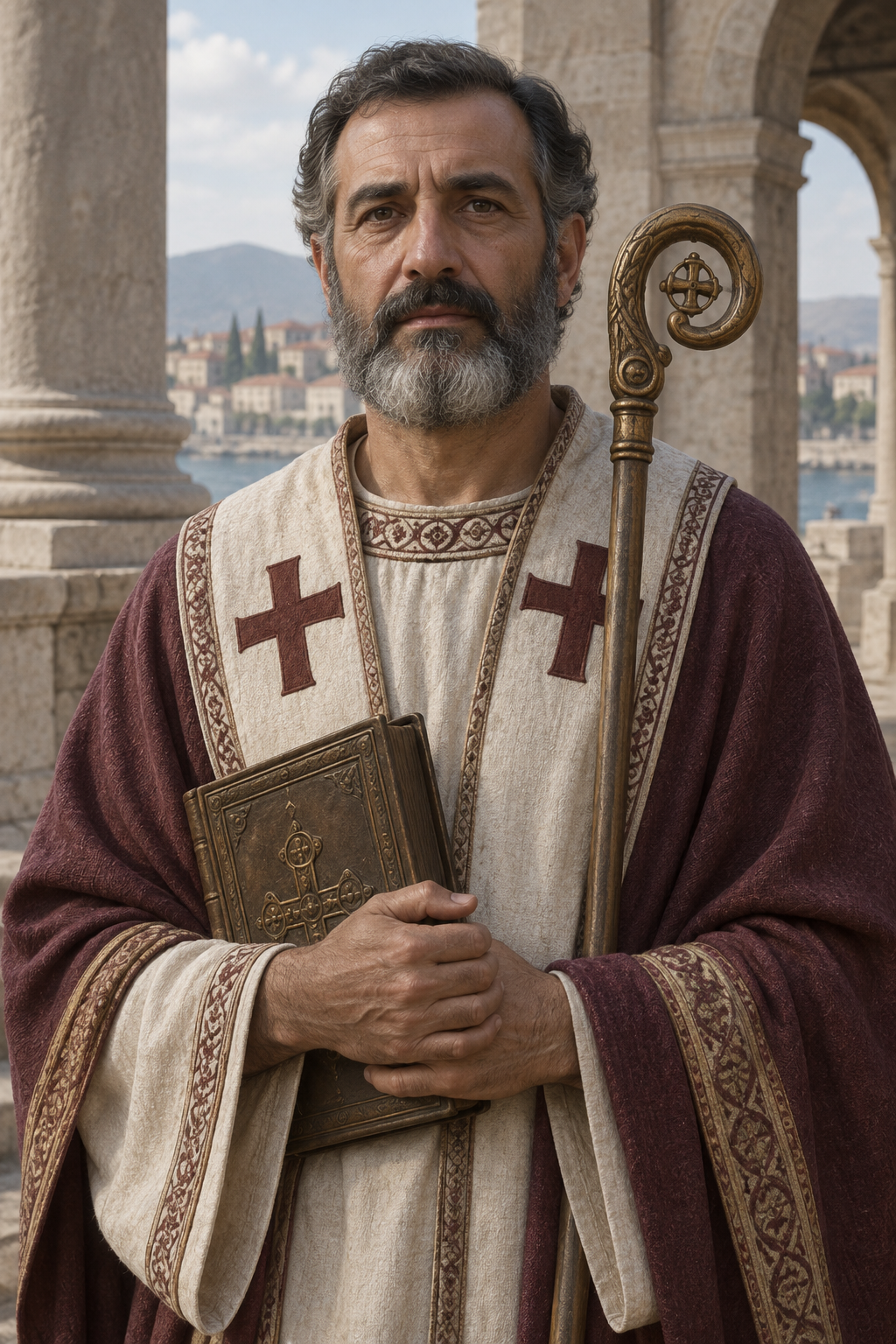
About Anthimus of Nicomedia
Anthimus led the church at Nicomedia, an imperial city in the Roman province of Bithynia. Christian communities there faced severe pressure during the persecution begun under Diocletian. Eusebius of Caesarea, writing close enough to the period to be a major early witness, names Anthimus as bishop and records that he was beheaded. Those two assertions, place and office together with manner of death, anchor the person behind the later veneration. They do not provide a complete chronology or a precise death day.
Eusebius describes church destruction, imperial orders, and many kinds of suffering at Nicomedia. His broad account gives context for Anthimus's death, but a passage about a crowd of victims cannot be read as a detailed eyewitness account of every named person. The often repeated number of twenty thousand martyrs belongs to a separate devotional tradition and should not be imported into Anthimus's biography as an established count. His episcopal position is direct evidence; the size and exact sequence of the wider martyrdom are different questions.
A later life gives Anthimus a dramatic period of concealment near the city. It says he sent letters encouraging Christians and that soldiers found him after he offered them food. In that telling, some soldiers converted before he went willingly to death. The Orthodox Church in America recounts the story as part of its saint's life. Eusebius does not supply those scenes, so they are identified here as received tradition rather than documented episodes. No lost letter is quoted or assigned an authentic authorial text.
The Catholic Church in Norway notes that letters attributed to Anthimus are not authentic. It also points out uncertainty over how later martyr groups and chronologies were linked. That caution keeps correspondence, conversions and arrest scenes outside the structured event record.
The cult had a later, geographically distinct witness. Procopius reports that Justinian built a shrine dedicated to Anthimus near the Golden Horn in Constantinople. The Oxford Cult of Saints project identifies the passage as *Buildings* 1.6.9–11 and dates the work to the sixth century. The shrine shows that Anthimus's name and martyr status traveled beyond Nicomedia. It is evidence about remembrance more than about the details of his execution two centuries earlier.
The calendar is not uniform. The Orthodox Church in America commemorates Anthimus on 3 September; the Norwegian Catholic entry notes other Western and Eastern listings. Neither the index's 20 November Orthodox date nor the feast itself supplies a death certificate. The proposed record corrects that Orthodox observance and leaves the exact life date empty. It also avoids assigning the disputed precise year 303 solely from the opening of Diocletian's persecution.
Anthimus's enduring significance is unusually clear despite the sparse personal detail: an early historian remembers a named bishop killed amid persecution, and a later capital city honored him with a shrine. The fuller narrative offers a model of courage and pastoral concern, but its scenes remain later devotional testimony. Keeping the two layers visible lets readers appreciate the historical witness without turning the uncertain letters, soldier conversions, or martyr count into confirmed biography.
Wondering how to weigh the stories and sources? Learn how to read a saint biography.