Biography
Anthony Mary Claret
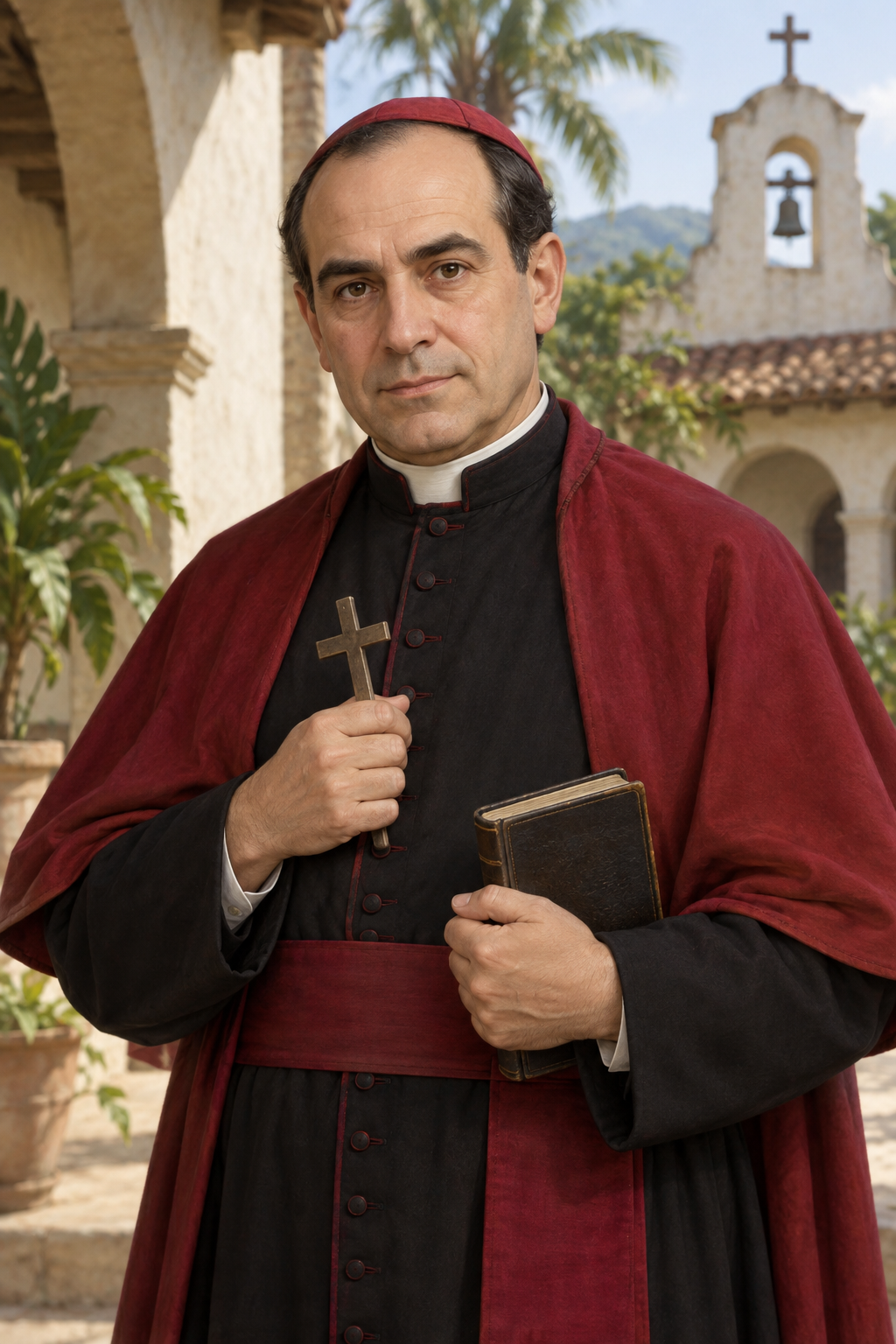
About Anthony Mary Claret
Anthony Mary Claret is remembered as a priest whose missionary energy took many forms. A letter of John Paul II for the 150th anniversary of the Claretians says that prayer, study, and a life of piety made him an evangelizer first in his native Catalonia, then in the Canary Islands, and later as archbishop in Cuba and Spain. That sequence is a solid framework for a biography: Claret’s work was not limited to public preaching, but joined spiritual discipline with catechesis, printed teaching, and pastoral office.
Pius XII’s canonization address supplies another perspective. It remembers Claret’s humble beginnings and his early work with a loom and workshop, then speaks of the wider ministry to which he was called. The address is devotional in purpose, so it should not be pressed into a complete social history. Yet it supports a significant point: later prominence did not detach him from the practical world of labor, parish life, and the ordinary demands of serving people.
On 16 July 1849, Claret and five young priests founded the Missionary Sons of the Immaculate Heart of Mary in a humble cell at the seminary of Vich. John Paul II’s anniversary letter names that event and treats it as the beginning of a religious family whose work continued beyond its founder. This is more than a date in an institutional history: it identifies the way Claret sought to give durable form to missionary service.
The same letter describes the tools of his ministry as the word of God, preaching, catechesis, and the printed word. It presents him as convinced that the Gospel could offer consolation, strength, healing, and forgiveness. Such language reflects the Catholic spiritual interpretation of his work. It should not be rephrased as a claim that every social problem was simple or that religious instruction replaced material care; rather, it explains the pastoral motive the Church sees in his evangelizing labor.
As archbishop in Cuba, Claret faced a demanding ministry. Pius XII praised his care for clergy and seminaries and his support of religious institutions, and recalled that he lived through earthquake, cholera, and an attack. The source provides the broad outline but not a license to dramatize each episode. What can be said is that episcopal service placed him in a setting of public crisis as well as ordinary pastoral administration.
Claret’s legacy endures through the Claretian family and through the Church’s memory of a missionary who connected contemplation and action. The sources allow a portrait of persistence: a worker and priest became a preacher, founder, and bishop; he used the tools available to him to communicate the faith; and he tried to form others for the same work. They do not require embellished stories to show why his example remains meaningful.
The social setting of his ministry deserves attention without exaggeration. The industrial changes John Paul II mentions brought displacement and new forms of inequality. Claret’s response, as the papal letter presents it, was evangelical rather than programmatic: he preached, taught, wrote, and organized others to share the Gospel with people whose lives were unsettled. That context helps explain why publishing and catechesis mattered to him. They were means of reaching people who might not otherwise encounter sustained religious instruction.
His foundation in Vich also shows that missionary zeal had to become a shared vocation. The six priests did not simply commemorate a spiritual enthusiasm; they formed a religious family capable of training members, accepting assignments, and sustaining a common charism. Later Claretians have interpreted that charism through the phrase “make God known, loved and served,” cited by John Paul II. The phrase expresses a spiritual intention, not a complete record of every activity associated with the institute.
The sources recall service in Cuba and Spain but should not be used to hide the complexity of those settings. Episcopal leadership could involve conflict, illness, natural disaster, and sharp social divisions. Pius XII’s reference to earthquake, cholera, and an attack demonstrates that Claret’s ministry was not sheltered from public crisis. A responsible account can say he served amid these pressures without assuming that a saint’s presence eliminated them or that later devotional praise settles every historical question.
Claret’s commitment to printed words is especially notable. Print could carry preaching beyond a single sermon and give readers material for catechesis and reflection. It could also magnify a leader’s influence, which makes responsible use important. The source presents the printed word as one tool among several, alongside prayer, study, direct preaching, and pastoral service. That balance keeps the legacy from becoming a story of technique alone.
For later readers, Claret’s life is not an instruction to imitate every nineteenth-century method. It offers a pattern of prayerful readiness, concern for people at the margins, and willingness to form communities for service. The strongest sources permit that interpretation while leaving uncertain childhood scenes, precise itineraries, and many details of his final years unclaimed.
Wondering how to weigh the stories and sources? Learn how to read a saint biography.