Biography
Anthony Mary Zaccaria
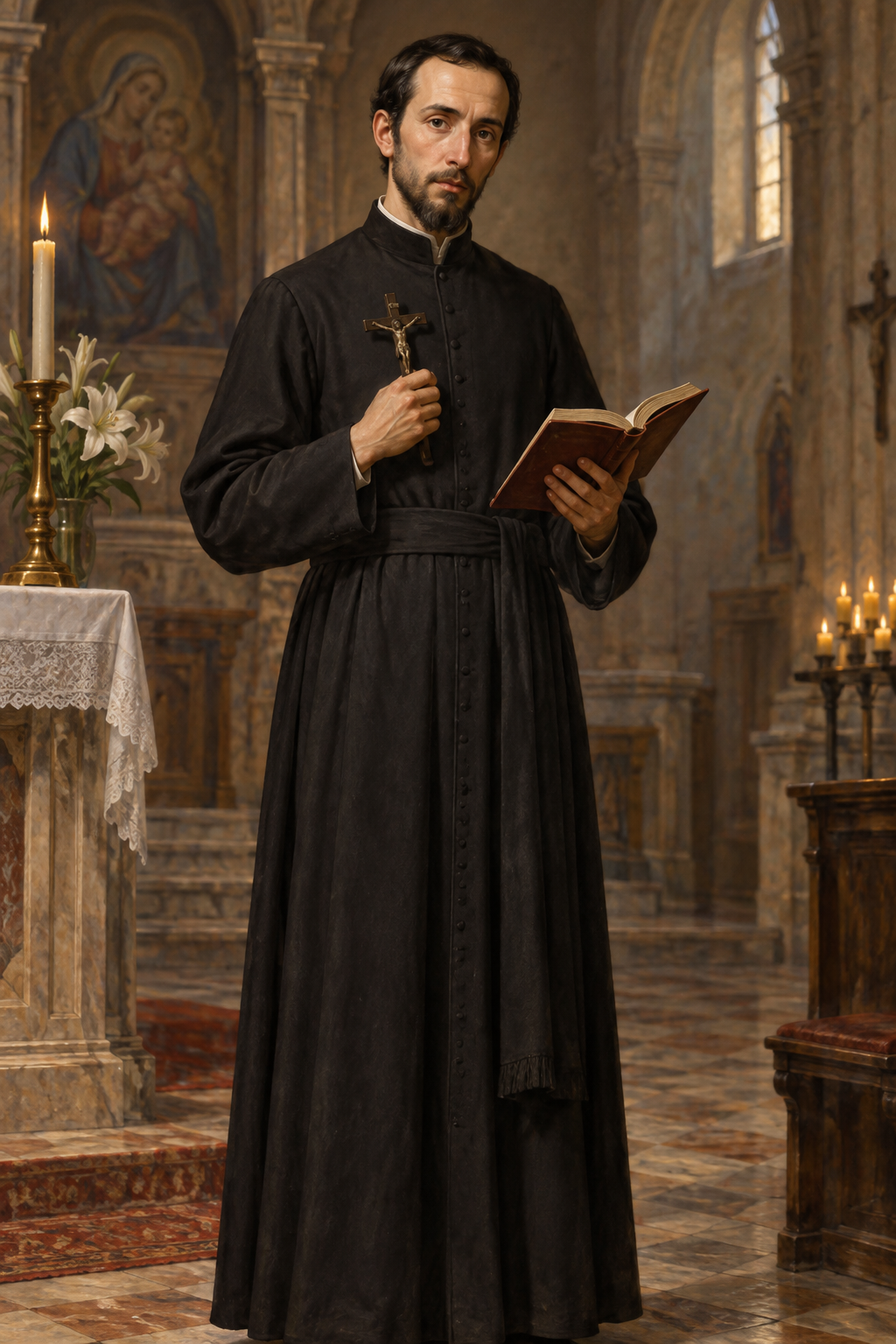
About Anthony Mary Zaccaria
Anthony Mary Zaccaria belongs to the Catholic reform movements of the sixteenth century. The Church remembers him especially as founder of the Clerics Regular of St Paul, later known as the Barnabites. In 1983, John Paul II marked the 450th anniversary of the congregation’s approval and reported that Pope Clement VII approved it at Bologna on 18 February 1533. That official act gives a firm institutional point in a life otherwise often summarized through later devotional language.
The same address characterizes Zaccaria’s life and work through two words: reform and holiness. Those words should not suggest a program of mere criticism. In the address, reform is joined to renewal of persons and communities, and holiness is shown in concrete Christian life. The source places special emphasis on his study of Saint Paul and on his attempt to imitate Paul’s way of life. This Pauline orientation gave the congregation both a name and a spiritual point of reference.
John Paul II also identified the Crucified One and the Eucharist as pillars of Barnabite spirituality. These emphases are not incidental decorative details. They help explain why Zaccaria is remembered as a pastoral founder: his work sought to direct Christian renewal toward worship, charity, and the pattern of Christ rather than toward personal ambition.
A later papal message for the fifth centenary of his birth calls him a tireless imitator of the Apostle to the Gentiles and a luminous model of pastoral charity. That description is commemorative rather than a critical biography, but it clearly identifies the spiritual legacy the Church recognizes: a ministry intended to strengthen the Church through charity, formation, and witness.
The Congregation’s approval in 1533 shows that Zaccaria’s vision was communal. A religious institute carries a founder’s work through rules, prayer, shared life, and apostolic service. The later addresses also name the Sisters Angelicals of St Paul and a lay movement, which helps prevent the legacy from being narrowed to clergy alone. The tradition received from Zaccaria calls different states of life toward the same renewal of faith and charity.
Because the sources used here are institutional and spiritual, the biography keeps its limits visible. It does not assert unverified birthplaces, death details, private conversations, or a fully detailed foundation narrative. It can say with confidence that Zaccaria founded a community approved in 1533, drew deeply on Saint Paul, and was received as a guide to reform and holiness. That is enough to show why later Christians see in him a witness to patient renewal grounded in worship and love of neighbor.
The term reform can be misunderstood if it is treated as a slogan about other people’s failures. In the papal addresses, it is joined to personal conversion and holiness. Zaccaria’s work called communities to recover the energy of the Gospel through prayer, charity, and a more serious participation in Christian life. This places reform first within the person and the community undertaking it, rather than as a claim to superiority over others.
His attention to Saint Paul gives the Barnabite tradition a distinctive scriptural texture. Paul’s letters speak often of life in Christ, mutual responsibility, the Cross, and communities being built up in love. The sources used here say that Zaccaria studied and sought to imitate the Apostle; they do not authorize attributing particular biblical commentaries or slogans to him without additional evidence. The connection is nonetheless sufficient to explain why the community bears the name of Saint Paul.
The Crucified One and the Eucharist were described as pillars, a word that suggests stability rather than passing sentiment. The devotion encouraged by the tradition is directed toward Christ’s self-giving love and toward a worshiping community nourished for service. Such language requires care: it should not be used to detach sacramental practice from the demands of charity. In Zaccaria’s received legacy, worship and love of neighbor are mutually implicating.
The presence of the Angelicals and a lay movement is equally important. A founder’s charism can be shared in more than one form of life. The later papal message sees this constellation as a way of encouraging many people to witness to the founder’s spirit in different social settings. This is not proof of the exact shape of every early association, but it makes clear that the legacy was not confined to clerical leadership.
Zaccaria’s short biography should therefore resist the temptation to compensate for sparse personal detail with invented scenes. The documented elements are already substantial: a founder associated with reform and holiness, a Pauline spiritual orientation, a congregation approved in 1533, and a continuing family of religious and lay witnesses. Together they show a ministry of renewal that was communal, scriptural, sacramental, and directed toward charity.
Wondering how to weigh the stories and sources? Learn how to read a saint biography.