Biography
Anthusa of Constantinople
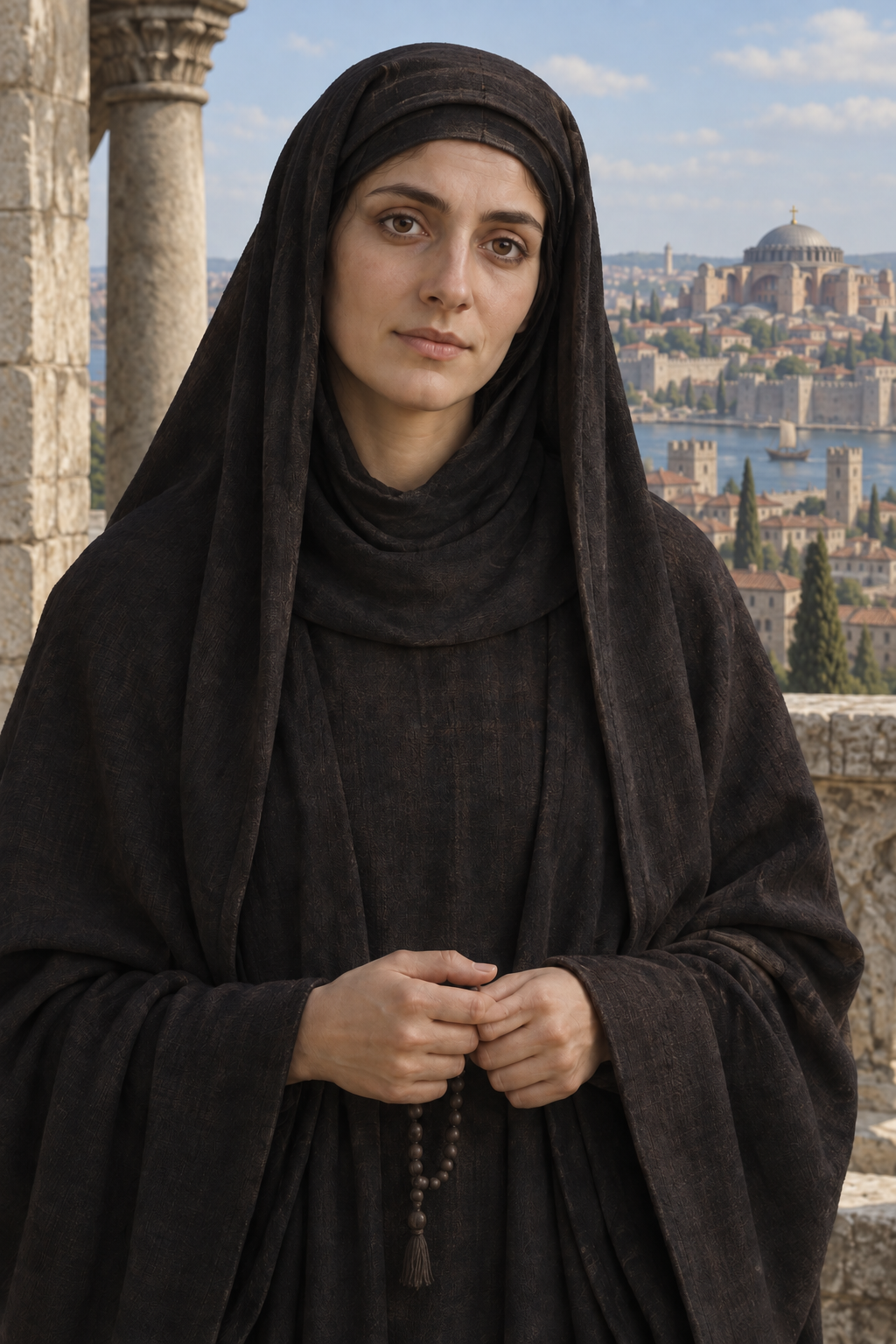
About Anthusa of Constantinople
Anthusa grew up within the imperial family of eighth-century Constantinople. A critical prosopography identifies her as probably the daughter of Emperor Constantine V and Eudokia, his third wife. It places her birth around 756 or 757. That phrasing matters: her precise birthday is not established, and the index need not turn a reconstruction into an exact life date. The same study calls Leo IV her half-brother, not her twin.
The wider dynasty shaped the choices later authors attributed to Anthusa. Constantine V was associated with imperial opposition to icons, while Leo IV inherited the throne and Irene later governed for her son. A scholarly account of Eudokia's family lists Anthusa among her children and distinguishes Leo, born to Constantine's first wife. This independent genealogy exposes an error in a popular life that has both Anthusa and Leo born as twins in 750 to Eudokia. The biography does not repeat that date or relationship as fact.
The Orthodox Church in America recounts a story involving another Anthusa, an abbess of Mantinea who, according to the tradition, predicted the birth of children to Constantine's household. The shared name can blur two different women: the older abbess and the emperor's daughter. The prediction and naming scene are part of a hagiographic explanation, not independent proof of a birth date. The profile identifies the daughter and leaves the abbess's story separate.
The received life says the princess refused marriage and used her wealth for churches, orphans, and widows. Irene, regent after Leo IV's death, reportedly offered her joint rule; Anthusa declined. Critical prosopography marks these as reported claims, not secure events. They remain attributed narrative rather than dated milestones.
The story then places Anthusa under Patriarch Tarasios for monastic tonsure and links her to a monastery called Homonoia or Eumeneia. The Orthodox life supplies more scenes of manual work and service to sisters, but those details are too specific to be treated as independently documented routines. The historical claim is more modest: an imperial woman remembered in monastic tradition.
Death dates differ. The Orthodox life gives 801 or 808, and the prosopography's reconstruction points to 808 or 809 while noting a reported age of fifty-two. Neither yields a certain year, and their assumptions differ. The prosopography also lists calendar witnesses for 12, 17, and 18 April. The current Orthodox Church in America uses 12 April. These are evidence for veneration, not for an exact date of death; the draft therefore retains the indexed Orthodox feast and leaves life dates blank.
Anthusa's name has remained attached to a distinctive choice: an imperial daughter remembered as leaving court honors for religious community and care for others. Scholarly reconstruction confirms enough of her family and monastic identity to distinguish her from the Mantinea abbess. It also shows why a familiar twin-birth story cannot be repeated. Readers can value the monastic ideal in her received life while understanding where the documentary record is firm, probable, or simply traditional.
Wondering how to weigh the stories and sources? Learn how to read a saint biography.