Biography
Aristides of Athens
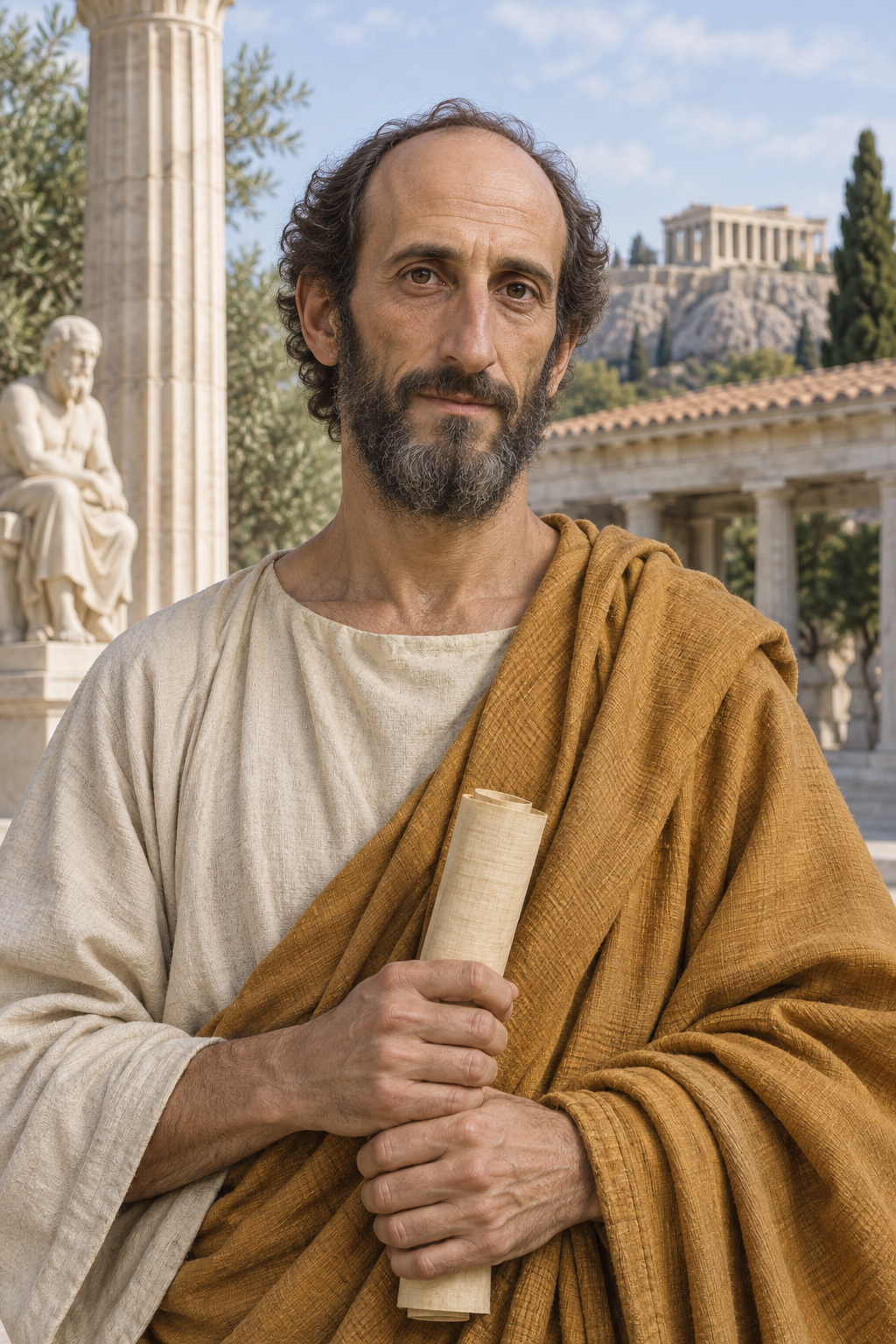
About Aristides of Athens
Aristides of Athens is remembered as a Christian philosopher and defender of the faith. Jerome describes him as retaining a philosopher's clothing after becoming a follower of Christ. For Jerome, his Christian allegiance and philosophical identity belonged together. The work he left was an Apology, a defense of Christianity addressed to imperial authority rather than a personal autobiography.
Eusebius places Aristides alongside another apologist, Quadratus, and says that his work was addressed to Hadrian. He also reports that many people still possessed it in his own time. His notice therefore bears witness to the work's circulation, but offers little detail about the author's private life.
The intended emperor is disputed: another interpretation places the Apology under Antoninus Pius, whose reign lasted from 138 to 161. It would be misleading to give one precise presentation date without acknowledging that disagreement. The work's later recovery involved several languages: an Armenian fragment was published in 1878, and a Syriac version was discovered at Sinai in 1889. A Greek form was also identified within the story of Barlaam and Josaphat.
The Apology moves from arguments about God to claims about religious conduct. It praises Christian care for strangers, widows and people in need, presenting shared life as part of its defense. These are the author's claims about Christians, not a record proving that he personally performed every action described. Its criticisms of other religions likewise belong to an ancient polemic, not an impartial account of those communities.
Wondering how to weigh the stories and sources? Learn how to read a saint biography.
Prayers for Aristides of Athens
Aristides of Athens: sourced prayer excerpt
I did these things in ignorance.