Biography
Arnold of Arnoldsweiler
About Arnold of Arnoldsweiler
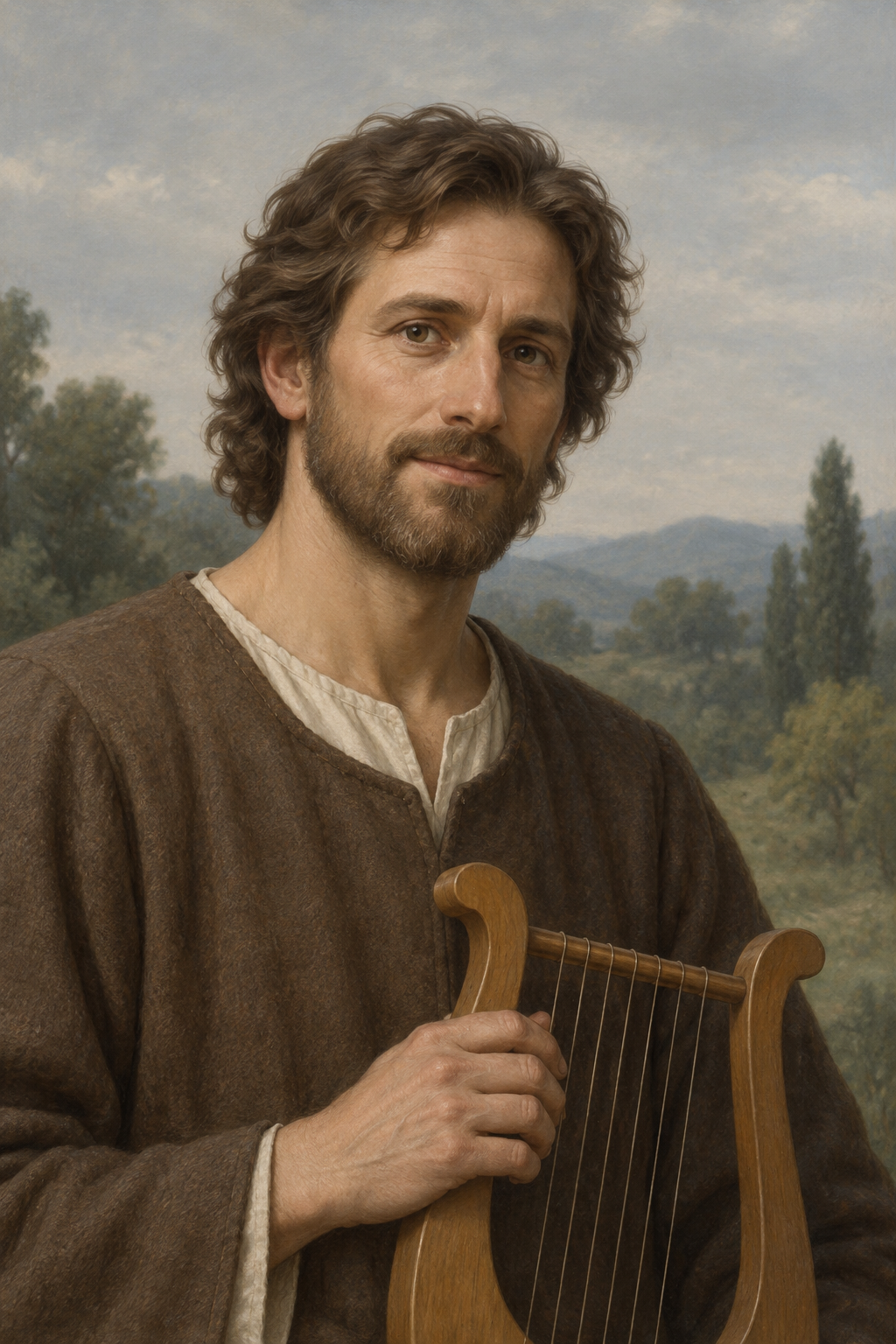
Arnold of Arnoldsweiler is remembered as a musician whose concern for poor people mattered more than his success at court. His anonymous medieval Life places him in Charlemagne’s household, where his musical skill won affection. It says he used his earnings to care for poor people and orphans. These details belong to the later tradition preserved by his biographer.
The Life’s central story concerns a royal forest that nearby villagers could not use for wood. Arnold asked the king for as much ground as he could ride around during a meal. By arranging fresh horses along the route, he completed the circuit quickly. The king granted the forest, and Arnold distributed its benefits among the neighboring villages. The account celebrates practical ingenuity directed toward people in need.
Rudolf Wyrsch’s study urges caution about treating these stories as a contemporary biography. Arnold does not appear in sources written during the lifetime traditionally assigned to him. Proposed death years have depended on how later writers interpreted the legend. Wyrsch particularly questions a reconstruction that treats the intended pilgrimage to Spain as an established event and then uses famine chronology to date his death. Such reasoning cannot give a secure life span when the underlying narrative remains uncertain.
Wyrsch also places the forest ride and the ring recovered from a fish within a wider family of European legends. Similar stories were told about other saints and rulers. Their recurrence does not establish what happened to Arnold personally. It helps explain the language through which later communities remembered generosity, protection, and preparation for death. The historical questions remain open even while the local tradition has a clear religious meaning.
A later documentary reference is narrower but firmer. A received excerpt of a 1168 charter from Archbishop Philip of Heinsberg mentions a priest, Godfrey of Wilre Saint Arnold, donating land to Saint Cunibert. The reference shows the saint’s name attached to the place in the twelfth century. It does not identify his birth, describe his court service, or date his death.
Augsburg’s diocesan directory records the recognition of his cult for the Archdiocese of Cologne in 1886. It also lists his patronage of musicians, organists, and instrument makers, and his invocation for a good death. These forms of remembrance join the musical vocation of the tradition with concern for people approaching the end of life. Recognition of an existing cult belongs to the history of his veneration; it does not resolve the competing accounts of his lifetime.
The parish’s account describes a sandstone figure on the saint’s raised tomb in the former parish church, now called the Arnoldus Chapel. It dates the figure to the first half of the fifteenth century and identifies it as the oldest local depiction. The object belongs to the history of his remembrance, rather than providing a portrait made during his lifetime.
Bishop Klaus Hemmerle gave that remembrance a social emphasis when opening the Arnolduswoche in 1991. In the excerpt of his homily preserved by the parish, he spoke of faith expressed at work, in the heart, through concern for weaker neighbors, and in shared community. His interpretation invited listeners to see the saint’s example as a pattern for their own relationships. It was a pastoral application of the tradition to contemporary life.
The Diocese of Aachen describes an annual week of celebrations around 18 July, Arnold’s commemorative day. An earlier octave was shortened to five days as attendance declined. The program brings different groups into the celebration: women’s associations, children, local organizations and brotherhoods, altar servers, and young people. This pattern gives the remembrance a place within the region’s ordinary communal life, rather than leaving it solely within an individual shrine.
The week concludes with a festive Mass and a procession carrying relics through the village, followed by a gathering around the old parish church. Aachen’s description also notes a changing biblical theme each year. Those practices show how prayer, neighborhood participation, and the saint’s memory continue to meet. The relics are objects of veneration; their religious use does not itself supply independent verification of the medieval life stories.
Music has a tangible place in the later church’s history. KuLaDig’s heritage record describes the new parish church, built between 1899 and 1902, and its Klais organ, installed in 1915 and restored in 1997 after alterations. It also records that preservation efforts saved the older church from demolition. The two buildings and the instrument retain different layers of a community’s worship. Their dates document later religious and musical life, rather than Arnold’s own years.
Cologne’s archdiocesan magazine reports a further development of the candle-offering tradition. Environmental campaigners have brought candles to Arnoldsweiler in connection with the surviving Hambach woodland. Their gesture draws on the remembered forest gift and expresses thanks for the remaining trees. This contemporary use of the tradition shows how Arnold’s association with shared resources has acquired renewed meaning. His devotion continues to connect care for neighbors with gratitude for what a community receives and preserves.
Wondering how to weigh the stories and sources? Learn how to read a saint biography.