Biography
Artemisia Bowden
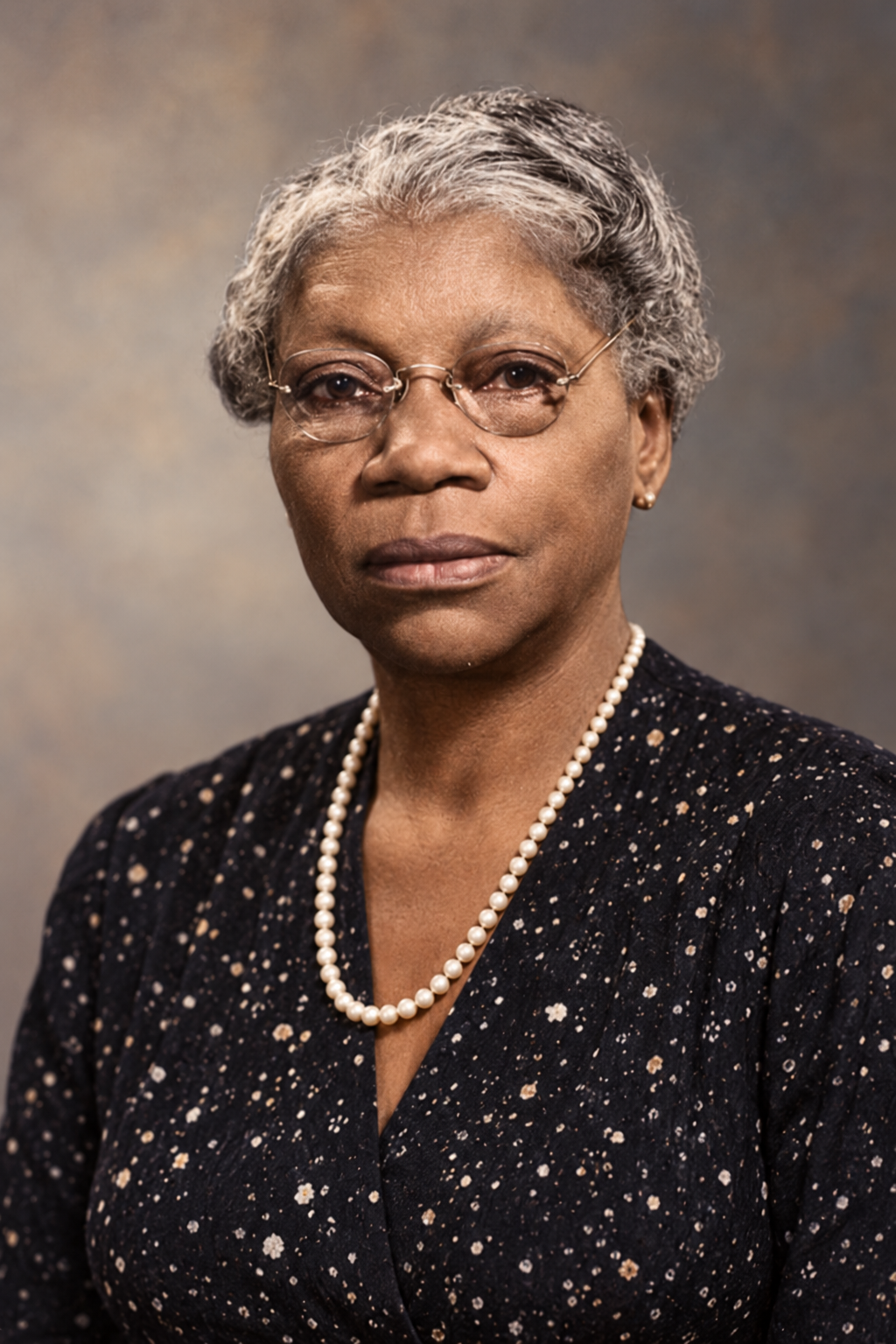
About Artemisia Bowden
Artemisia Bowden spent more than half a century building educational opportunities for Black students in San Antonio. She was born around 1879 in Albany, Georgia. After graduating from St. Augustine’s School in Raleigh in 1900, she taught in North Carolina before moving to Texas in 1902. There she became the leader of St. Philip’s, a small school whose future was far from secure.
Her parents, Milas and Mary Molette Bowden, had both experienced slavery. She attended St. Athanasius School in Brunswick before studying in Raleigh. Later, while leading St. Philip’s, she continued her own education through summer study at several institutions.
The school had begun in 1898 under Episcopal bishop James Steptoe Johnston. Its first weekend sewing class served six Black girls. Bowden inherited an institution that would grow beyond those beginnings into a school offering broader academic and vocational education, and eventually college courses.
Her work included teaching as well as administration. The curriculum combined subjects such as algebra, literature, botany, and civics with practical instruction. As public vocational schools attracted students, Bowden sought pupils outside San Antonio and developed boarding arrangements. These changes answered immediate pressures while enlarging what the school could offer. She continued this work through recurring financial uncertainty. Correspondence examined by historian Beverly Bragg records appeals for support, unpaid obligations, and the threat that the institution might close.
A letter from the General Education Board shows how difficult fundraising could be. In November 1929, field agent Leo M. Favrot replied to Bowden’s appeal. He remembered visiting when St. Philip’s offered secondary education and acknowledged its advance to junior-college work. Yet recognition did not mean a grant. The board concentrated its contributions on selected institutions with particular affiliations. Favrot could offer Bowden no encouragement unless the school was selected through the appropriate agencies. He proposed a possible visit, but the letter contains no promise of financial assistance.
The following year, the school’s finances also drew the attention of state education officials. On November 20, 1930, Lucia Douglas of the Texas Board of Examiners wrote after reading a newspaper report that the Episcopal Church had withdrawn support and that the city school system had declined to take over. Douglas asked Bowden for definite information about any changes. As an accrediting official, she was concerned about the school’s financial foundation; she also expressed a personal wish to see it succeed. The letter shows how funding uncertainty could affect the institution’s standing as well as its daily operation.
Some appeals brought concrete offers. In June 1933, Arthur D. Wright of the John F. Slater Fund wrote to Bowden offering thirteen hundred and fifty dollars toward the salaries of two teachers for the coming academic year. The offer was conditional on an accompanying memorandum. Wright requested signed agreements and a report for the previous year. The surviving letter documents an offer rather than confirming that the money was paid, but it gives a precise example of the support Bowden sought to keep teaching underway.
Bowden argued that a city supporting a junior college for White students also owed educational provision to Black residents. In 1942, St. Philip’s entered the municipal junior-college system. She continued as dean until her retirement in 1954, completing fifty-two years of service. Her civic work extended beyond the campus. She helped secure a Black nursing unit at Robert B. Green Hospital, access to Lindbergh Park, and the East End Settlement House.
The change to public control did not immediately end educational segregation. St. Philip’s and San Antonio College came under a new district board in 1945. Only in 1955, after Bowden’s retirement, did St. Philip’s admit White students and San Antonio College admit Black students.
Her own writing explains the larger purpose behind these efforts. In a surviving typescript on equal educational opportunities, Bowden rejected the claim that Black Americans received an equal education. She examined the practical conditions that made learning possible: suitable buildings, equipment, teachers, fair compensation, instructional materials, and enough time in school. She argued that funding arrangements could perpetuate inequality even when they appeared to follow a consistent formula.
The argument linked education to democratic participation. Bowden compared unequal spending, teachers’ salaries, and school facilities, and described the obstacles facing Black students seeking professional training. She insisted that a democracy needed the informed participation of everyone. Her closing appeal joined educational opportunity to human worth, refusing distinctions based on wealth or race. This was a public argument about the conditions of citizenship, grounded in the school work she had sustained.
Bowden died in San Antonio on August 18, 1969.
In 2015, the Episcopal Church added her to its calendar of commemorations, with an observance on August 18. This recognition belongs to the Episcopal tradition. Her remembered work joins the patient administration of a school with advocacy for educational opportunity beyond its walls.
Wondering how to weigh the stories and sources? Learn how to read a saint biography.