Biography
Arthelais
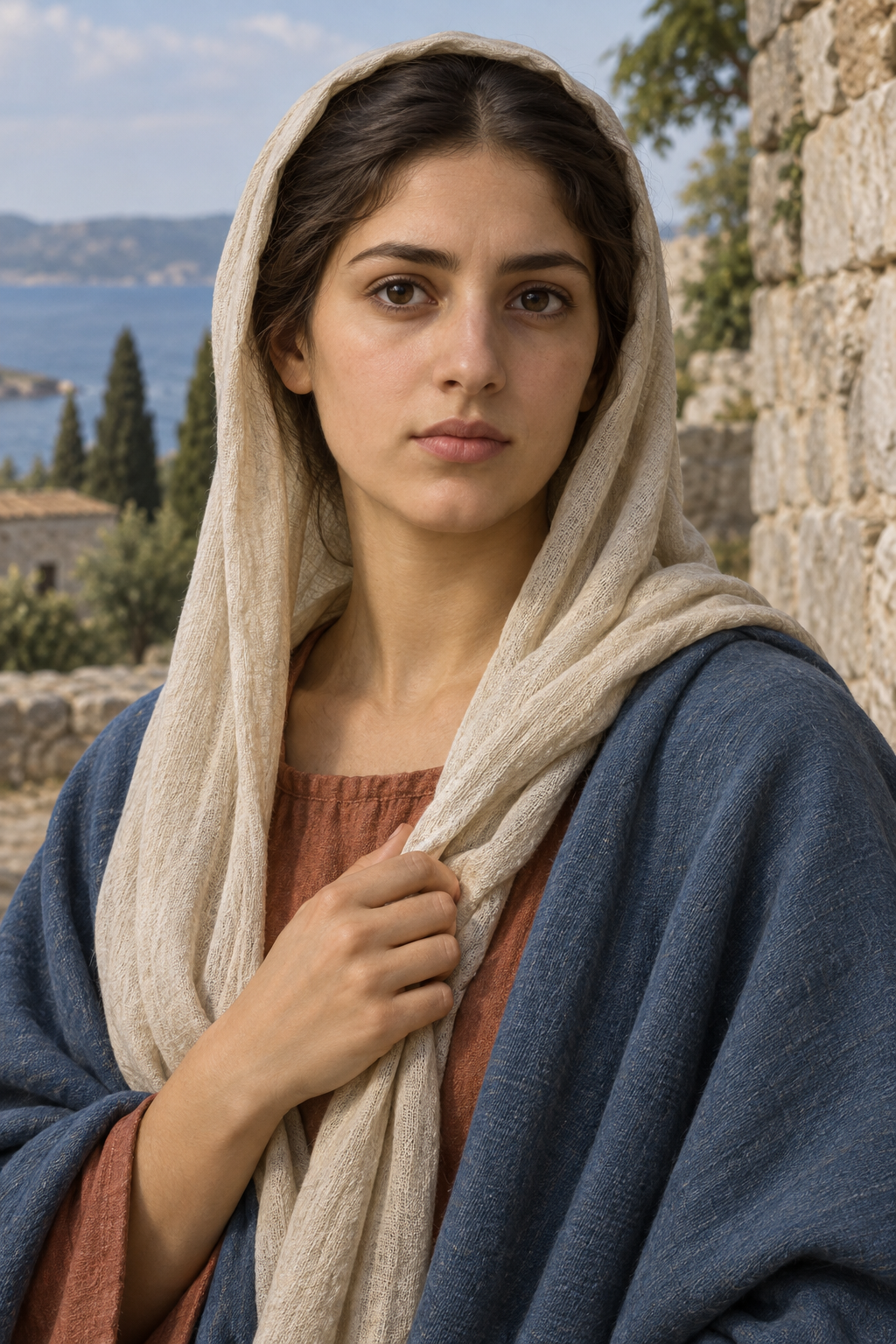
About Arthelais
Arthelais is remembered in Benevento as a Christian virgin. The French Catholic calendar Nominis commemorates her on March 3 under the name Arthellaïs.
The Norwegian Catholic directory also lists her among Benevento’s patrons. That continuing remembrance is clearer than the details of her lifetime. The same directory explicitly cautions that the surviving story of her life is not credible as a historical account.
In the Latin Life, Arthelais is a young woman from Constantinople whose parents fear an imperial demand for her presence. She proposes going to Italy to preserve her virginity. The journey brings captivity and a miraculous release, followed by a visit to the sanctuary of Michael on the Gargano. There she chooses to go herself and gives money toward the church’s work. The story then brings her to Benevento, where it depicts prayer, fasting, an offering at the church of Mary, and participation in the Eucharist. Its final scene places her, ill with fever, near the church of Luke, receiving communion before her death. These are the episodes of a hagiographic narrative; its family relationships and miracles are not independently established facts.
The problems were already visible to the editors who printed the Latin versions. Their introduction identifies difficulties in the imperial chronology and an apparent copying error in the long Life: the same remarkably precise period is given both for Arthelais’s entire life and for her residence at Benevento. The shorter version instead says that she lived there for some years. Choosing one number would conceal that conflict. The introduction also distinguishes the sources from which its two versions were supplied. Their survival establishes that stories about her were transmitted; it does not settle her exact age or year of death.
Modern scholarship likewise places the written remembrance at a distance from its setting. In the authored abstract of his review of Riccardo Valli’s critical edition, Armando Bisanti describes the Life as a Beneventan hagiographic work probably composed in the ninth or tenth century. This is the review’s stated assessment, reported from its abstract; the full review and edition have not been inspected for this account.
The modern IRHT manuscript catalogue records one witness of the shorter text in Naples, assigning that manuscript to the sixteenth or seventeenth century. This describes a surviving copy, rather than the date of the events in its narrative.
Historian Immacolata Aulisa places Arthelais’s story among accounts of women who undertook religious journeys to the Gargano. Her discussion recognizes pilgrimage as a setting in which women could act beyond the limits of private household life. Read with its uncertainties acknowledged, the Life presents Arthelais taking initiative in her journey and in her act of devotion. That portrayal belongs to the religious meaning of the story, even where its chronology remains unresolved.
Wondering how to weigh the stories and sources? Learn how to read a saint biography.