Biography
Assunta Marchetti
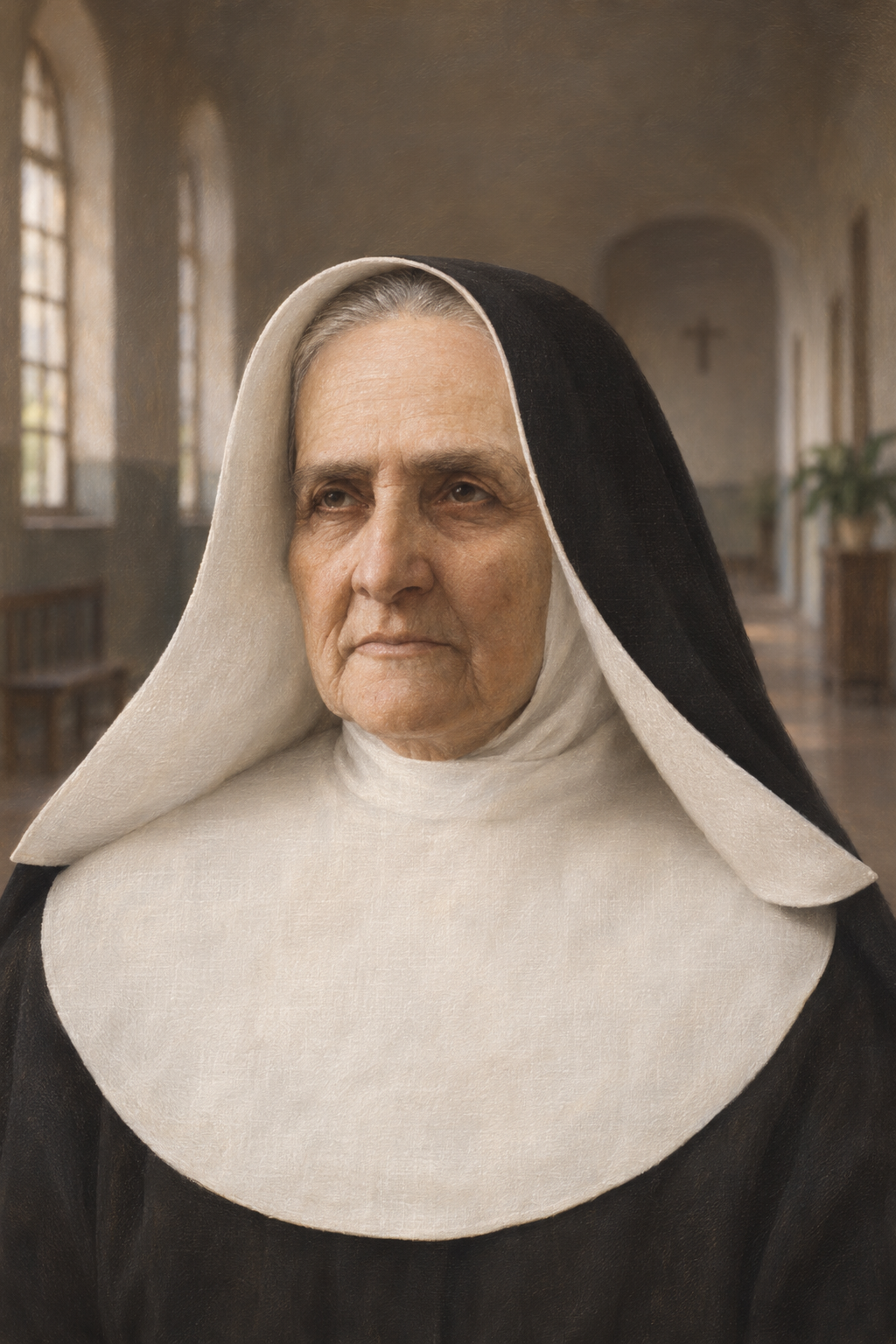
About Assunta Marchetti
Assunta Marchetti spent more than fifty years in Brazil caring for children and serving a religious community formed around migrants’ needs. She had first hoped for a contemplative life in Italy. Family responsibilities, including her mother’s illness and her father’s death, delayed that plan. The invitation that changed her direction came from her brother Giuseppe, a priest working with Italian migrants in Brazil. In 1895 she agreed to join the mission and help care for children who had lost their parents.
She was born at Lombrici di Camaiore, near Lucca, on 15 August 1871. In October 1895 she traveled with her mother Carolina and two other women, Maria Franceschini and Angela Larini, to meet Bishop Giovanni Battista Scalabrini in Piacenza. On 25 October the women made religious vows before him. This small group became the beginning of the Missionary Sisters of Saint Charles Borromeo, the Scalabrinian sisters. Assunta’s new vocation therefore emerged through family relationships and collaboration rather than through an undertaking she began alone.
In São Paulo, the sisters cared for children at the Cristoforo Colombo orphanage. Their congregation’s history remembers both children of Italian migrants and children of people who had been enslaved. Assunta’s work included nursing and catechesis as well as the daily attention children needed. Her brother Giuseppe died in 1896, leaving the young mission without a person who had played a central part in bringing it together. The sisters continued the work in circumstances that required perseverance and the support of other people.
The early community also faced questions about its identity and future. The apostolic letter describes the arrival of sisters from another institute and Assunta’s effort to preserve the particular vocation of the group serving the orphanage. It records her public perpetual vows as a Sister of Saint Charles Borromeo on 1 January 1912. The history was not a simple progression from foundation to expansion. Religious commitment developed alongside decisions about governance, the relationship between communities and the form their service would take.
The decree on her virtues records the eventual existence of two distinct, canonically legitimate communities. It also traces her work beyond the first orphanage: assignments in southern Brazil, Jundiaí and Monte Alto, where she served sick people at a charitable hospital. She later returned to leadership and was elected superior general again in 1927. That office continued until 1935, after which she went to Mirasol. There she remained for twelve years, continuing work among people who needed care. The decree describes her final return to São Paulo as illness increased.
Her congregation remembers a range of practical responsibilities across these years. She served as administrator, nurse and cook, as well as superior and guide to other sisters. Work brought her to different towns in São Paulo and Rio Grande do Sul. Hospital patients sought both help with their wounds and a word of encouragement. These recollections place her service within tasks that had to be repeated each day: preparing food, tending illness, organizing a household and making time to listen.
A serious injury to her leg while visiting a sick person caused prolonged suffering. The brief Scalabrinian biography remembers that difficulty alongside her continuing concern for children. She died on 1 July 1948 in the São Paulo orphanage, aged seventy-six. The place of her death connected her last years with the mission she had accepted as a woman, although her work in between had extended well beyond one institution and one role in the community.
The formal account of her virtues identifies prayer as a support for that service. It remembers Eucharistic and Marian devotion, silent contemplation and trust in God amid work and illness. It also singles out attention to orphaned children, families in difficulty and people who were sick. This account does not separate religious practice from the demands of care. It describes a spirituality expressed through the people she received and the duties she carried out over many years.
At her 2014 beatification, Cardinal Angelo Amato recalled the way former children of the orphanage remembered her care. In published excerpts of his homily, he emphasized a maternal charity expressed through patient and humble service. The recollections linked the public celebration to children who had arrived at the orphanage in very poor condition and regained strength through consistent care. They explain the affectionate language associated with her memory through the practical experience of people who had lived in the institutions she served.
The following day Pope Francis spoke of her beatification after the Angelus. He named her as cofounder of the Scalabrinian sisters and remembered service to orphans, sick people, poor people and migrants. He connected her example with recognizing the face of God in people in need. Assunta had been beatified in São Paulo on 25 October 2014. The Catholic Church honors her as a blessed religious sister, with her permitted memory on 1 July.
Wondering how to weigh the stories and sources? Learn how to read a saint biography.