Biography
Azariah
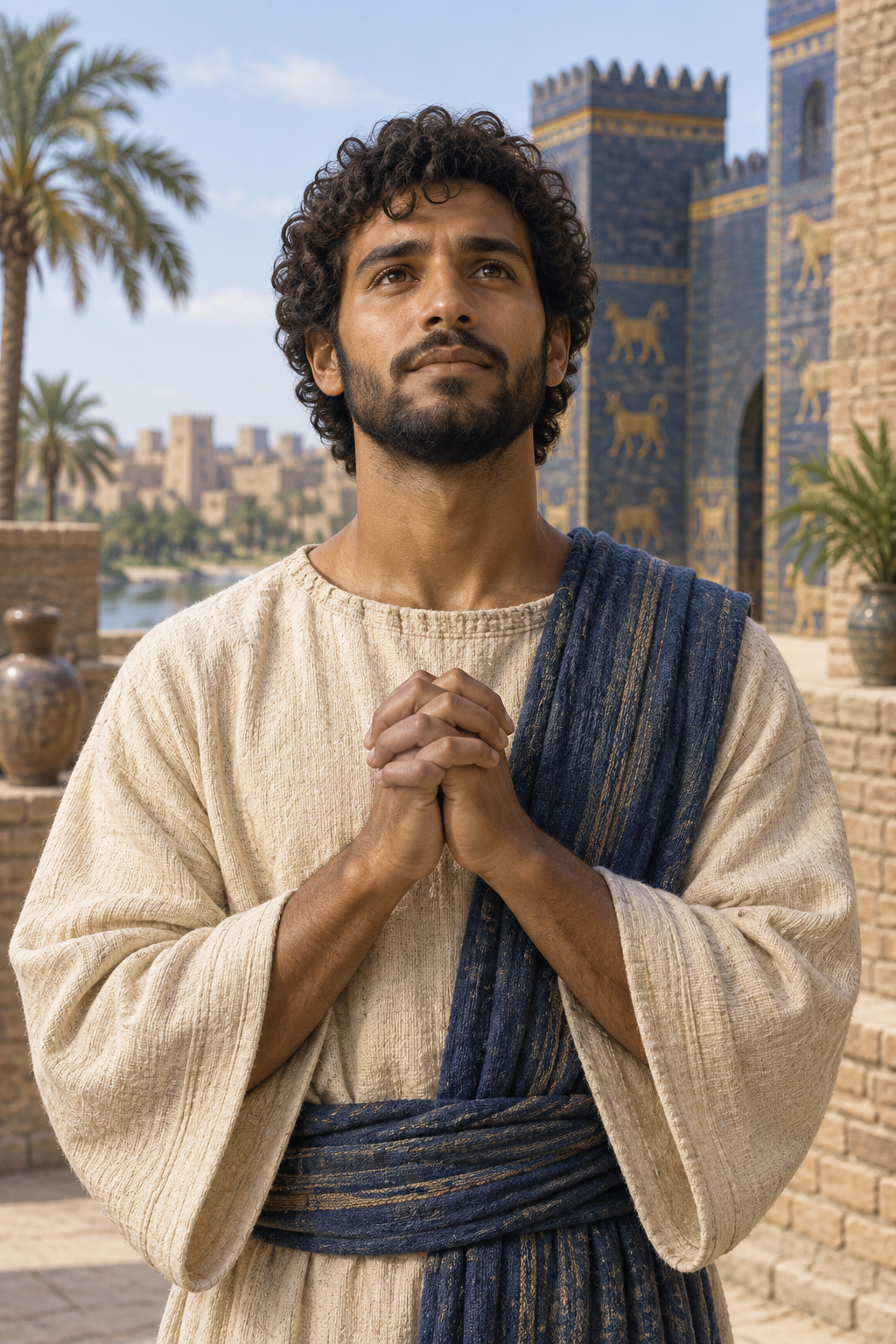
About Azariah
Azariah is the Judean youth whom the Book of Daniel names beside Daniel, Hananiah, and Mishael and says the Babylonian court renamed Abednego. This narrow identification matters because many biblical people bear the name Azariah. He is not Azariah son of Oded, a high priest of that name, or the Azariah used as Raphael's disguise in Tobit. Daniel supplies no parents, birthplace, exact age, marriage, or personal death account for this youth. The USCCB introduction describes Daniel as an apocalyptic work by an unknown author whose stories address faith under persecution. Its court setting therefore gives a sacred literary portrait, not a modern archive from which exact life dates can be recovered.
The narrative opens with Jerusalem besieged and vessels and selected Judean youths taken into Babylonian service. Azariah belongs to a group described as young men from Judah suitable for court training. The chief chamberlain assigns new names: Daniel becomes Belteshazzar, Hananiah Shadrach, Mishael Meshach, and Azariah Abednego. The renaming marks the pressure of imperial education and administration, but the text still remembers each Judean name. It does not say that Azariah abandoned his inherited identity. Jerusalem and Babylon can be shown only as city-level locations within the story. No precise residence, capture site, or travel route is established.
Daniel then resolves not to defile himself with the royal food and wine and asks for a test using vegetables and water. Azariah is included with the four youths who follow this discipline. The story says they appear healthy after ten days and receive knowledge and understanding. It singles out Daniel for insight into visions and dreams, so that gift should not be transferred to Azariah. The episode portrays cooperation rather than solitary heroism: the companions accept a common risk and live by a shared practice. It does not reveal Azariah's private reasoning or give him an individual speech. Any claim about his motives beyond fidelity within the group would be invented.
When Nebuchadnezzar threatens Babylon's wise men because they cannot reveal and interpret his dream, Daniel asks for time and tells Hananiah, Mishael, and Azariah to seek mercy from God. The mystery is disclosed to Daniel, who blesses God and speaks before the king. After the interpretation, Daniel requests administrative responsibility for Shadrach, Meshach, and Abednego in the province of Babylon. The text therefore presents Azariah as a prayer companion and later as an appointed official, not as the interpreter of the dream. The chapter's chronology and offices belong to the court tale. They can support a traditional event at Babylon but not an independently documented government career.
Azariah becomes most visible in Daniel 3. Nebuchadnezzar erects a gold statue on the plain of Dura and orders officials to bow when music sounds. Shadrach, Meshach, and Abednego are accused of refusing. Brought before the king, the three answer together that they will not serve his god or worship the image, whether or not they are rescued. The account gives no separate line to Azariah at this hearing. Its collective answer is a model of moral courage because the companions refuse coercion without claiming control over the outcome. Dura's exact archaeological identification is uncertain, so the event retains the narrative place-name without coordinates.
The king orders the furnace heated and has the three bound and thrown into it. In the shorter Hebrew-Aramaic form, the story moves from their fall into the furnace to the king seeing four unbound figures. Catholic and Orthodox Bibles preserve Greek additions between those moments. The USCCB identifies these verses as additions translated from the Greek form of Daniel. Within them, Azariah stands in the fire and voices a confession and appeal before all three sing together. The distinction is important: the prayer is genuinely part of the received Greek scriptural text, while its words remain speech attributed to a literary character rather than a transcript independently verified from a Babylonian official.
The furnace scene ends with the king calling the youths out and acknowledging that the fire has not harmed them. He praises their refusal to serve or worship any god except their own and promotes them in the province of Babylon. This miraculous deliverance is central to the narrative and to later Christian commemoration. It should be described as Scripture's testimony, not as an event corroborated by contemporary Babylonian evidence. The story's own focus is also narrower than some later retellings: it records rescue from this sentence, not Azariah's entire subsequent life. Daniel gives no reliable account of where or how he eventually died.
The Orthodox Church in America commemorates Azariah under the form Azarias, together with Ananias and Misael, on December 17. Its account calls them the Three Holy Youths, links their Babylonian names to Daniel, and remembers their preservation in the furnace. It also reports a later tradition that the companions survived to old age and were beheaded under the Persian ruler Cambyses. That death story is not supplied by Daniel and is not used here to create a martyr status, death date, or mapped event. The documented fact is the modern Orthodox commemoration; the furnace and later death traditions retain their own lower historical confidence.
Azariah remains significant through a portrait built from companionship and action. He accepts discipline with other displaced youths, joins them in prayer when a community is threatened, refuses an imperial act of worship, and speaks from within danger in the Greek form of Daniel. The text does not make him an isolated wonder-worker or provide enough evidence for a conventional civil biography. It instead preserves a remembered name within a community whose solidarity resists erasure. Careful treatment honors that witness while leaving gaps open: no exact dates, invented childhood, individual patronage, or certain manner of death is needed to show why the Three Holy Youths endure in Jewish and Christian reading.
Wondering how to weigh the stories and sources? Learn how to read a saint biography.