Biography
Bárbara Maix
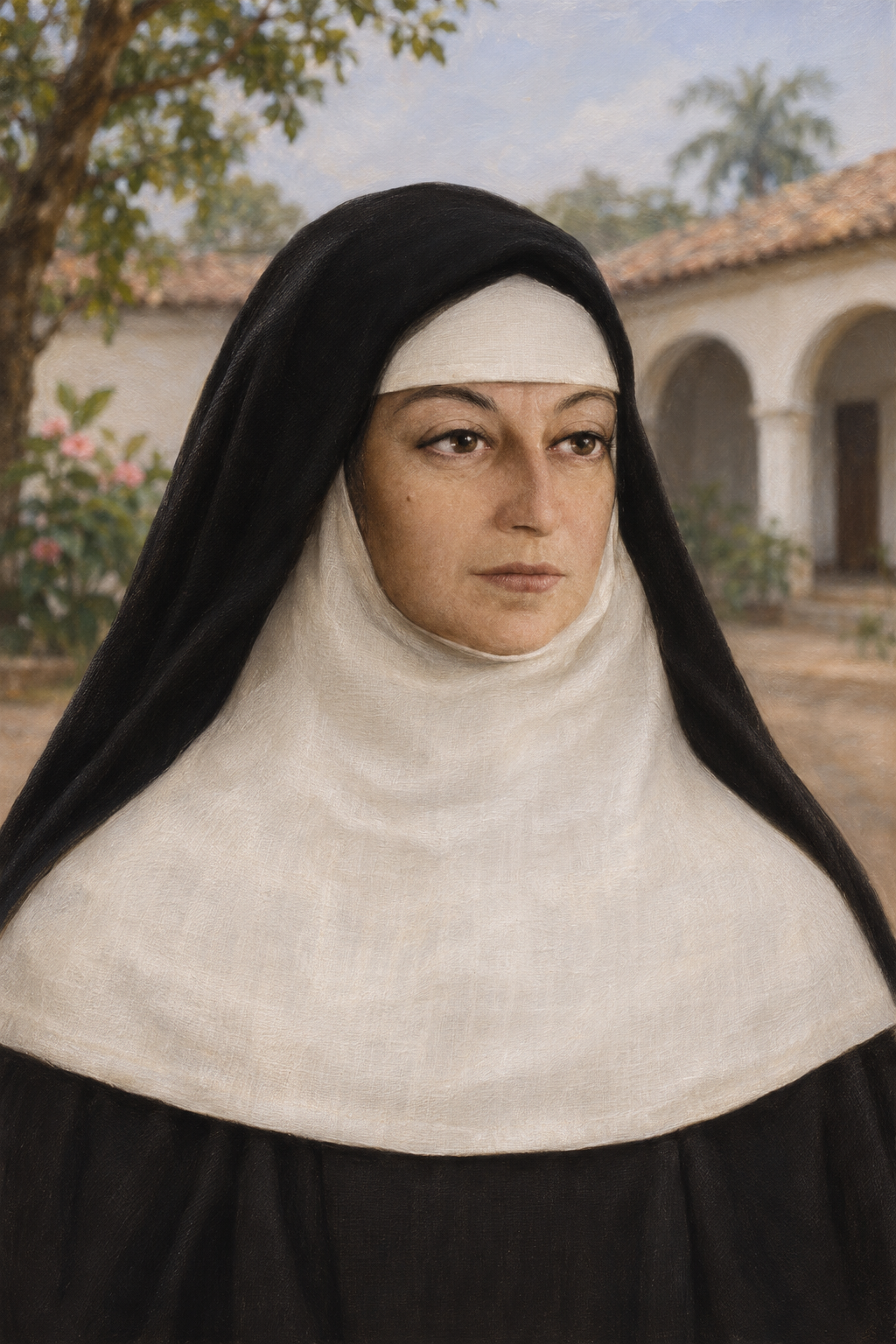
About Bárbara Maix
Bárbara Maix began her work among young women looking for employment in Vienna and carried that concern for vulnerable people to Brazil. Born in Vienna on 27 June 1818, she grew up in a family affected by poverty, illness and bereavement. Her father worked at the imperial palace, while the household experienced serious hardship. By the age of fifteen she had lost both parents. Catholic faith and the support of her surviving family belonged to the setting in which she began considering a life of service.
In 1843 she opened a residence intended to receive working women and women without employment. Her concern was practical: newcomers to a large city could struggle to find secure work and a place to live. She also hoped to form a religious community. The group’s plans encountered restrictions on new foundations, and the political upheaval of 1848 made their position more difficult. Their eventual departure grew from those circumstances, rather than from a journey originally planned as a mission to Brazil.
Redemptorist historian Charles Hergenroeder traces both support and opposition within the church. Father John Nepomucene Pöckl encouraged Bárbara, but his involvement brought conflict with his own superiors, and the Vienna archdiocese opposed the new congregation. Civil authorities could approve assistance for domestic servants while refusing approval for a religious institute. This distinction mattered to the women trying to live and work together. The obstacles included disputes about authority, financial support and the character of their proposed community.
During the revolutionary unrest of 1848 the residence was searched and suppressed. Bárbara and her companions sought temporary refuge, then prepared to leave Europe. Their intended destination was North America. After waiting in Hamburg for a suitable passage, they accepted a ship bound for Brazil instead. Hergenroeder records their arrival in Rio de Janeiro on 9 November 1848 and the local bishop’s welcome. A community whose work had begun in Vienna now faced the need to establish itself in a different language and society.
In Rio de Janeiro on 8 May 1849, Bárbara and her companions received the religious habit and made vows before the bishop. The congregation became known as the Sisters of the Immaculate Heart of Mary. The apostolic letter also records her return to Europe and an audience with Pope Pius IX in 1852, which encouraged the enterprise. She returned to Brazil and continued the work there. Her religious name, Maria Bárbara of the Most Holy Trinity, expressed the consecrated life within which she understood that service.
The congregation’s own history remembers her move to Rio Grande do Sul and work at the Asilo Nossa Senhora da Conceição in Pelotas. Its account also links her later years with Rio de Janeiro and the school of Nossa Senhora do Amparo in Petrópolis. These settings broadened the early concern for women without secure work into education and care for children. The ministry took different institutional forms, while remaining directed toward people who needed protection, opportunity and material help.
The homily prepared for her beatification emphasized that breadth of service. Cardinal Angelo Amato recalled schools and institutions for orphaned or abandoned children, education for young women and care for sick people during epidemics and conflict. He also remembered difficulties within the community, including division and humiliation. His account placed forgiveness and continuing charity beside the visible achievements. The woman being honored was remembered through the relationships that tested her as well as through the institutions associated with her name.
The same homily associated that perseverance with trust in God and devotion to the Heart of Mary. Its published excerpts recall her encouraging the sisters to entrust their suffering and labor to Mary, even when they had no money to offer. The message reflects the financial limitations and personal difficulties that accompanied the ordinary work and responsibilities. It presents prayer as part of the community’s response to hardship, within the responsibilities of education, care and life together.
Bárbara died in Catumbi, Rio de Janeiro, on 17 March 1873, aged fifty-four. Her congregation records her beatification in Porto Alegre on 6 November 2010 and continues to preserve her memory at the São Rafael sanctuary and memorial. The life remembered there connects an Austrian beginning with a sustained Brazilian mission. Visitors encounter the memory of a founder whose companions and successors continued work in education and service after her death, rather than a life confined to the moment of founding.
At the beatification, Amato’s prepared homily was read by Archbishop Dadeus Grings because the cardinal could not attend. The Brazilian bishops’ greeting welcomed the recognition and emphasized a life given in service to people in poverty. The ceremony thus brought attention back to the practical work with which the community had begun. Bárbara is honored by the Catholic Church as a blessed religious founder; her permitted feast is 6 November.
Wondering how to weigh the stories and sources? Learn how to read a saint biography.