Biography
Bega of St Bees
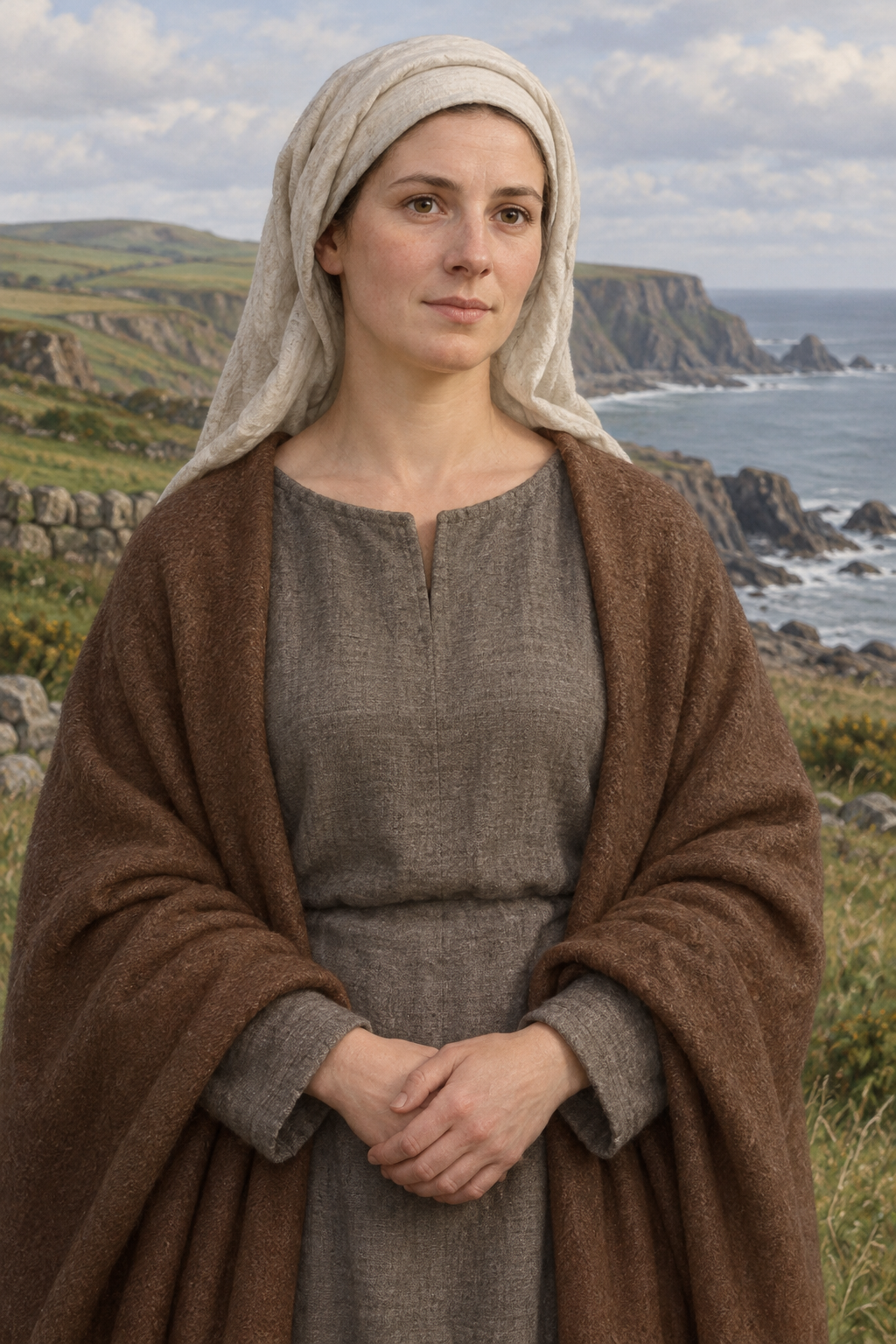
About Bega of St Bees
Bega is remembered through the medieval devotion centered at St Bees in Cumbria. The priory’s records name her as a holy virgin. One charter records an oath by Eda, daughter of Ivo the smith of Ravenglass, sworn on Bega’s bracelet. Such evidence makes the cult and its place in local religious life visible, while supplying little dependable information about the woman commemorated.
The later Life presents her as the daughter of an Irish king, devoted to Christ and reluctant to marry. Its opening describes a heavenly visitor who gives her a bracelet marked with a cross. This is a devotional story, rather than a contemporary account of her childhood. Its author acknowledges that much of the older record had passed from memory and explains that he gathered material for the edification of the Church.
John M. Todd’s study begins with the documented cult and works back toward the uncertain person behind it. He distinguishes the Bega of St Bees from the stories of Begu and Heiu that the Life brought together. He also examines the possibility that the name of a holy bracelet was interpreted as a saint’s name. The evidence does not settle that question. Todd offers a later historical setting in which parts of the story could have arisen, without claiming that this establishes a true biography.
The University of Glasgow’s catalogue likewise preserves several possible explanations of her identity. It records proposed connections with other saints and the argument that the cult began with an arm-ring. These possibilities remain distinct from an established identification. The named devotion at St Bees can be described more securely than Bega’s birthplace, lifespan or family.
Her name continues in the parish church dedicated to St. Mary and St. Bega. The Church of England’s parish record describes a building with much of its medieval fabric still standing and local displays explaining the history of the priory and village. Those are witnesses to continuing remembrance. They do not make the later princess story a documented personal life.
A Catholic reference records her September 6 observance in the Diocese of Lancaster. Other dates occur in medieval and later accounts. Her memory belongs to a long history of devotion whose surviving records are stronger than the life story attached to them.
Wondering how to weigh the stories and sources? Learn how to read a saint biography.