Biography
Benedict Joseph Labre
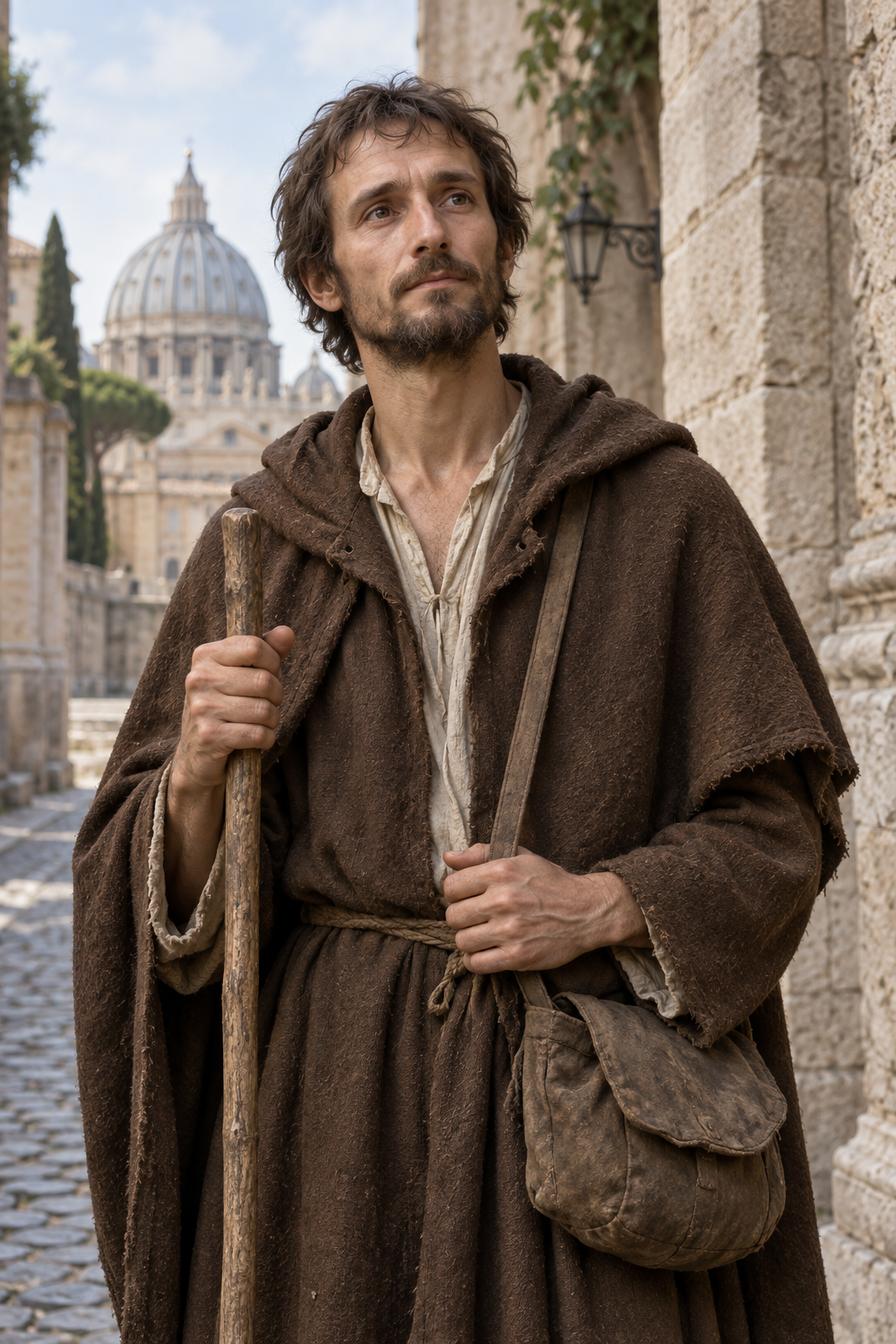
About Benedict Joseph Labre
Benedict Joseph Labre was born at Amettes in northern France on 26 March 1748. He sought monastic life as a young man, but several attempts ended without profession, including a stay cut short by illness. These experiences are better described as discernment than as personal failure.
Labre eventually made pilgrimage rather than enclosure his settled vocation. The Dicastery describes travel across Europe with few possessions, sustained by charity that he also shared. That documented pattern can be retained without romanticizing hunger, exposure, or lack of shelter.
An older Catholic reference, drawing on his confessor's biography and beatification material, places him at Sept-Fonts in 1769 and follows later pilgrimages before six final years centered in Rome. The underlying process files were not reviewed, so these remain claims of a signed synthesis rather than direct archival findings.
John Paul II described Labre as living without a fixed abode among ruins near the Colosseum and dying in a poor back room nearby. The homily is pastoral, but it provides an official account of his final Roman setting without inventing a permanent residence.
The reference account says that on 16 April 1783 Labre collapsed at Santa Maria ai Monti and died in a neighboring house. A modern profile should neither prescribe his austerities nor reduce homelessness to picturesque devotion.
Pius IX beatified Labre in 1860, and Leo XIII canonized him in St Peter's in 1881. The Catholic memorial is April 16. These institutional facts do not independently verify every devotional episode.
Benedict Joseph Labre remains significant because his path did not fit the monastic forms he first pursued. He fashioned a lay vocation from pilgrimage, prayer, radical material poverty, and life among other poor people. His story can invite attention to people without secure housing only when told without turning deprivation into an aesthetic or assuming that involuntary homelessness is spiritually desirable.
Wondering how to weigh the stories and sources? Learn how to read a saint biography.