Biography
Blaesilla
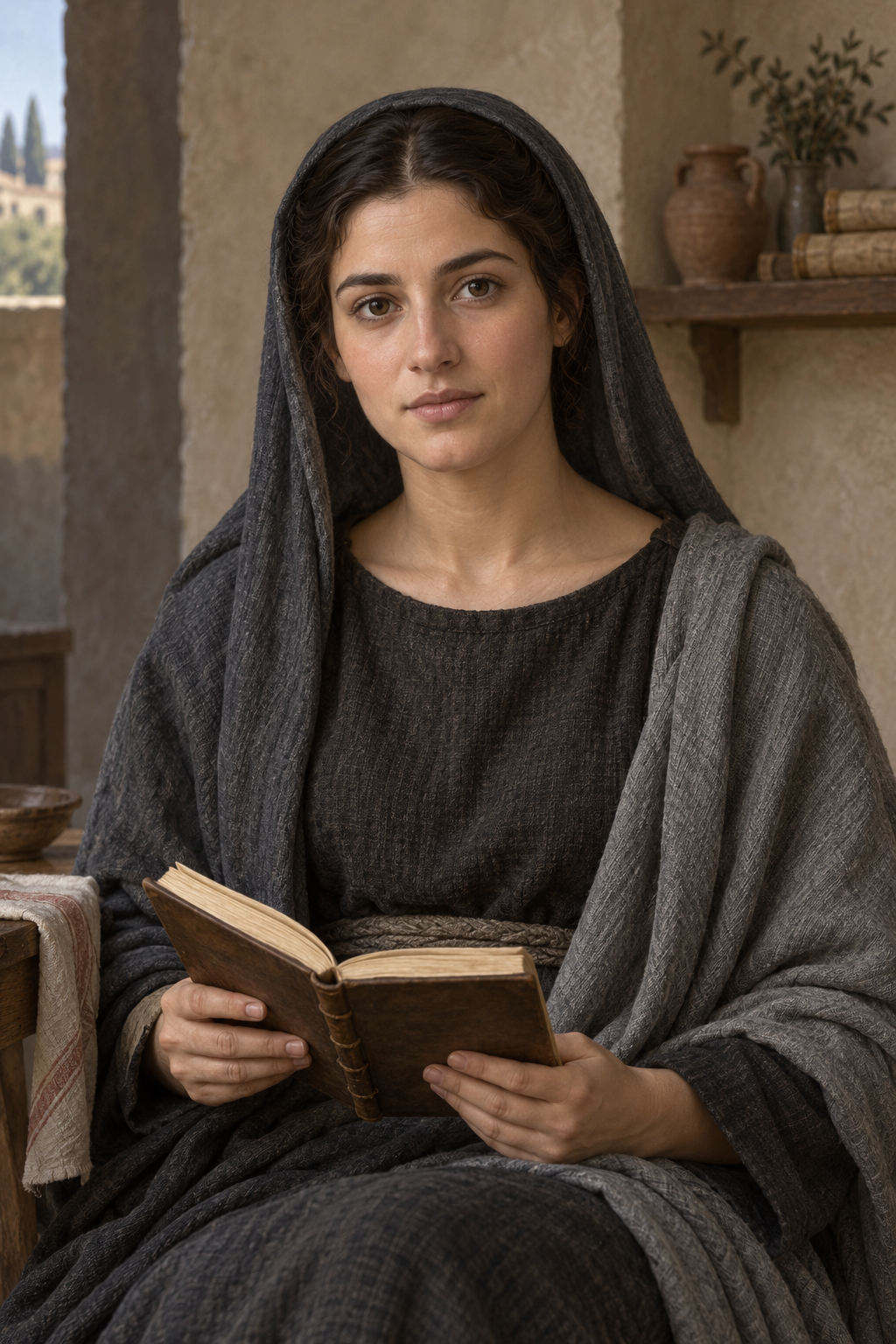
About Blaesilla
Blaesilla was a young Roman widow associated with Jerome and the study of Scripture. His letter after her death praises her Greek, Latin and learning of Hebrew. Her life ended early, leaving a grieving mother, Paula, and a controversy about the rigours of religious renunciation.
A later preface gives a particularly concrete trace of her interest in books. Introducing his Latin translation of Origen’s homilies on Luke, Jerome recalls that Blaesilla had asked him in Rome to translate a much larger collection of Origen’s writings on the Gospels. He says that the task exceeded the strength, time and labour available to him. Her request was therefore more ambitious than the work he was then supplying to Paula and Eustochium. The passage preserves Blaesilla as someone who wanted access to extensive biblical interpretation. It also records a limit: the desired collection was not a completed translation made for her.
Her death became part of a wider argument over ascetic life. In a study of Jerome’s writing, Johanna Lamprecht notes that renunciation challenged expectations about marriage, family continuity and the use of inherited wealth. She reads his response to Paula’s bereavement as a defence of his spiritual authority as well as a letter of condolence. The shift from praise to criticism of the mother’s grief belongs to that argument. It cannot provide a neutral account of either woman’s feelings. Lamprecht’s interpretation helps explain why the surviving portrait of Blaesilla is inseparable from the writer who preserved it.
The same scholar’s later study examines the hierarchy Jerome constructed around sexual renunciation. In that scheme, widows and consecrated virgins occupied different places. Blaesilla appears as a widow, while her sister Eustochium is presented as a virgin. The distinction matters when describing her vocation. Reverence for her memory does not change the kind of life recorded for her. Lamprecht also places these categories within an ascetic movement that could offer women a different social and religious standing. They describe a particular ancient ideal, rather than an uncomplicated measure of a person’s worth.
The Catholic reference Nominis remembers her as a saint with a local observance on 22 January. Its brief record associates both her birth and death with Rome. That later remembrance sits alongside the more difficult history of her reception. Lamprecht’s study cautions that literary praise of women in Jerome’s circle could also promote his own theological and scholarly programme. Blaesilla remains significant as a named participant in that world of scriptural learning, while the controversy surrounding her death calls for careful reading of its surviving testimony.
Wondering how to weigh the stories and sources? Learn how to read a saint biography.