Biography
Blandina of Iași
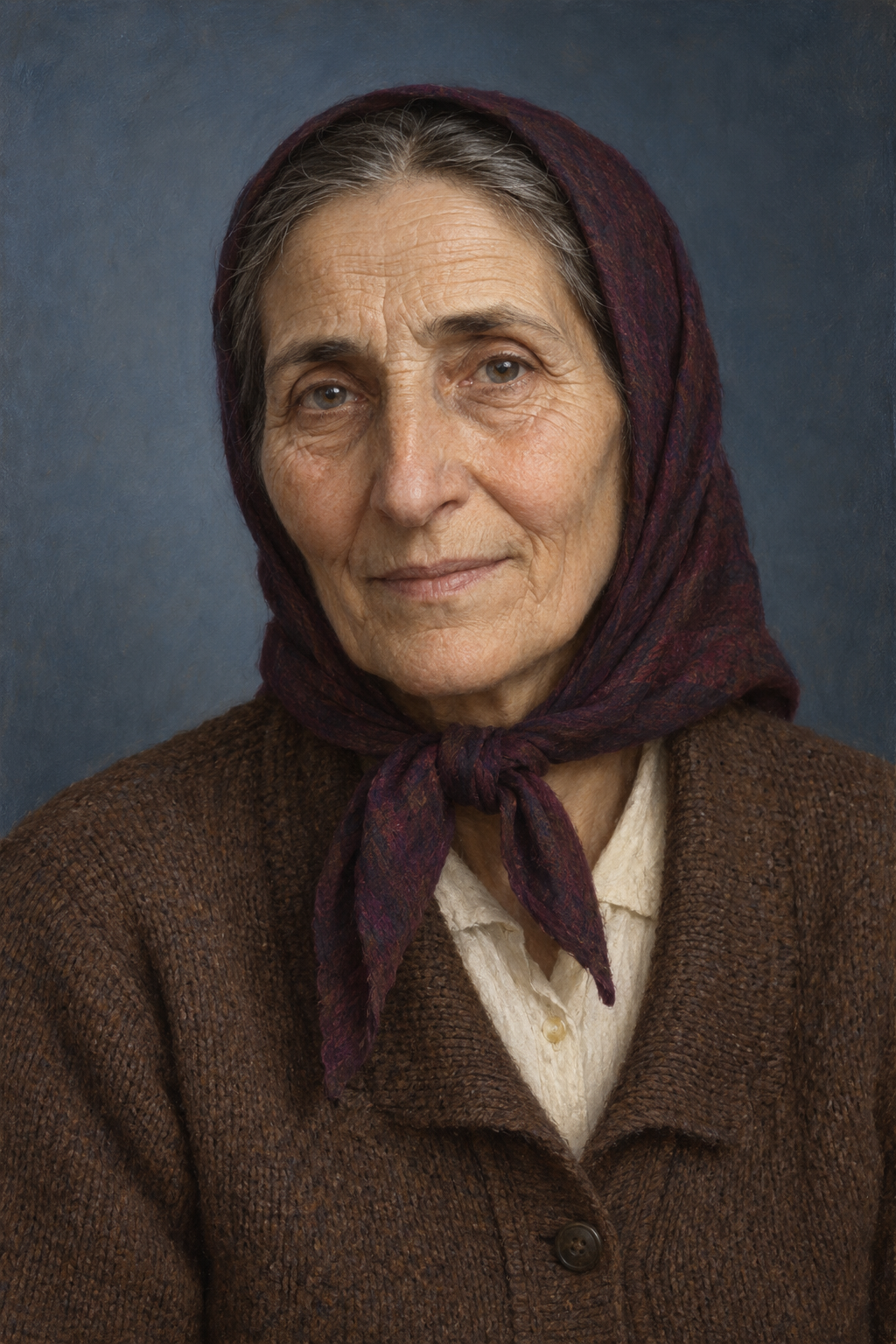
About Blandina of Iași
Blandina of Iași was a Bessarabian teacher, wife, and mother who survived Soviet imprisonment and exile. She married Gheorghe Gobjilă and had a son, Vladislav. Arrested in 1941, she later learned that her husband had died in captivity.
An archival list published by Moldova’s National Museum of History provides another trace of the couple. It names Blondina Gobjilă, a teacher born in 1906, immediately before Gheorghe Gobjilă, an engineer. Both entries give Căușenii Noi in Tighina as their last residence. The editors identify the list as a record of people deported during the Soviet occupation of 1940–1941, compiled under an order issued in 1942. It was preserved in Moldova’s National Archives and reproduced without correcting its place names or arrangement.
The entry gives Cernoleuca in Soroca as Blondina’s birthplace. That detail conflicts with the church account, and the surviving descriptions consulted here do not resolve the difference. The archival list supports the record of repression, but it does not supply a narrative of her imprisonment or justify treating every detail of later remembrance as independently confirmed.
Her church biography describes prayer with imprisoned nuns and help for sick prisoners. Release from prison in 1949 did not end her enforced residence in Siberia. She received permission to leave in 1956 and reached Romania in 1957.
Her memoir also contains an antisemitic generalization about Jews welcoming Soviet forces. That passage reflects the narrator’s prejudice and is not reliable evidence about an entire community. In Iași she cleaned the metropolitan cathedral and prayed at Parascheva’s shrine. The canonization document recalls her leaving her son’s household after refusing to abandon her religious practice.
Mircea Stoleriu, later a priest, remembered her arrival in his family’s crowded home when he was about twelve. Six people already shared two rooms. Blandina carried little luggage, and he recalled her first greeting as a gentle touch on his head. They prayed and sang together; he remembered her becoming part of their family rather than a passing guest.
Stoleriu also remembered practical care for the children when his mother was in hospital. Blandina arranged for them to work in a vineyard so they would have an occupation and earn some money. She accompanied them on a hospital visit and asked them to pray for their mother. His account places these ordinary responsibilities beside religious experiences that he interpreted as miracles.
He recalled several women gathering around her to help at the cathedral and assist people in need. Within the household, she called his mother her daughter and the children her grandchildren. Their family language expressed the place she had come to occupy in their lives.
This account comes from someone who lived with her, recalling childhood many decades later. His recollections give a personal view of her later years. She died on May 24, 1971.
Her memory was being passed to schoolchildren well before her canonization. In May 2010, pupils from the Bogdan Petriceicu Hasdeu and Ion Creangă schools attended a memorial service at her grave in Iași’s Eternitatea Cemetery. Religion teacher Angela Roșu initiated the commemoration, and Stoleriu conducted the service. The report describes a poem about Blandina and a distribution of food, toys, and sweets by pupils. Teachers linked the remembrance with practical help for children from single-parent households or residential care. This was a local act of remembrance, years before the church formally included her in its calendar.
Her remains were exhumed in Iași in April 2026 as part of the church’s preparations for public veneration. At the ceremony, Bishop Veniamin recalled her collecting help for struggling families and receiving requests for prayer from people who trusted her.
After the exhumation, her remains were placed in specially prepared boxes and taken to the old Saint George Cathedral for prayer. The report identifies this as part of the church’s liturgical and administrative preparation for her veneration.
That month, a group for clergy children in the Archdiocese of Iași chose her as its patron. This is a specific community’s dedication, rather than a designation covering all priests’ children. The local proclamation followed at the metropolitan cathedral on May 17, 2026. Seven bishops celebrated the liturgy under Metropolitan Teofan, and Bishop Nichifor presented the synodal document. Patriarch Daniel’s message interpreted her willingness to undertake humiliating work in prison as service to others. Teofan emphasized her faith through the successive settings of Basarabia, Siberia, Bucharest, and Iași. These speeches explain how the church received her memory; they are expressions of ecclesial judgment rather than new eyewitness accounts of her imprisonment.
On May 24, 2026, a church in Cimișlia was consecrated with Blandina as an additional patron alongside Nicholas and Eudokia. Her commemoration thus links communities in Romania and the Republic of Moldova. A reliquary containing a fragment of her remains was presented for veneration at the Cimișlia ceremony. Clergy and worshippers gathered from communities on both sides of the Prut. The additional dedication connected a particular parish’s worship with the public recognition of a woman born in Bessarabia who spent her final years in Iași.
Wondering how to weigh the stories and sources? Learn how to read a saint biography.