Biography
Bridget of Sweden
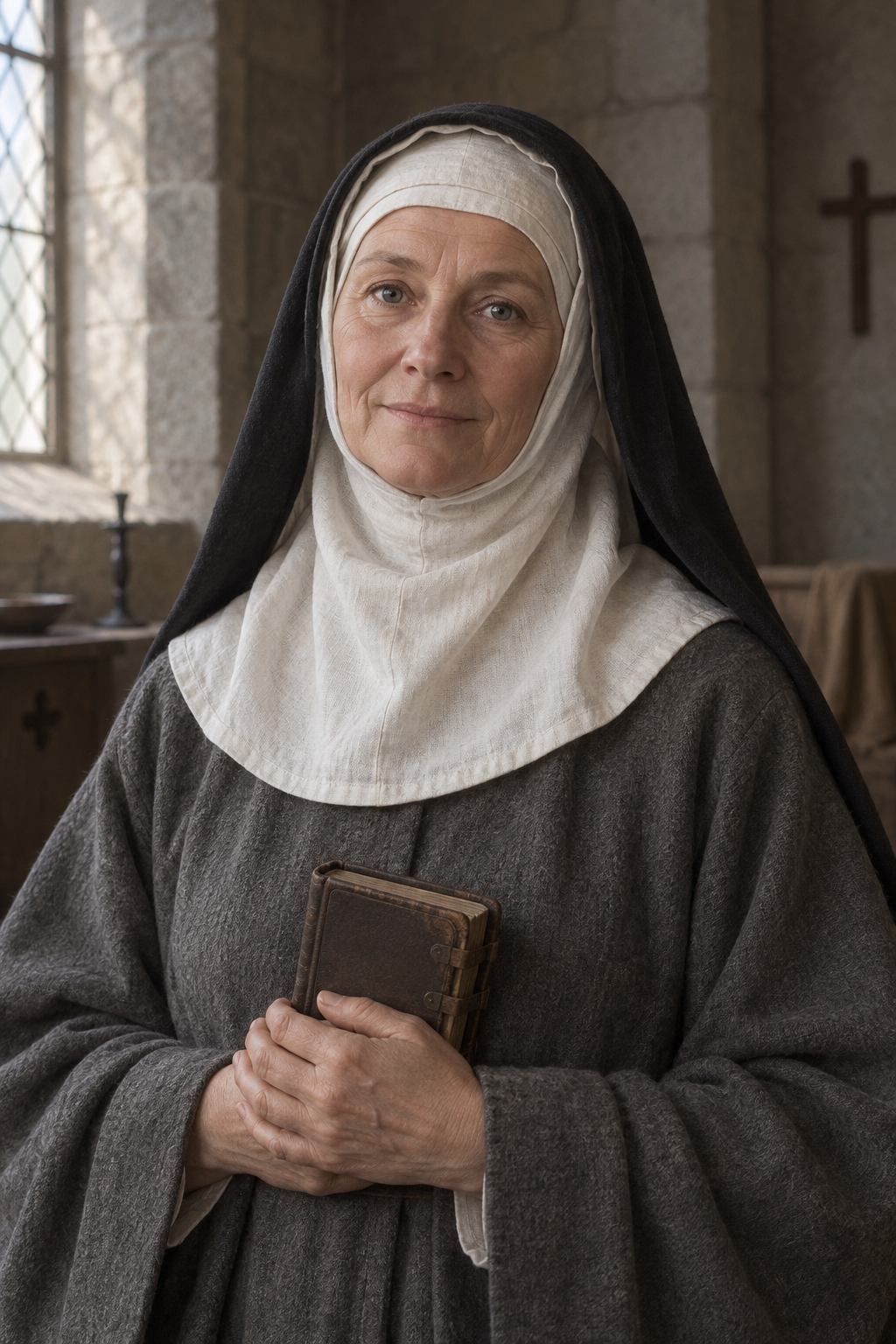
About Bridget of Sweden
Bridget of Sweden grew up among people who helped govern her country. She was probably born at Finsta around 1303. Her father, Birger, was a lawman and royal councillor, and her mother, Ingeborg, belonged to a powerful family. Known in Swedish as Birgitta Birgersdotter, she learned to read and write and, after her mother's death, spent part of her childhood with an aunt. She married Ulf Gudmarsson while still very young. Their household at Ulvåsa eventually included eight children, and managing its affairs formed a substantial part of her early adult life.
The family's resources also made practical care for others possible. John Paul II's account recalls a hospital established by Bridget and Ulf, where they attended the sick themselves. It describes Bridget serving poor people personally rather than leaving every task to household servants. Her religious life took shape within marriage and parenthood, alongside the work of educating children and caring for neighbors. These responsibilities matter to her story: the woman later remembered for visions and a religious foundation had already spent many years running a home.
Pilgrimage opened another path beyond the household. Bridget and Ulf traveled to Santiago de Compostela in 1341. After his death in 1344, she lived near the Cistercian monastery of Alvastra for several years. There she developed plans for a new religious community and the rule by which it would live. Her next major journey brought her to Rome in 1349. Seeking support for the foundation would become a long undertaking, extending through much of the remaining quarter-century of her life.
Widowhood did not mean that Bridget herself became a nun. Benedict XVI explicitly distinguishes her life near Alvastra from religious profession. She gave away possessions and devoted herself more fully to prayer, while remaining a laywoman. Her reported visions increasingly shaped that life. In the writings that preserve them, Christ and Mary speak with her, and the suffering of Christ receives sustained attention. These encounters are presented as her religious experience, with the tenderness and demands of divine love recurring throughout the collection.
Bridget's voice reached readers through the work of several helpers. Peter Olovsson, a monk of Alvastra, served as her secretary; another Peter Olovsson, associated with Skänninge, became her spiritual adviser. Her Swedish accounts were translated into Latin, and Alfonso of Jaén helped shape the collected Revelations. The books therefore carry both her testimony and the labor of people who recorded, translated, and arranged it. This collaboration allowed words first spoken or written in Sweden to circulate among readers far beyond her own language.
Her message could be uncomfortable for those in authority. Uppsala Cathedral's account remembers her challenging rulers and church leaders who used their power at the expense of poor people. She called for changes in conduct, not simply declarations of religious loyalty. Such criticism brought the concerns of vulnerable people into her dealings with powerful men. Her language could be severe, including warnings of judgment. The same woman associated with care for the sick could speak sharply when she believed leaders were failing those entrusted to them.
At Vadstena, the future monastery was to occupy a former royal palace. The Swedish National Property Board traces the building from its thirteenth-century royal beginnings to the gift intended for Bridget's foundation in 1346. Its account also preserves her vision of turning a place built through poor people's labor into a house marked by humility and usefulness. That purpose gave the proposed change of use a moral meaning as well as a practical one. The palace's rooms would serve a different kind of household, dedicated to communal religious life.
Approval came slowly. Urban V authorized the foundation in 1370, under the Rule of Augustine. That decision was a step toward Bridget's goal, not the opening of the completed monastery.
Her plan brought women and men into distinct communities under an abbess. The monastery at Vadstena was inaugurated in 1384, after her death. The long interval between the royal gift and the community's opening shows how much of this undertaking depended on others carrying it forward.
Bridget's years abroad also included visits to Italian shrines and a final pilgrimage to the Holy Land in 1371–1372. She died in Rome in 1373. Centuries later, John Paul II named her a co-patroness of Europe. He honored her holiness while distinguishing that recognition from endorsement of every individual revelation attributed to her.
The foundation's legacy includes ordinary working arrangements as well as books and churches. The Swedish History Museum describes Bridget's concern that sisters doing textile work should have good light and suitable chairs. She favored simple everyday clothing while allowing richly made textiles for worship. Such details bring the founder close to the daily work of the community she hoped to establish: prayer shared space with hands, tools, fabric, and the need to see a task clearly.
Wondering how to weigh the stories and sources? Learn how to read a saint biography.
Prayers for Bridget of Sweden
Bridget of Sweden: sourced prayer excerpt
Visa mig, Herre, din väg, och gör mig villig att vandra den. Amen.