Biography
Carlos Manuel Rodríguez Santiago
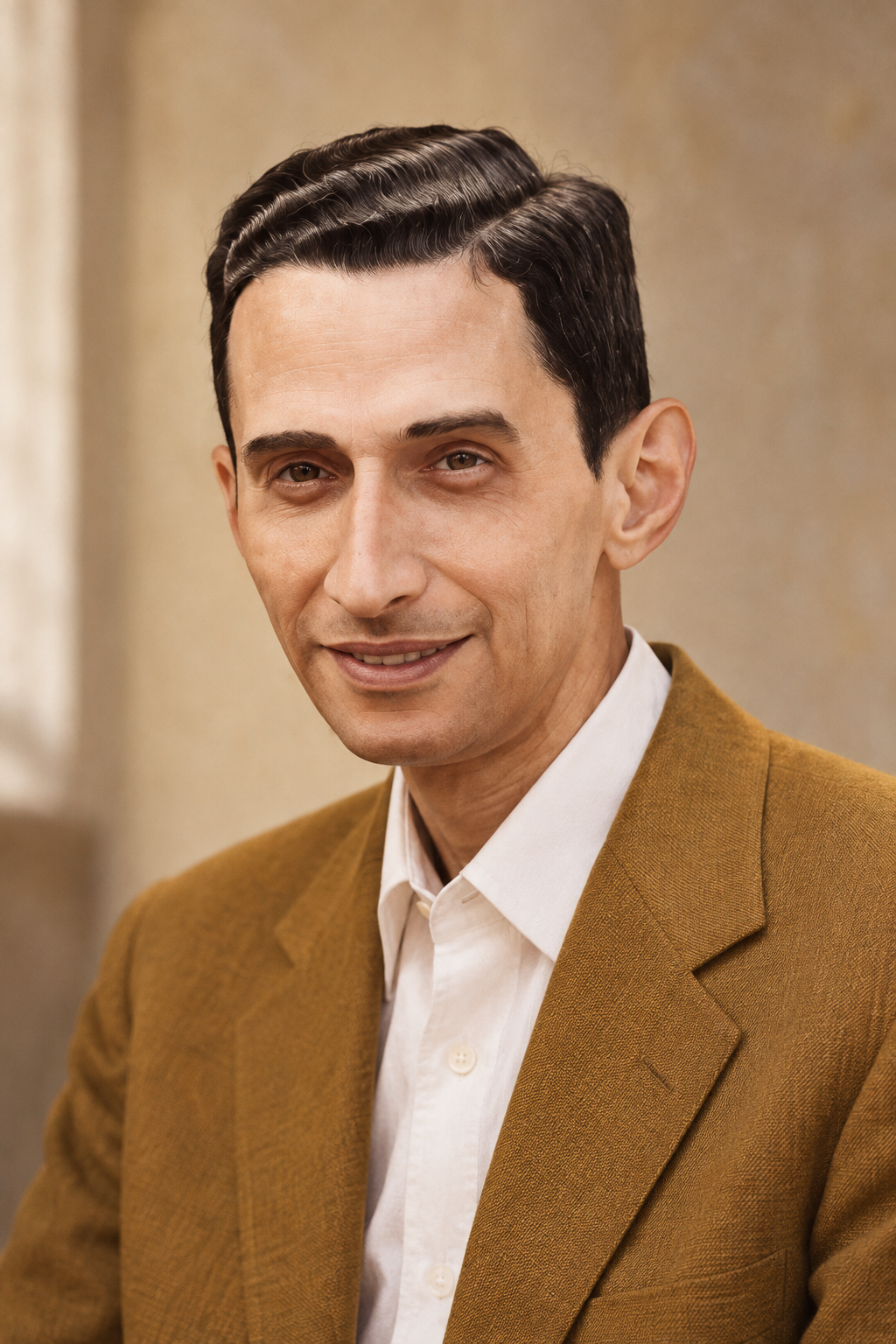
About Carlos Manuel Rodríguez Santiago
Carlos Manuel Rodríguez Santiago grew up in Caguas, Puerto Rico, and developed a lasting interest in the Church’s worship.
When he was six, a fire destroyed his family’s home and his father’s shop. The family moved in with his maternal grandparents, and his grandmother became an important presence in his religious upbringing.
Illness repeatedly interrupted his schooling. He completed secondary school and later enrolled at the University of Puerto Rico, but his health prevented him from continuing beyond his first year. He kept reading and learning independently. Alongside office work, he translated articles and prepared the mimeographed publications Liturgia and Cultura Cristiana. He also helped organize a parish choir and discussion groups.
At the Catholic University Center, he worked with students and teachers to connect Christian faith with intellectual and everyday life. John Paul II later described this work as a lay apostolate within the university community.
Rodríguez advocated fuller participation in worship, use of the vernacular and renewed attention to the Easter Vigil.
His work extended beyond the university circle into parish life. A study excerpt published by María, Madre de la Misericordia parish identifies Sagrado Corazón in Santurce and Madre Cabrini and San Antonio in Río Piedras among the places where he promoted renewal. He visited parishes with others who shared this concern. The account records his preparation of the Easter Vigil at Madre Cabrini in 1955–1956 and a written appeal sent to Puerto Rican parish priests in 1958, urging them to preserve the meaning of the vigil.
His own writing helps explain what he hoped this participation would mean. An excerpt from his writing Fe y vida, reproduced by the National Eucharistic Revival, presents Christian life as a share in the new life opened by Christ’s death and resurrection. He distinguished that life from merely copying outward actions or collecting unrelated religious practices. In the same passage, he identified the liturgy as the means through which this union with God becomes real in believers. A letter to Rafael Ángel, quoted in the same article, expresses his desire that others should share in Christ’s Easter life. These excerpts place his teaching about worship within his wider concern for the lives of the people he taught.
Recollections gathered for his beatification also describe prayer at home. His brother, Abbot José, remembered an image of Mary in a prominent place on the bedroom altar and Carlos reminding the family of Marian feasts. Magdalena Alicea, who had received catechesis from him and visited frequently, recalled bringing flowers for the image and seeing him replace its candle when it burned down. Manuel Domenech remembered him praying the rosary and credited him with introducing him to Mary as presented in Scripture. These memories were reproduced in El Visitante by Pablo E. Negroni, a member of the circle associated with his cause. His sister Haydée remembered his faith as something expressed naturally in conversation and daily life. She connected his confidence as a teacher with the prayer, scriptural reflection and liturgical celebrations that sustained him.
His understanding of Christian life centered on Christ’s resurrection. At his beatification, John Paul II emphasized both this Easter spirituality and his conviction that holiness was a calling for every baptized person.
His health deteriorated, and he died on July 13, 1963, at forty-four.
The Catholic Church beatified him on April 29, 2001.
The following day, John Paul II acknowledged the lay circles that had worked to bring his cause forward.
A report on a later memorial ceremony identifies his place of death as San Jorge Hospital in Santurce. In May 2001, Archbishop Roberto González Nieves dedicated a chapel there in his memory, with members of Rodríguez’s family and the circle promoting his cause present. His physician, Gaspar Encarnación, read the Easter Proclamation at the dedication. The ceremony thus recalled the vigil that had occupied so much of Rodríguez’s teaching.
His influence also appears in accounts of the community Jesús Mediador. In a study of Catholic renewal in Puerto Rico, Marinilda Fuentes Sánchez relates that the women who began that community met Father Álvaro de Boer through Rodríguez at the Catholic University Center. The community’s published recollections credited Charlie with preparing them to reflect on the liturgy and the meaning of Easter before they encountered the Second Vatican Council’s reforms. Their later work joined worship with service among people with limited resources. Their recollections show how his teaching remained part of the community’s account of its beginnings.
In 2021, Puerto Rico’s bishops returned to his example in a pastoral letter written during the COVID-19 pandemic. They recalled how recurring illness had interrupted his activities without ending his commitment to teaching and service. Their letter connected his attention to Christian formation with the needs of families and communities facing uncertainty. His writings and work with small groups remained a reference point for lay participation in the Church.
Wondering how to weigh the stories and sources? Learn how to read a saint biography.