Biography
Casimir of Poland
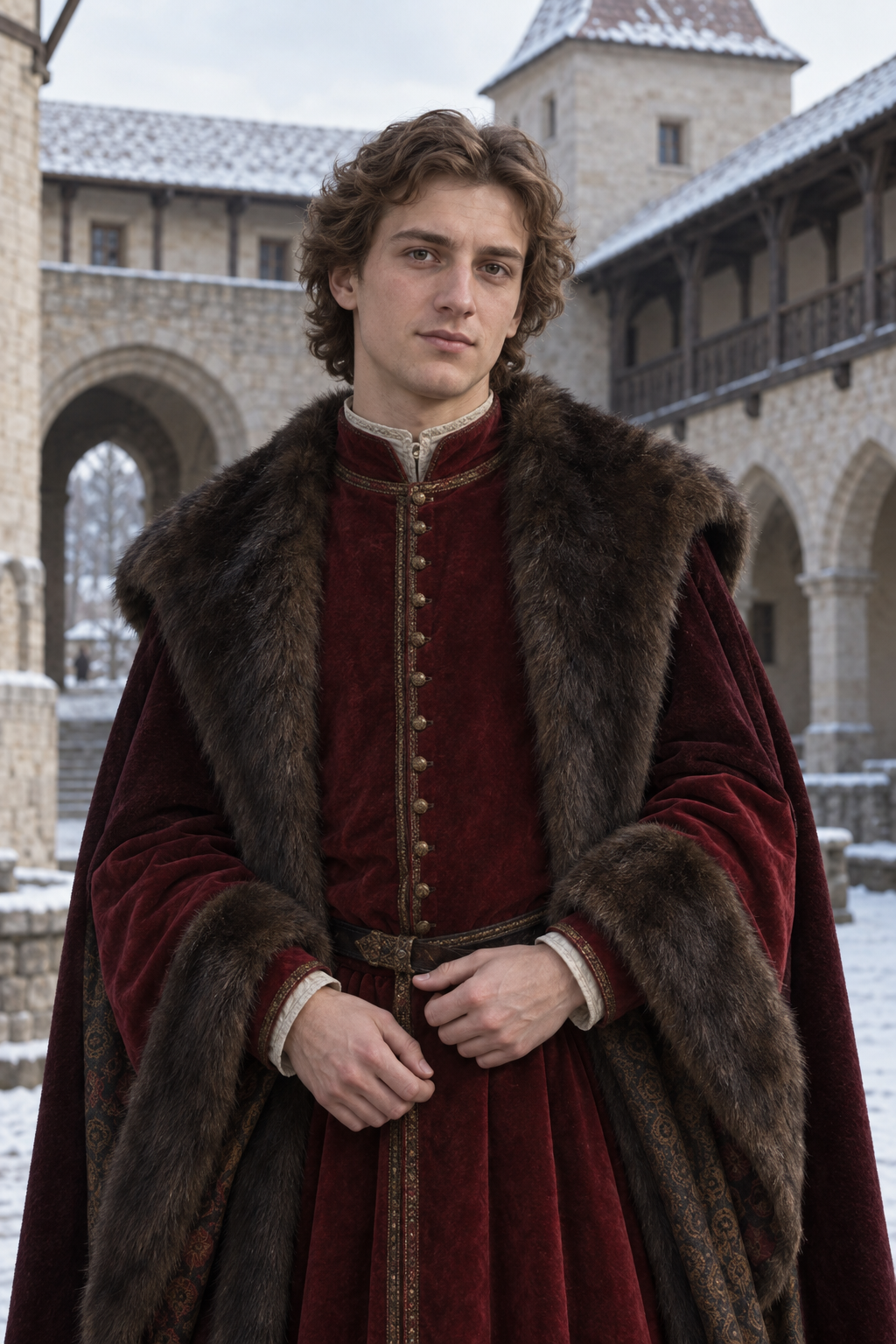
About Casimir of Poland
Casimir Jagiellon was born at Wawel Castle in Kraków on 3 October 1458, the second son of Casimir IV and Elizabeth of Habsburg. His father was king of Poland and grand duke of Lithuania, so the children grew up within a dynasty whose responsibilities crossed both realms. Casimir studied with his brothers under the historian and canon Jan Długosz and the humanist Filippo Buonaccorsi, known as Callimachus. Their lessons prepared them for public office as well as court life.
The prince learned Polish, Latin, and German and received humanistic and military education. A scholarly study notes that two Latin speeches from his youth survive, evidence that he was being introduced to public ceremony before adulthood. Such glimpses of his education are valuable because Casimir left little writing in his own hand. Much of what later generations said about his inward life came through witnesses, memorial writing, and religious biography rather than his own words.
Hungarian opponents of King Matthias Corvinus invited the Jagiellonians to support a competing claim to the Hungarian throne; his father sent the young prince with a Polish force in 1471. The expedition ended without a crown for Casimir. The experience formed part of his preparation for rule, but its exact effect on his character is an interpretation rather than a recorded confession by the prince.
His elder brother Władysław had become king of Bohemia, leaving Casimir prominent in the family's plans for Poland and Lithuania. From 1474 he travelled repeatedly to Lithuania with his parents and lived at times in Vilnius Castle. A study of royal itineraries associates his visits with Vilnius's role as a political center and places him there in 1479. The safer conclusion is that Vilnius became an important home and eventual center of his memory, while royal duties still took him elsewhere.
Casimir's clearest responsibility came between 1481 and early 1483, when his father remained in Lithuania and entrusted him with affairs in Poland. The work included courts, justice, finances, and military administration. Seven letters written on his behalf survive from this period, offering a closer view of his public role than later portraits of a prince apart from government. Records from May 1483 also refer to financial books that had belonged to the Polish vice-chancellor and passed into Casimir's hands. These are modest traces, but they support describing him as an active administrator rather than assuming he merely held an honorary title.
The prince's religious life is known through a different mixture of evidence. The first dedicated biography was written by papal nuncio Zacharias Ferreri in 1520, more than three decades after Casimir died, and published the following year. Ferreri questioned people who had known him, but his work was written for a campaign seeking church recognition and belongs to the genre of hagiography. This distinction does not dismiss his devotion; it clarifies how confidently particular scenes can be told.
Catholic memory associates Casimir with concern for poor people, prayer, and self-restraint. The Roman Martyrology recalls generosity to the poor and devotion to the Eucharist and Mary. Stories of prayer at the doors of a closed church and advice to his father on justice appear in Ferreri's account as reported by the historian Čiurinskas; they should be introduced as testimony gathered after Casimir's death. The Lithuanian encyclopedia calls the proposed refusal of marriage a matter of tradition and also mentions ill health, leaving no secure single motive.
In 1484, serious illness interrupted Casimir's journey from Lithuania toward a parliamentary meeting in Poland. He remained at Grodno Castle and died there on 4 March, aged twenty-five by completed years. The Roman Martyrology calls the illness consumption, but the surviving evidence cannot supply a modern clinical diagnosis. His body was buried in Vilnius Cathedral.
His cult did not begin with the later account of a miraculous appearance at the 1518 relief of Polotsk. A papal indulgence granted in 1501 for visitors to the chapel containing his tomb shows that the site already drew attention. Wojtyska's study also finds no surviving basis for the often repeated claim that Leo X canonized him in 1521. In 1602 Clement VIII authorized his liturgical celebration in Poland and Lithuania. The Italian Bishops' Conference today lists his March 4 observance as an optional memorial in its own calendar. These developments belong to the history of his veneration, rather than to events Casimir himself experienced.
An image of Casimir made in 1600 and a second used in liturgical texts in 1603 show how artists helped make his cult visible before and just after Clement’s authorization. The hymn “Omni die” became associated with him, but its text was composed by Bernard of Morlaix in the thirteenth century; it is not Casimir’s own prayer. His significance rests in both a documented role in government and the continuing Catholic devotion centered on his life and tomb at Vilnius.
Wondering how to weigh the stories and sources? Learn how to read a saint biography.