Biography
Catalina de María Rodríguez
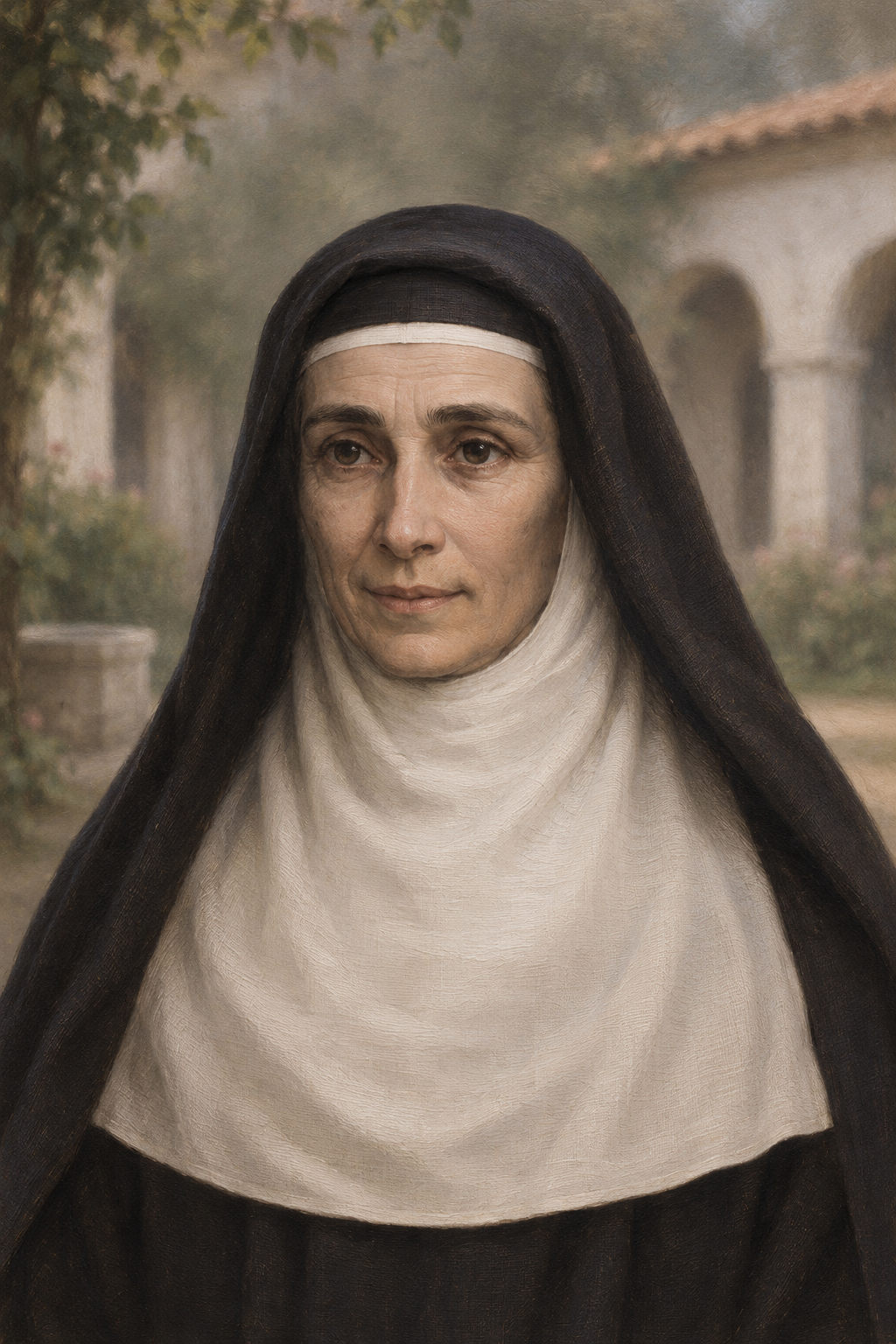
About Catalina de María Rodríguez
Catalina de María Rodríguez brought together the spiritual life of retreat houses and the practical education of women. She was born Josefa Saturnina Rodríguez in Córdoba in 1823. Her congregation’s biography remembers an early attraction to religious life that could not immediately be carried out. She took part in the Spiritual Exercises associated with the Jesuits and supported their work. Before she founded a religious community, however, she lived through marriage, the responsibilities of family life and bereavement. Those different experiences belong to the history of the woman later known as Madre Catalina.
In 1852 she married the widowed army officer Manuel Antonio Zavalía. She helped bring up his two children. The couple lived for a time in Paraná, where their own daughter died at birth, before returning to Córdoba. Zavalía died in 1865. Widowhood reopened the possibility of a religious vocation that had remained important to her. Her community’s account describes the proposed foundation as a house for retreats joined to a community of women who would support that work, teach religious subjects and help women learn practical skills.
The project did not take shape at once. The Dicastery’s biography places several years of attempts and difficulties between widowhood and the foundation in September 1872. Its central concern was a form of active religious life through which women could serve other women, especially those who were poor or vulnerable. The Spiritual Exercises remained a formative influence. This combination gave the proposed community a different shape from the enclosed religious life Catalina had known when young. The eventual foundation grew out of a long process of discernment and work rather than one sudden change of direction.
A historical study of Córdoba’s religious congregations identifies the foundation as the Hermanas Esclavas del Corazón de Jesús. It records the collaboration of the cathedral canon David Luque and the Jesuit José María Bustamante. Their roles included direction and the preparation of constitutions. The study places the sisters among locally founded communities especially concerned with women’s education. It records substantial growth by the end of Catalina’s life, with houses beyond the original foundation. This historical setting gives the story institutional substance alongside the congregation’s own account of its beginnings. The study records twelve houses and two hundred sisters by 1895.
The congregation remembers its expansion into the region served by José Gabriel del Rosario Brochero. At his request, a group of sisters crossed the Sierras Grandes in 1880 to help run a retreat house and a girls’ school. Education and the work of retreats therefore traveled together beyond Córdoba. The same institutional account describes the continuation of that mission through schools, retreat houses, homes for young people at risk and mission centers. These are distinct forms of service, linked in the congregation’s memory by Catalina’s original concern for spiritual formation and practical assistance.
The public Catholic account also remembers the way she governed the community. It describes concern for sisters, people employed in its houses and those who came in illness or need. In the report associated with her beatification, Cardinal Angelo Amato emphasized practical works of mercy and forgiveness. Such descriptions are the church’s assessment of her religious witness. They can be reported as that assessment without turning them into claims that every relationship was harmonious or that the difficulties of founding and sustaining a congregation disappeared.
Catalina died on 5 April 1896. Her Catholic recognition developed through a formal cause, and in May 2017 Pope Francis authorized the promulgation of a decree concerning a healing attributed to her intercession. The announcement identifies her as Josefa Saturnina Rodríguez and names the congregation she founded. The public decree notice does not itself provide a medical case history for independent assessment. What it establishes directly is a step in the church process that preceded her beatification later that year.
The beatification was celebrated in Córdoba on 25 November 2017, with Cardinal Amato representing the pope. AICA’s report describes the reading of the papal decree and the participation of members of the congregation and people connected with the cause. It also records the authorized liturgical memory on 27 November. At the conclusion, representatives of different missionary communities took part in a sending forth. The ceremony thus linked recognition of the founder with the work carried on by the religious family after her death.
Francis recalled the beatification the next day at the Angelus. He described Catalina as first married and then widowed, before she consecrated herself to God and devoted herself to the material and spiritual care of vulnerable women. In that concise account, the different parts of her life were held together.
Later recognition also extended beyond church ceremonies: a municipal tribute in Tucumán acknowledged the sisters’ continuing contribution to education. The lasting significance of Catalina’s foundation lies in this organized work of women teaching, accompanying and supporting others.
Wondering how to weigh the stories and sources? Learn how to read a saint biography.