Biography
Caterina Volpicelli
About Caterina Volpicelli
Caterina Volpicelli was born in Naples on January 21, 1839. The existing catalog stores Naples as both birthplace and death place, and this draft preserves both fields.
Her Neapolitan setting is important. Caterina's life belongs to a city where wealth, poverty, religious renewal, and social need stood close together.
The Vatican biography presents her as well educated and formed in a Catholic environment. The public page should let that formation matter without turning the introduction into a family genealogy.
Caterina's devotion to the Sacred Heart belongs at the center of the article. It was not only private piety; it shaped apostolic prayer, reparation, and charitable action.
That distinction should be clear for readers. The Sacred Heart was not a decorative theme added to her life, but the spiritual center from which service, formation, and social care flowed.
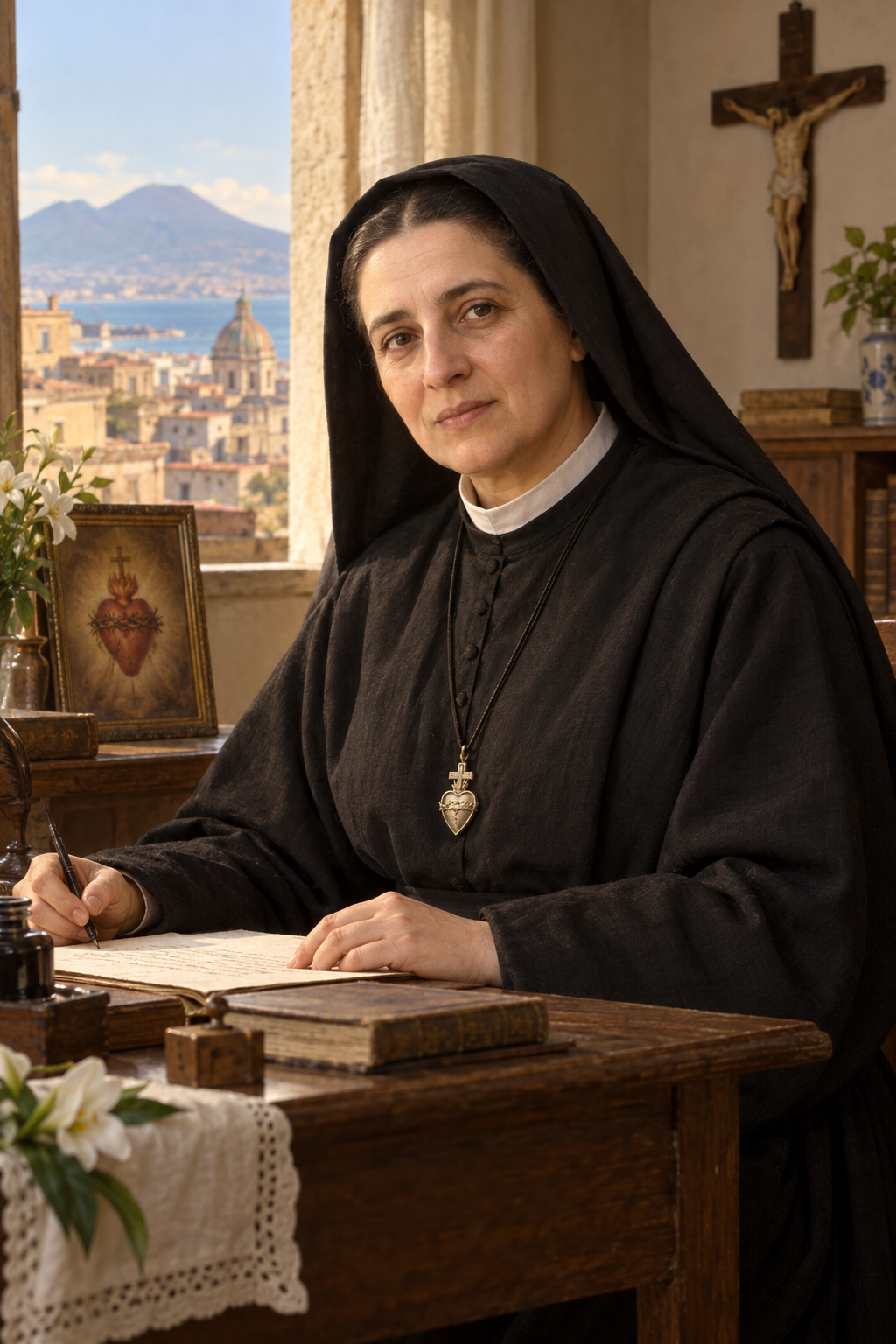
The artwork can show a restrained Sacred Heart devotional image or medal, but it should avoid an oversized glowing heart graphic. The visual cue should serve the history rather than overwhelm it.
Caterina founded the Servants of the Sacred Heart. The congregation's name should be included because it directly expresses the charism and public shape of her work.
The page should describe foundation as organized charity. Caterina gathered women, formed them, opened houses, and connected prayer with service for people who were poor, sick, or otherwise marginalized.
This organized form matters because it shows more than personal generosity. She helped build a community able to sustain works of mercy beyond a single moment or household.
The Vatican biography notes that the houses expanded beyond Naples. The public article can mention this growth while avoiding modern institutional statistics or promotional language.
One important episode is service during the cholera outbreak of 1884. Sources remember the Servants caring for victims, but the page should narrate this with restraint and dignity.
The episode should not become a spectacle. It shows that Caterina's spirituality could remain present where fear, illness, and poverty pressed hardest on the city.
That restraint also guides artwork. A writing desk, devotional image, book, and Naples background are better than a hospital scene or visual drama around illness.
The Dicastery profile frames Caterina among witnesses of charity toward poor and marginalized people. This draft uses that theme without quoting homily language or expanding into a full social history of nineteenth-century Naples.
The beatification biography is also useful because it shows continuity between the early cause history and the later canonization. It should support identity and apostolic witness, not become a technical account of the process.
The page should also avoid making her sound like a private mystic detached from daily responsibilities. Caterina's devotion produced letters, houses, formation, and service that other people could see and receive.
The catalog classifies Caterina as `Virgin`, and this draft preserves that field. The page should show virginity as part of her consecrated life and founder identity, not as an isolated label.
The lack of a second class in the catalog is also preserved. The draft does not add a generic religious-life class before final review, even though the foundress identity is central to the prose.
Her death is recorded in Naples on December 28, 1894. The catalog already stores that full date, death place, and December 28 feast, and this draft leaves them unchanged.
Caterina was beatified in 2001 and canonized in 2009. Those recognitions should be concise because the main narrative is her life of prayer, foundation, and charity.
The canonization note can help readers place her in recent Catholic memory, but it should not turn the article into an event report from 2009.
The final article should avoid sentimental devotional language. Sacred Heart spirituality can be presented clearly through conversion, reparation, prayer, and care for wounded people without exaggerated phrases.
This matters because the Sacred Heart is easy to reduce either to an image or to emotion. Caterina's life lets the page show it as disciplined love expressed through organized mercy.
Her relevance is concrete for anyone trying to connect interior devotion with public mercy. Caterina's life shows prayer becoming structure: houses, formation, service, and courage during illness.
That relevance should stay grounded in Naples. The city setting keeps her charity from floating as an abstraction; it had streets, families, illness, poverty, and people who needed durable help.
The final page should leave readers with a Neapolitan foundress at a desk, writing, organizing, praying, and making devotion to the Heart of Christ visible through care for suffering neighbors.
Artwork should show a nineteenth-century Neapolitan foundress in simple dark religious dress and veil, with writing desk, book or letter, crucifix, modest Sacred Heart cue, and Naples visible through a window. Avoid modern objects, oversized heart graphics, hospital drama, crowd scenes, rendered text, halos, and exact-likeness claims.
The badge crop should keep Caterina's face, veil, writing hand, and Sacred Heart cue visible. It should read as foundress and spiritual organizer before it reads as generic devotional portrait.
Wondering how to weigh the stories and sources? Learn how to read a saint biography.