Biography
Catherine Labouré
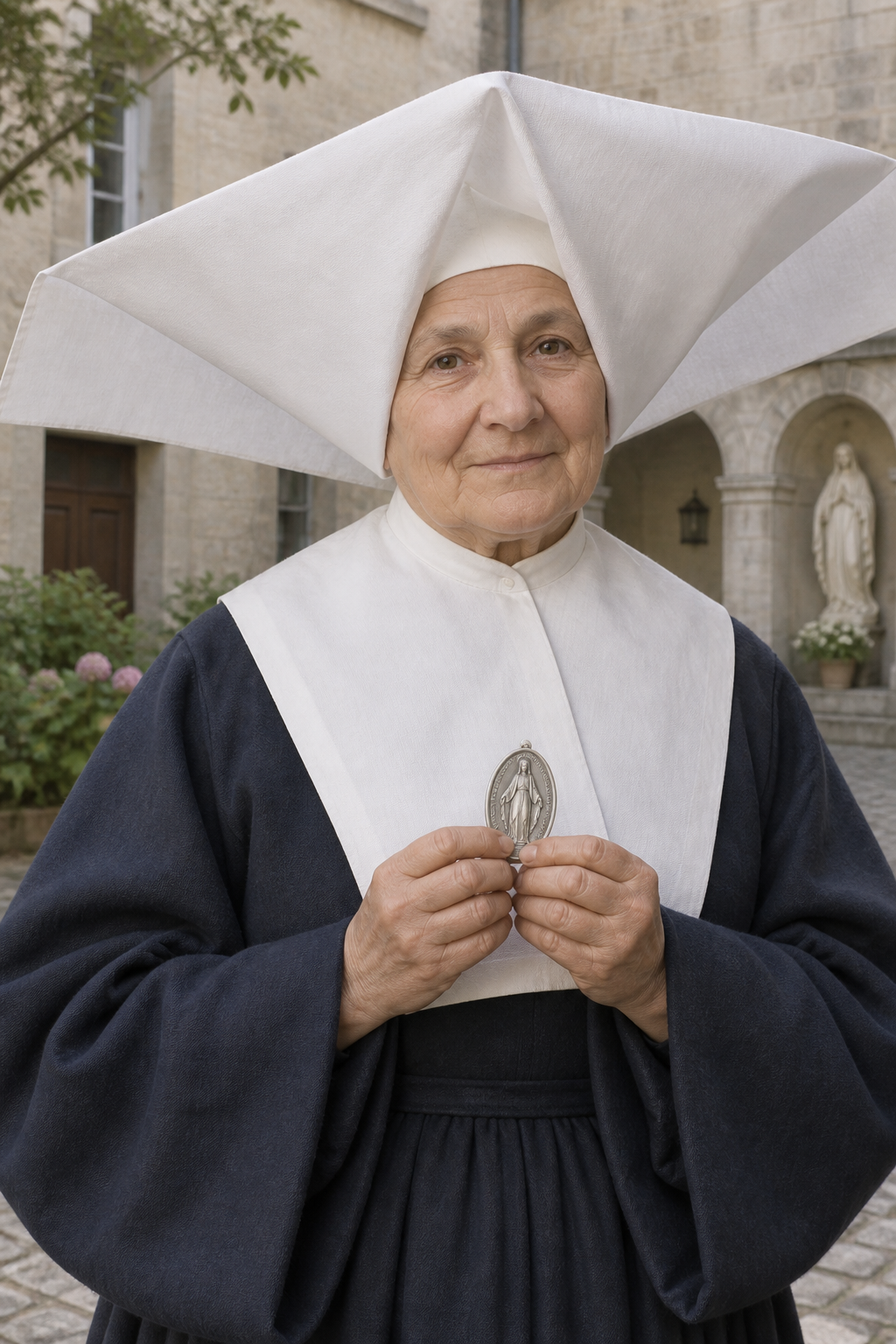
About Catherine Labouré
Catherine Labouré spent much of her life caring for people whose days required patience and practical help. A Daughter of Charity, she served older people at the hospice of Enghien in Paris for more than four decades. Her community remembers her attention to people who were ill, bereaved or difficult to please, and especially her willingness to stay beside those who were dying. That long service belongs at the center of a life often remembered chiefly for extraordinary visions.
She was born at Fain-les-Moutiers in Burgundy on 2 May 1806. Her mother died when she was a child, and responsibilities at home grew heavy. The chapel's biography describes meals, washing, work in the garden and care for animals among her tasks. Catherine wanted to join the Daughters of Charity, but her father resisted. Work in a Paris restaurant did not extinguish that desire. She eventually entered the community's period of preparation and went to its Paris motherhouse in 1830.
The name by which she became known did not erase her ties to home. Her biographer Joseph Dirvin explains that her family called her Zoé and records her use of both names in a signature. His account of her later life shows her visiting relatives and keeping close to her sister Tonine. Catherine's reserve could make her hard to know, but it did not mean indifference to the people she loved. Religious service and family affection continued alongside one another.
In 1830 Catherine reported encounters with Mary in the chapel on the rue du Bac. According to the devotional account preserved by the International Miraculous Medal Association, she described a nighttime meeting in July and another vision in November. The second included the image from which the medal developed: Mary, rays of light and an inscription asking for her intercession. Catherine understood this as a request to have a medal made. She brought the account to her confessor, Jean-Marie Aladel, who initially resisted it. The story comes to us as her reported religious experience, not as an event witnessed by the community around her.
The medal's production was a separate, public development. The same association recounts how Aladel consulted his superior and the archbishop of Paris before arranging for it to be struck. The first medals were distributed in 1832. Reports of favors and conversions accompanied their circulation, and the name Miraculous Medal took hold.
Meanwhile, Catherine's daily work continued at Enghien. Dirvin describes her taking charge of the elderly men there and caring for the small farm attached to the house. The position called for organizing other sisters' duties and managing the practical needs of a household. It was not simply a matter of remaining out of sight. Her work involved responsibility for other people, including residents who could be demanding, and a combination of firmness with care.
Her service also reached younger people. Speaking after her canonization, Pius XII remembered her concern for girls in the Reuilly neighborhood who went to work in factories while still children. Religious instruction and a place to gather offered them support, and Catherine wanted the Children of Mary association established among them. The pope connected her part in that undertaking with the everyday abilities her sisters had known: good judgment, kindness and practical skill. His portrait helps place her Marian devotion within a wider effort to care for people, rather than apart from it.
War brought urgent demands to the community. Anne Prévost's account in the Daughters of Charity bulletin describes the arrival of wounded men during the war with Prussia. Catherine helped provide food for the elderly residents and the injured while supplies were rationed. During the Paris Commune, the sisters also faced threats. Prévost recounts Catherine standing with her superior, Sister Dufès, when armed men sought to take the superior away. These remembered episodes show a different side of her quietness: remaining present when the people and community around her were under pressure. The account places her charity within the shared work of her sisters.
Her identity as the woman behind the medal was not revealed only after her death. The New Catholic Encyclopedia records that she told her superiors about her visions in May 1876, seeking completion of a statue she associated with Mary's request. She died at Enghien-Reuilly on 31 December that year. The tasks she had carried for so long passed into other hands, while attention to the story she had guarded continued to grow.
Catherine was beatified in 1933 and canonized by Pius XII on 27 July 1947. The Church's cause record honors her simplicity, charity and patience.
When John Paul II visited the chapel in 1980, he repeated the invocation associated with the medal. He prayed also for the sisters who welcomed pilgrims there. The connection between prayer and hospitality remained visible in the place where Catherine had begun her religious formation.
Wondering how to weigh the stories and sources? Learn how to read a saint biography.
Prayers for Catherine Labouré
Catherine Labouré: sourced prayer excerpt
O Marie, conçue sans péché, priez pour nous qui avons recours à vous.