Biography
Catherine of Genoa
About Catherine of Genoa
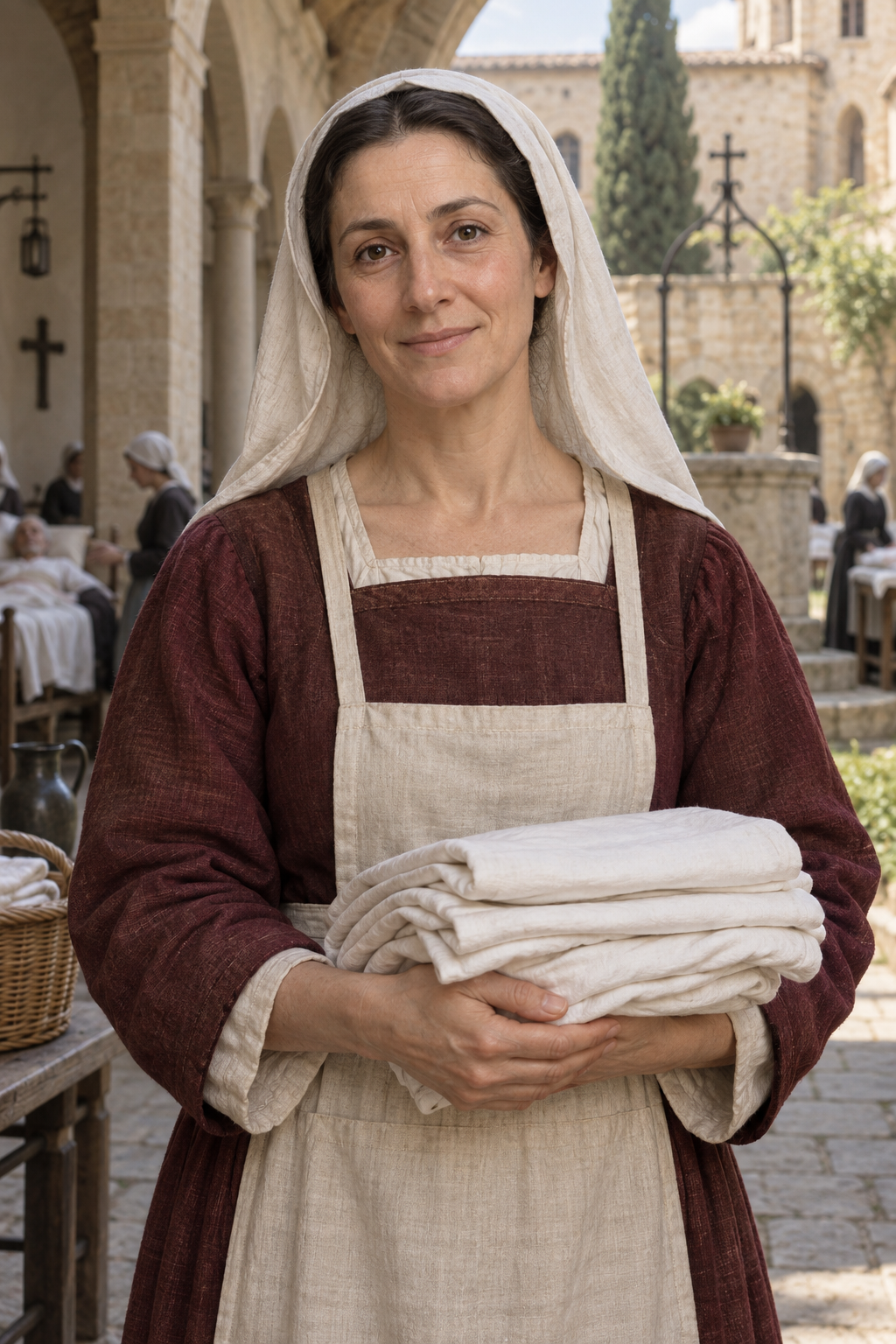
Catherine of Genoa’s life brought an aristocratic household, a troubled marriage and the daily work of a city hospital into the same story of religious change. Born into the Fieschi family in 1447, she grew up with the advantages of noble birth. Later accounts describe a girl drawn to prayer and to Christ’s suffering. At about thirteen she asked to enter a convent, but the community would not accept someone so young. Her hoped-for religious vocation instead gave way to marriage with Giuliano Adorno, chosen by her family. The marriage was unhappy: her biographers describe his extravagance and her prolonged distress, followed by a period of social diversions that failed to give her lasting contentment.
The marriage took place on 13 January 1463. Catherine’s decisive religious change came ten years later, when she reported experiences of divine love and a new awareness of her faults. She began caring for patients at Pammatone, the city’s expanding hospital. In 1489 she became director of its women’s section, with responsibility for supervising staff and caring for abandoned children. The appointment joined personal service to the daily obligations of administration.
Her followers’ Life locates the turning point in a visit to confession at her sister’s convent. It describes Catherine as so overwhelmed by love and sorrow that she postponed speaking to the priest and returned home. There she understood Christ’s suffering as love directed towards her, an experience that became central to the way she spoke about God. The narrative follows her through contrition, confession and a growing sense of closeness to Christ, rather than presenting conversion as a single completed achievement.
Catherine’s service began beyond the hospital walls. The diocesan account associates her with the Ladies of Mercy and their visits to people living in poverty. It remembers the discomforts she overcame in approaching sick people whose conditions initially repelled her. Her husband eventually joined her changed way of life, and the couple left their larger home for accommodation near Pammatone and then within its complex. Hospital work demanded attention to other people’s bodies and to the staff responsible for their care, not only an enthusiasm for private spiritual exercises.
A circle of companions formed around her, including Ettore Vernazza. After Giuliano’s death in 1497, that circle continued to link religious conversation with organised assistance. The fraternity of Divine Love, established that year, supported provision for people described as incurable, including those suffering from syphilis who were refused by other hospitals. Catherine’s concern for particular people also appears in the surviving testamentary record: the biographical entry by Federica Burlando notes provisions reflecting affection for those who helped her and for Giuliano’s daughter born outside their marriage.
Prayer and practical service remained closely connected in Catherine’s life. Benedict XVI’s account describes her reluctance to disclose her interior experiences and the group of collaborators drawn to her at Pammatone. Her teaching about purgatory likewise began with inward experience rather than a journey through a landscape of punishments. She understood purification through the contrast between human sin and divine love: love itself became the fire that changed the soul. In this understanding, the pain of separation from God and the desire for union belonged together, making purification a movement towards the one the soul loved.
The Spiritual Dialogue gives this relationship a memorable image: God holds a delicate golden thread attached to the human heart. The soul feels drawn towards its source without fully comprehending the action of love. In that literary conversation, spiritual change is attributed to God’s patient action rather than to the soul’s power to remake itself unaided.
For many years Catherine made confessions without taking someone into her confidence about the full extent of her inner life. Near its end, Cattaneo Marabotto became her spiritual guide, and she explained to him experiences both recent and long past. His recollections helped preserve a religious life that had often been lived without an external director’s detailed knowledge of what she was experiencing.
Her final years were marked by severe illness, and she died in Genoa on 15 September 1510. The writings associated with her were assembled by followers; their precise contributions remain a subject of textual scholarship.
Her canonization in 1737 made the hospital worker a subject of public celebration. A banner attributed to Marco Benefial represented her in the setting of Pammatone, while its reverse showed her in glory. The surviving painting, catalogued by Italy’s Ministry of Culture, records how later devotion joined her care for patients to her reputation for holiness.
That connection received a further institutional expression in Pius XII’s letter dated 15 September 1943. He named Catherine a secondary heavenly patron of Italian hospitals, while retaining the principal patronage of Camillus de Lellis and John of God. The designation linked her remembered charity to the continuing work of people responsible for the sick.
Wondering how to weigh the stories and sources? Learn how to read a saint biography.
Prayers for Catherine of Genoa
Catherine of Genoa: collect petition
accendi in noi il fuoco della tua carità e rendici partecipi della Passione del tuo Figlio.