Biography
Charles Horace Mayo
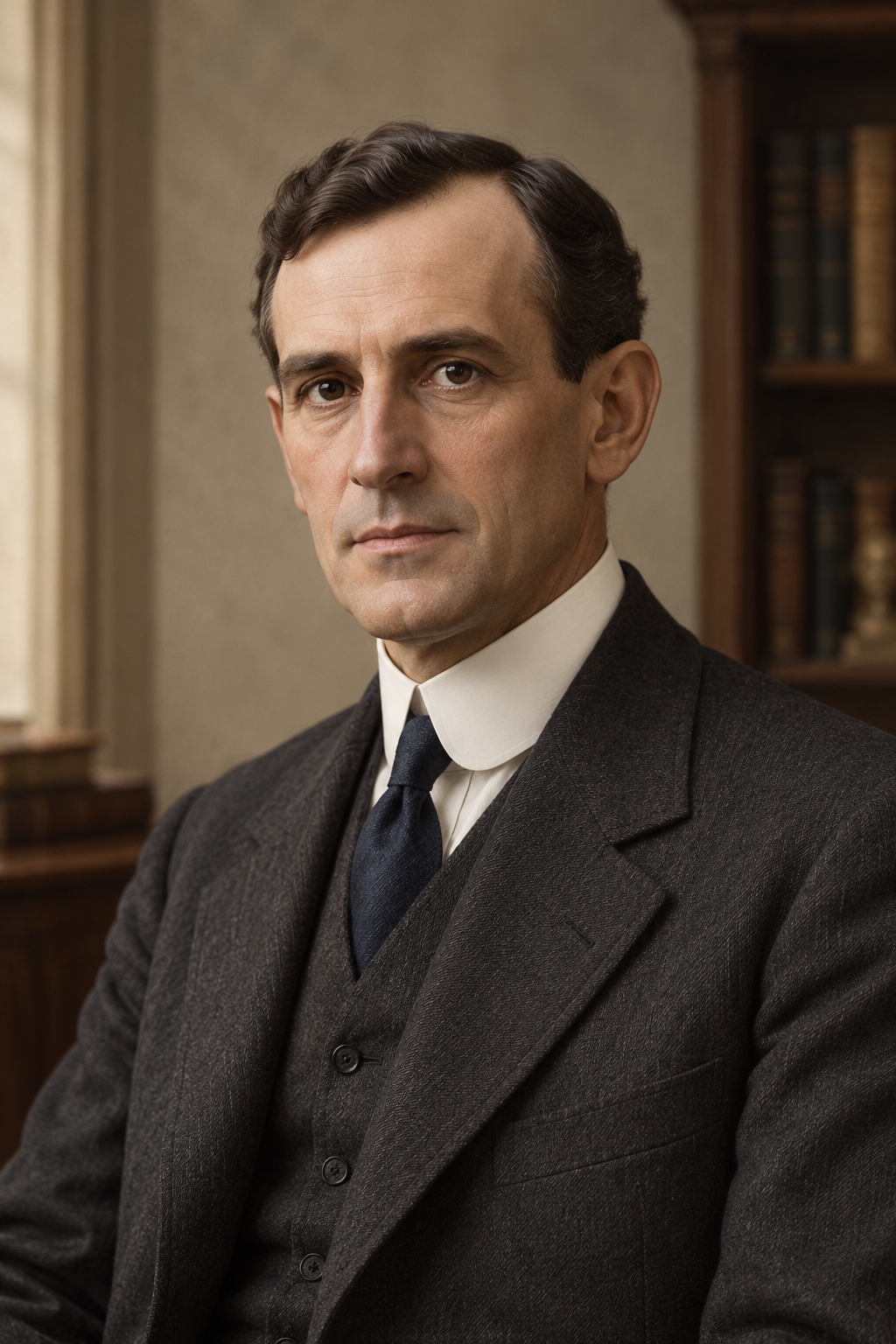
About Charles Horace Mayo
Charles Horace Mayo was born in Rochester, Minnesota, on July 19, 1865, the younger son of William Worrall Mayo and Louise Wright Mayo. He became a physician in the same city, where the family name became closely associated with a growing medical practice.
His father introduced him to medical work before he entered college. When the family considered his further education, they chose Chicago Medical College at Northwestern University. His older brother, William James, had attended the University of Michigan; a different school would give Charles another perspective. He began the program in 1885 and received his medical degree on March 27, 1888. The school offered a three-year course combining clinical experience with instruction in medical science. Chicago’s many clinics also gave him opportunities to observe physicians beyond his own teachers.
His connection with Northwestern continued after graduation. The university awarded him additional degrees, including an honorary law degree in 1921. He spoke at the cornerstone ceremonies for buildings on its new campus in 1926 and became a trustee in 1932. The relationship therefore extended from his own training into support for the institution’s later development.
One part of his early practice was less specialized than his later reputation might suggest. From 1889 through 1908, he diagnosed and treated eye disorders in rural southeastern Minnesota despite having no formal training in ophthalmology. This work accompanied a busy general practice with his father and brother. Historian John Warren Henderson studied his office ledgers to reconstruct this aspect of his career. Those records preserve the everyday encounters, diagnoses and treatments behind a medical life often remembered chiefly through the Mayo Clinic.
His surgical work ranged beyond the eye. It included operations on the thyroid gland, procedures involving the nervous system and orthopedic surgery. During the First World War he and William alternated as chief consultants to the United States Army’s surgical services. Charles served as a colonel and later received a commission as a brigadier general in the medical reserve. These responsibilities carried his work beyond Minnesota into a national medical organization.
The clinic’s educational work developed through exchanges with other physicians. The brothers welcomed doctors and students to Rochester to observe their practice, while they and their colleagues traveled elsewhere to learn. Education became a continuing part of their institution rather than something confined to the brothers’ own years in medical school. In 1915 they established the Mayo Foundation for Medical Education and Research and partnered with the University of Minnesota on graduate training in specialty medicine.
The program began awarding graduate degrees in 1917, when its first recipients were two women and two men. That year also brought its first doctorate in biochemistry. This work joined clinical training to laboratory research. The history of the institution’s education includes nurses as well as doctors: Edith Graham, who became Charles’s wife, trained as a nurse anesthetist in 1889. Her work belongs within the account of the medical community in which the brothers practiced.
Charles and Edith built Mayowood in 1911. Their country estate grew to include working farms, greenhouses and an artificial lake. A later generation, their son Charles William and his wife Alice, made further changes to the house. The two physicians named Charles must therefore be distinguished: Charles Horace was the earlier Mayo brother, while Charles William was his son.
The brothers also arranged for the institution to continue beyond their personal careers. In 1919 they transferred property and capital to the Mayo Properties Association, a charitable and educational corporation. This was a separate development from the foundation for medical education established in 1915. Charles held a professorship in surgery in the University of Minnesota’s graduate school from 1915 to 1936 and in its medical school from 1919 to 1936. He withdrew from surgery in 1930 and from administration in 1933. His career thus combined operating, teaching and institutional leadership, with those responsibilities ending at different times rather than in one abrupt retirement.
Charles Horace served as president of the American College of Surgeons in 1924–1925.
Charles also advocated eugenic sterilization, a harmful part of his public legacy.
He grew up in the family’s Calvary Episcopal parish in Rochester. The family’s work with Catholic sisters connected its medical history with cooperation across denominational lines.
The brothers spent time in retirement in neighboring homes in Tucson, returning to Rochester for board meetings. Their close working relationship therefore continued after their busiest years as surgeons. Charles’s death came while he was visiting Chicago. William survived him by only two months, dying in July of the same year.
He died of pneumonia in Chicago on May 26, 1939.
Trinity Episcopal Church in Asbury Park commemorated him with the other Mayos and Menningers in its March 6, 2025, service. This records a specific Episcopal observance, rather than a claim of Catholic canonization.
Wondering how to weigh the stories and sources? Learn how to read a saint biography.