Biography
Chiara Badano
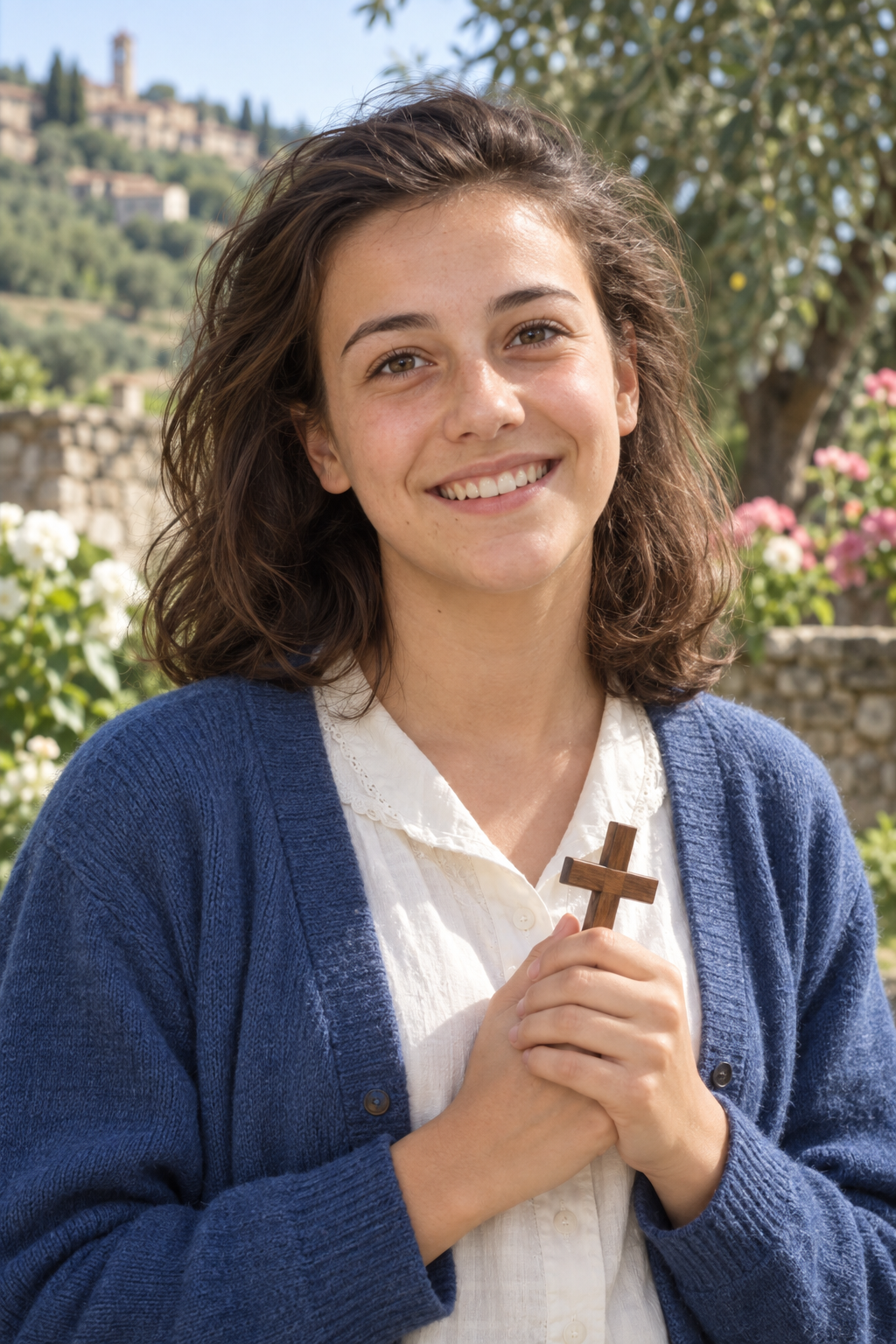
About Chiara Badano
Chiara Badano grew up in Sassello, a small town in Liguria, within a family that took Christian faith seriously without separating it from daily affection and play. Her parents, Maria Teresa and Ruggero, remembered waiting eleven years for a child and learning to respect their daughter's freedom rather than treating her as a possession. Her mother recalled sending her back to a neighbour to return an apple taken without permission, watching from the balcony to give her courage. On another occasion, Chiara first resisted giving away her toys, then sorted out good ones for children who had less.
She was born on October 29, 1971. At about nine she encountered the Focolare Movement, founded by Chiara Lubich, and joined its young members. The group gave her friends with whom to explore how faith could become action. Her correspondence with Lubich continued as she grew older, and the founder gave her the additional name Luce. Prayer and participation in the Eucharist became important parts of her formation, alongside the effort to serve people around her.
Chiara enjoyed tennis, skating, the mountains, and especially the sea. Friends gathered at the local Bar Gina, and some brought their anxieties to her because she listened attentively. Moving to Savona for secondary school was painful, and she failed her first year. Her adolescence included disappointment in a hoped-for romance as well as the ordinary demands of study. Faith did not remove those setbacks: she tried to begin again when she fell short. Her story includes these difficulties alongside the confidence for which she later became known.
She noticed people who could easily be overlooked. In his beatification homily, Cardinal Angelo Amato recalled her sharing school snacks with children in need and helping a socially isolated woman carry heavy objects. Even during her final illness, she arranged a Valentine's Day dinner for her parents in 1990, making the telephone calls herself when her mother said it was too late to book. These were small, deliberate acts of attention: food for another child, practical help in the street, and time together for her parents.
Pain during a tennis game led to investigations that revealed osteosarcoma. She entered Turin's Molinette hospital on February 7, 1989, and underwent surgery later that month. Treatment did not stop the cancer. In a short written prayer to Mary, Chiara asked for healing, or for the strength to persevere if healing was not granted. Her death came on October 7, 1990, before her nineteenth birthday.
Her parents remembered that acceptance had not come without an inward struggle. Returning from a hospital appointment, she asked her mother not to speak and lay silently on her bed. Her mother waited, respecting the request, until Chiara was ready to talk. The recollection gives space to distress and privacy within a life often remembered chiefly for its smiles.
The support around Chiara was more than a series of hospital visits. Friends prayed for her and worked to ensure that neither she nor her family faced the illness alone. Her relationship with her mother also involved giving as well as receiving. Chiara asked for help, but she could also console and encourage the person caring for her. Love moved in both directions, even when illness made her increasingly dependent on other people's assistance.
In a letter to the young Focolare members dated October 4, 1989, she thanked them for the unity, sacrifices, and prayers that helped her renew her commitment. Bertone later quoted that letter in his thanksgiving homily. Her spirituality was not simply a private effort to be strong: she understood herself as sustained by others and able to offer something back to them. Her letters also used the language of a bride awaiting Christ, expressing the hope that accompanied her approaching death.
Ferdinando Garetto, a physician who knew her, recalled wondering whether her warmth could survive the progress of the disease. On his last visit, after she had lost the use of her legs, she noticed the books he was carrying and asked about his examination. His memory centres on her interest in the person entering the room, at a time when her own needs were immense. Speaking to Vatican Radio in 2010, he stressed that young people did not need to become ill or die to pursue holiness. For him, her example pointed toward using the life one has well, not seeking her medical circumstances.
The Church beatified Chiara on September 25, 2010. Soon afterward, Benedict XVI spoke about her to young people and families in Palermo. He emphasized that the courage of her last years had been prepared and accompanied by the support of her parents and friends. He placed her family within the wider life of the Church, including the Focolare community. That remembrance leaves her surrounded by people who loved and helped her, while recognizing the particular generosity with which she responded to them.
Wondering how to weigh the stories and sources? Learn how to read a saint biography.
Prayers for Chiara Badano
Chiara Badano: sourced prayer excerpt
grant us the gift to live with you and for you.