Biography
Claudine Thévenet
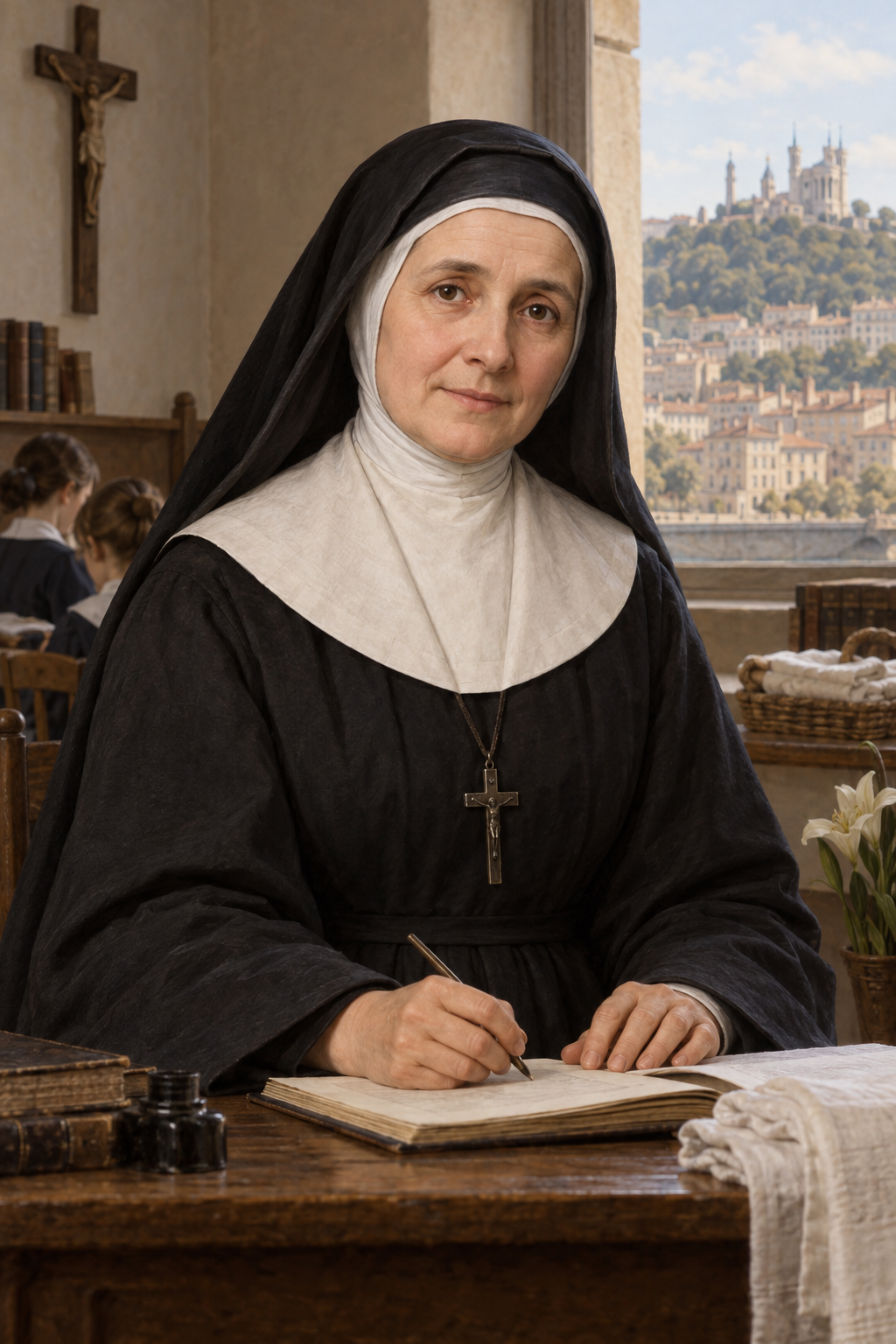
About Claudine Thévenet
Claudine Thévenet was born in Lyon on March 30, 1774. The existing catalog stores that full date and birthplace, and this draft preserves both fields.
Her life was marked by the upheaval of the French Revolution. The Vatican biography remembers the execution of two of her brothers as a formative wound and links her later life to forgiveness.
The page should treat that event soberly. It belongs in the biography because it helps explain her spirituality, but it should not become an execution scene in artwork or a dramatic spectacle in prose.
Claudine's response was not passive forgetfulness. Forgiveness became a source of action: she turned toward young people whose lives had been damaged by poverty, family breakdown, and social disorder.
That movement from wound to service is the heart of the page. It should be written with emotional seriousness, but without invented interior dialogue or dramatic scenes that the sources do not supply.
The sources emphasize her care for girls, especially those who were poor or abandoned. The public page should describe these children with dignity, not as background figures for Claudine's virtue.
A school room, writing tablet, books, folded linen, and Lyon/Fourvière context are enough to show the work. Crowded misery or revolutionary violence would pull the page away from its central witness.
Those visual choices also protect the children in the story. The portrait can show the place of education and care without making vulnerable girls into a spectacle.
Claudine gathered companions and began a work of education and charity in Lyon. The Religious of Jesus and Mary source helps explain the community's memory of that beginning.
The foundation of the Religious of Jesus and Mary should be central to the article. It gave durable form to the mercy and forgiveness that had matured in Claudine's life.
The community gave structure to a work that could have remained informal. Rules, companions, prayer, teaching, and shared responsibility helped mercy become repeatable rather than occasional.
That foundation should not be described only as institutional expansion. It was meant to form young people, especially girls, in Christian life and human dignity.
The catalog classifies Claudine as `Virgin`, and this draft preserves that field. It does not add a second class before final approval, even though her foundress identity is central to the prose.
This preserves the current row while letting the biography speak plainly about her foundation. Final review can decide whether additional class or status data belongs in structured fields.
The Dicastery profile supports the themes of forgiveness, charity, education, and founding. It also helps keep the page anchored in official Catholic recognition rather than relying only on congregational memory.
The RJM source is useful for charism and family memory. This draft uses it without importing current institutional statistics, global school claims, or modern promotional language.
That boundary keeps the biography focused on Claudine herself. Later growth is important, but the slow-vetted page should first make her own life, choices, and founding work clear.
Claudine died on February 3, 1837. The catalog stores the full death date and February 3 feast, but leaves death place blank.
Lyon is strongly supported as the setting of her life and death, yet this draft preserves the blank death-place field until the final approval packet can decide whether to update it.
That blank should be visible in the source note because it is not a lack of Lyon context. It is a boundary against changing structured data before the batch receives its one review.
That restraint is deliberate. The biography can be saturated with Lyon context without silently mutating a structured field before approval.
Claudine was beatified in 1981 and canonized in 1993. Those recognitions should be concise because the main story is forgiveness converted into education and care.
The canonization note confirms public Catholic recognition, but it should not replace the narrative of forgiveness, school work, foundation, and care in Lyon.
The page should avoid making her holiness sound sentimental. Her witness included trauma, discipline, foundation, governance, and patient attention to young people.
It should also avoid making forgiveness seem easy. The page can show that forgiveness became a demanding vocation, worked out through years of education and care.
Her relevance is concrete for anyone tempted to let injury harden into bitterness. Claudine shows forgiveness becoming protection for others, not merely a private feeling.
The final page should leave readers with a Lyon foundress at a writing desk and school table: forgiving, organizing, teaching, and giving vulnerable girls a safer and more hopeful path.
Artwork should show a mature French foundress in simple dark religious dress and veil, with book, writing tablet, folded linen, crucifix, and old Lyon/Fourvière context. Avoid execution imagery, flags, crowds, modern classroom objects, rendered text, halos, and exact-likeness claims.
The badge crop should keep Claudine's face, veil, writing hand, and Lyon school context visible. It should read as foundress and educator before it reads as a generic religious portrait.
Wondering how to weigh the stories and sources? Learn how to read a saint biography.