Biography
Concepción Cabrera de Armida
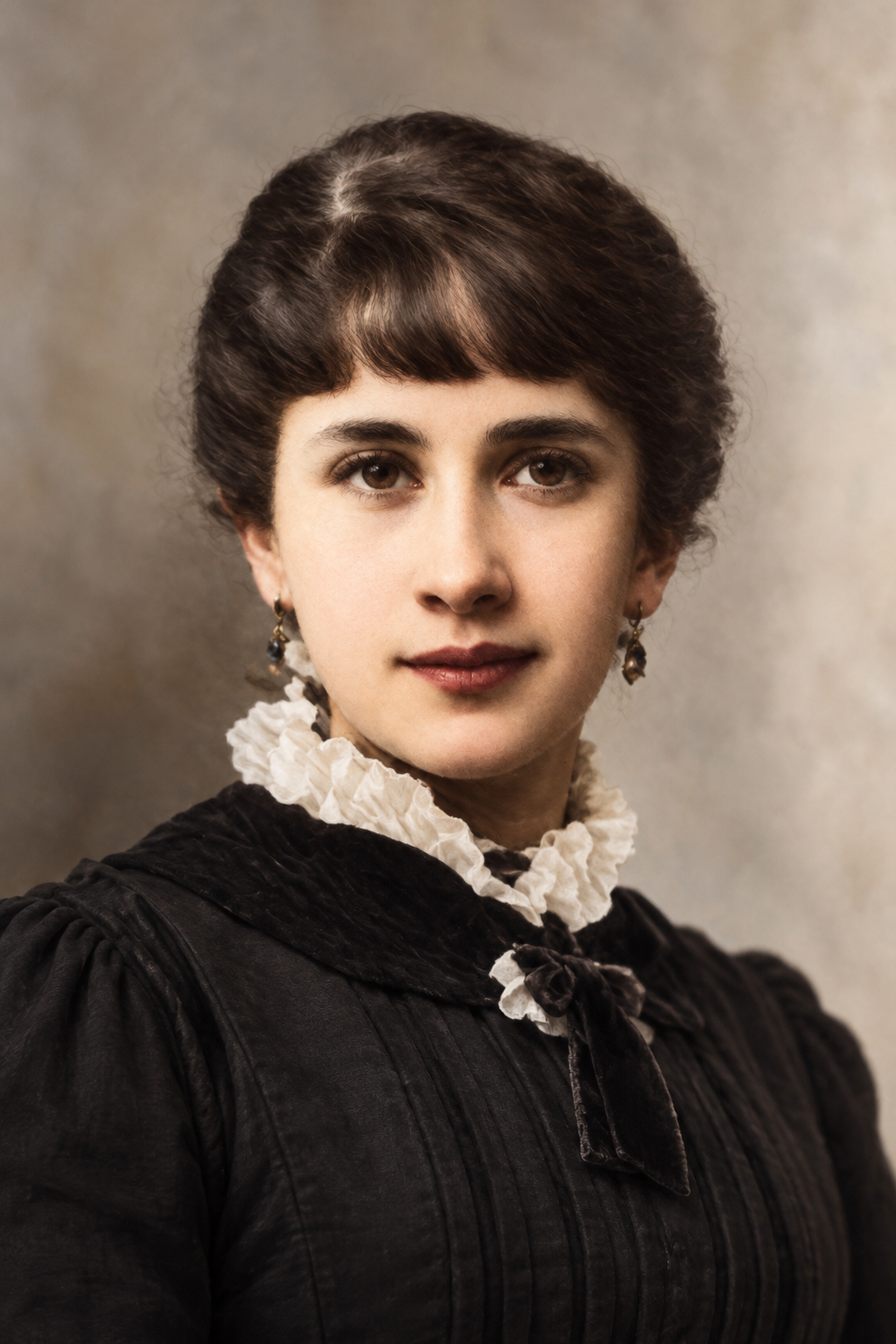
About Concepción Cabrera de Armida
Concepción Cabrera de Armida grew up in a prosperous Catholic family in San Luis Potosí, Mexico. Known as Conchita, she was the seventh of twelve children. Her formal schooling was limited, but she began writing while still young. She also taught catechism, reading and writing to children of people employed by her family. One early work, written in 1878, bore the title Historia de una muy pacifica família.
Her early life included country stays when her health was poor. The congregation she later inspired remembers a young woman who enjoyed playing the piano, singing and riding horses, as well as attending family celebrations and the theater.
In 1884 she married Francisco Armida, and they became the parents of nine children. Two died in early childhood. Her son Manuel later became a Jesuit, while her daughter Concepción entered the women’s congregation associated with her mother’s work.
A retreat in 1889 marked an important stage in her religious life. Under the guidance of the Jesuit Alberto Mir, she began keeping a spiritual diary.
Her writings came to describe a vocation of spiritual motherhood, extending beyond her own family to other people and especially to priests. She understood this through her devotion to Christ and to Mary. The reported words of Jesus recorded in her diary belong to her account of interior prayer and mystical experience. They are part of the evidence for how she understood her vocation, rather than independently witnessed conversations.
Her spirituality also included severe bodily penances. Historian Camille Foulard places these practices within a wider Catholic culture of reparation and resistance to political secularization. The study describes spiritual directors both encouraging and restricting her penances, including restrictions prompted by her health. This was a demanding and sometimes harmful aspect of her religious life, inseparable from the historical setting in which she lived.
In 1894 a Cross of the Apostolate was erected at her family’s estate of Jesús María. The following year, with Bishop Ramón Ibarra’s approval, the Apostleship of the Cross was founded in Chilapa. The Sisters of the Cross of the Sacred Heart of Jesus followed in 1897. These beginnings preceded her widowhood in 1901.
Her work continued alongside the responsibilities and losses of family life. The beatification homily remembers her attention to her children’s education and her efforts to visit sick and dying people. It also recalls that four of her children died during her lifetime.
Another initiative opened a path for laypeople to share her spirituality. The Covenant of Love with the Sacred Heart of Jesus was established in Puebla in November 1909, following approval from Archbishop Ibarra. Its purpose was to help members develop their baptismal commitment through shared community life and service. The association’s account identifies devotion to the Sacred Heart and the sanctification of everyday life as central concerns. Its work extended to families and people in different walks of life.
The Fraternity of Christ the Priest, established in 1912, belonged to the same developing family of works. Her spiritual writing repeatedly returned to the holiness of priests and their responsibility to serve others.
She had met the French Marist priest Félix Rougier in 1903. Their hopes for a new religious institute faced a long delay because his superiors initially refused permission. During a pilgrimage in 1913, she visited the Holy Land and Rome and met Pope Pius X. The Missionaries of the Holy Spirit were founded in 1914, with Rougier leading the new congregation.
Cabrera’s influence did not depend on holding an office of authority within these communities. Foulard’s study draws attention to her correspondence with church leaders and her ability to make her views heard within institutions governed by men. The historian also situates disagreements surrounding the foundations within tensions among bishops and religious orders. Her place in these networks was more complicated than a story of uninterrupted institutional support.
Her literary work included devotional texts, accounts of her spiritual development and reports written for her spiritual directors. The diary known as Cuenta de Conciencia records decades of her interior life.
She died in Mexico City in 1937. The house in San Ángel where she died became a museum preserving her memory.
In 1974 her remains were transferred from the Spanish cemetery to the chapel at Altillo, in Mexico City.
The Catholic Church beatified her in the Basilica of Guadalupe in 2019.
At that ceremony, Cardinal Giovanni Angelo Becciu emphasized her combination of prayer, family care and apostolic initiative. He described her as an inspiration for religious communities without confusing that influence with the position of superior general.
The Covenant of Love received recognition as an international association of the faithful in 2006. Its continuing account of her initiative preserves a specific part of her legacy: a shared spiritual life intended for people who remain engaged in family, work and society.
Wondering how to weigh the stories and sources? Learn how to read a saint biography.