Biography
Conrad of Piacenza
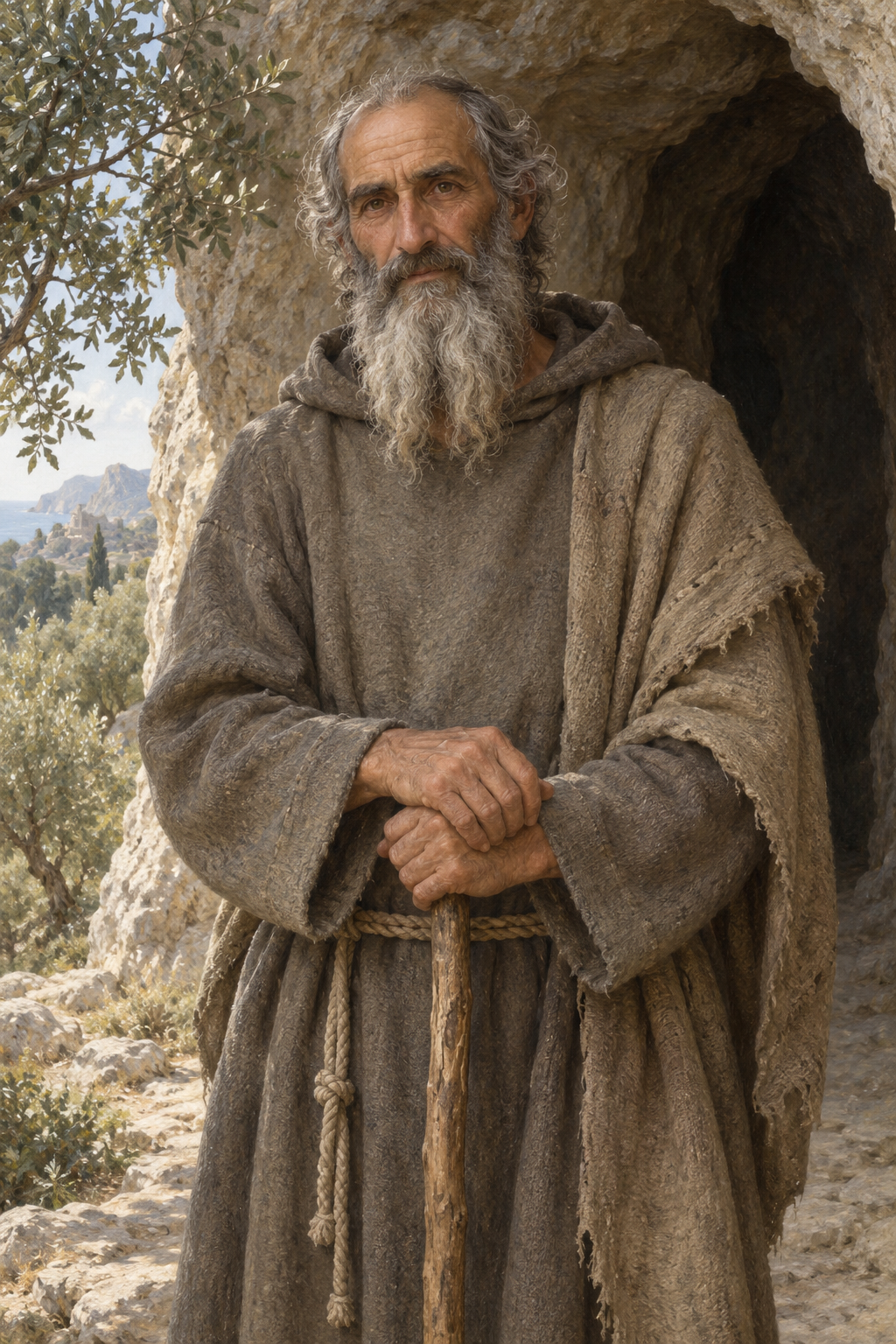
About Conrad of Piacenza
Conrad of Piacenza, also known as Corrado Confalonieri, is remembered as a Franciscan penitent who became a hermit near Noto in Sicily. His story begins with a damaging choice. According to the traditional account, he ordered a fire to drive animals from cover during a hunt. The flames spread beyond control, destroying nearby property. When an innocent man was condemned for the disaster, Conrad admitted his own responsibility and used his possessions to compensate those who had suffered.
The account then follows a change of vocation. Conrad entered the Franciscan Third Order, while his wife entered religious life. Eventually he settled near Noto, first beside a church dedicated to the Crucified Christ and later in a cave at Pizzoni. These places became central to his remembrance as a man who exchanged wealth for prayer and penitence.
The detailed chronology is less certain than this familiar outline suggests. Historian Mario Pagano notes that the surviving biographies often contradict one another and combine history with conventional hagiographic episodes. They give different accounts of Conrad’s wife and add particulars absent from the earliest narrative. His birth is variously placed in 1284 or 1290, while reports of his death also differ. Such disagreement makes a precise modern timeline misleading.
Solitude did not end his contact with others. The Diocese of Noto’s account describes visitors coming to the hermitage for help and prayer. It also recounts a bishop’s visit during which Conrad unexpectedly produced fresh bread. The bread story, like the account of birds accompanying him, belongs to the devotional tradition surrounding the hermit. It shows how he came to be remembered for hospitality as well as austerity; it is not an independently established miracle report.
Recognition of his cult developed over centuries. Pagano records papal authorization under Leo X in 1515, its extension to Sicily under Paul III in 1544, and permission for an office and Mass under Urban VIII in 1625. These were different stages in the history of worship, rather than interchangeable dates for a single modern canonization ceremony.
A later papal act provides direct evidence of his place in the local Church. On 27 November 1963, Paul VI issued Scandere caelum, confirming Conrad as co-principal patron of the Diocese of Noto alongside the Virgin Mary under the title Scala Paradisi. The act names him as a saint and confessor. This documented recognition is distinct from the uncertainties surrounding his medieval life.
His feast continues to connect remembrance with practical care. Reporting the diocesan celebration of 19 February 2016, the Diocese of Noto described Bishop Antonio Staglianò’s appeal for solidarity and concrete charity. At the close of the celebration, the bishop welcomed the daily opening of the soup kitchen named for Conrad. The report presents that service as a living expression of mercy associated with the city’s remembered penitent.
Wondering how to weigh the stories and sources? Learn how to read a saint biography.