Biography
Dominic de la Calzada
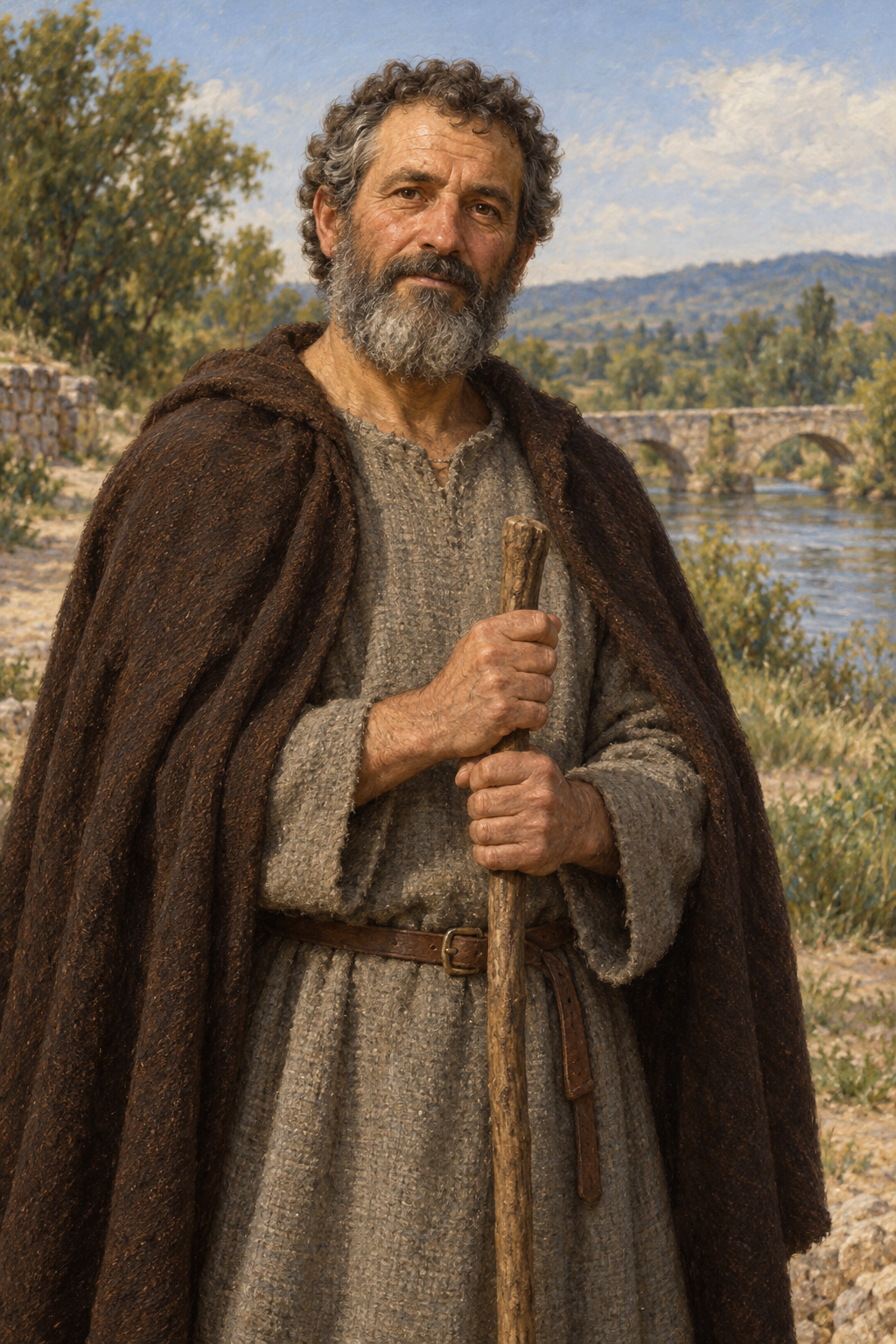
About Dominic de la Calzada
Dominic de la Calzada is remembered for making the journey to Santiago de Compostela safer and more hospitable. Active in the late eleventh and early twelfth centuries, he helped establish the route between Nájera and Redecilla del Camino and a bridge over the River Oja. Lodging and care for travellers accompanied this practical work. The settlement that grew around his foundations became the town bearing his name.
The surviving evidence gives a much clearer view of these foundations than of his childhood. Historian Francisco Javier Díez Morrás traces the familiar birth year of 1019 to later hagiography. In 1606, Luis de la Vega assigned Dominic a lifespan of ninety years; José González de Tejada subsequently supplied the corresponding birth year. Neither based that calculation on contemporary evidence. The precise year of his birth remains unknown.
His birthplace is also disputed. Arturo Calvo Espiga examines competing traditions connecting him with Viloria de Rioja and with Tuscany. Papal documents of 1362 describe a Tuscan origin, but these too postdate his lifetime by centuries. They establish the existence of that medieval tradition, rather than settling where he was born. Accounts of his parents and early vocation cannot be assembled into a secure personal chronology.
Agustín Ubieto Arteta draws attention to the less celebrated work of sustaining Dominic’s foundations. Gifts, purchases and exchanges of land helped provide their material support. Royal protection also mattered, and the community continued to receive grants after his death. The documentary record reveals an institution that needed resources and administration as well as the initial work of building and receiving travellers.
The Church commemorates his death on 12 May 1109. Later images often show an elderly, kindly man, but Díez Morrás cautions that this familiar appearance belongs to the development of his devotion. It is not evidence for the exact age at which he died.
His tomb became a focus of devotion in the cathedral. One especially famous legend tells of an unjustly hanged pilgrim saved through his intercession and cooked birds returning to life. A live cock and hen are kept in the cathedral in remembrance of the story. This is a tradition associated with his shrine, not a documented episode from his lifetime.
Local remembrance also took musical form. Field notes preserved by the Spanish National Research Council describe the music played as his image left the cathedral on 12 May. Twelve dancers, directed by a leader called the cachiburrio, accompanied the patronal procession. The record preserves the gestures, clothing and instruments of a community celebrating the saint whose name its town carries.
Wondering how to weigh the stories and sources? Learn how to read a saint biography.