Biography
Elijah
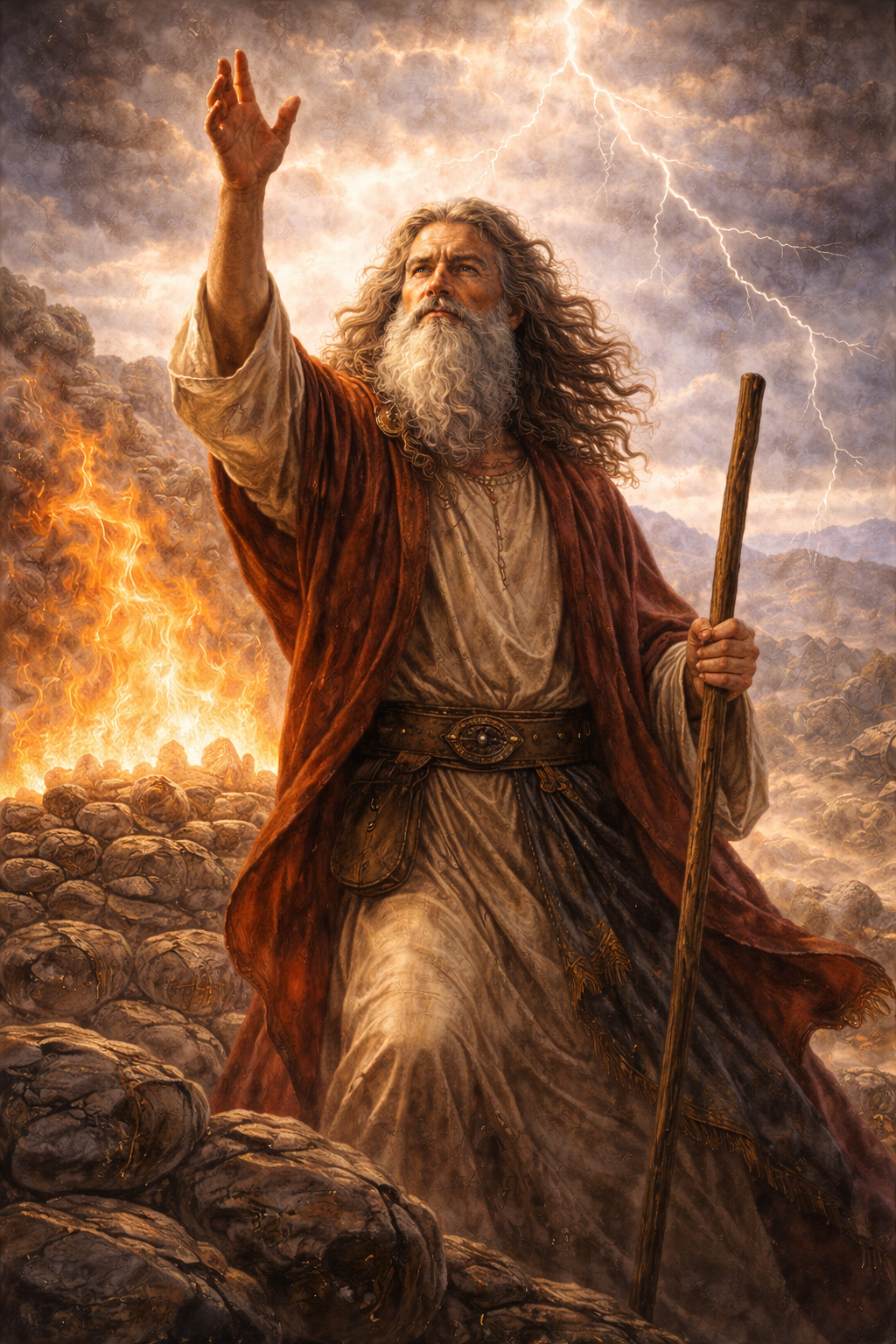
About Elijah
Elijah enters 1 Kings abruptly as “the Tishbite, from Tishbe in Gilead” during the reign of Ahab in the northern kingdom of Israel. The books of Kings provide no parentage, childhood, birth year, or age for him. The USCCB note adds that the meaning of “Tishbite” is uncertain, so even the opening designation does not justify a precise birthplace or map coordinate. His narrative belongs to the theological history of Kings rather than an independently documented modern biography.
Elijah announces to Ahab that neither dew nor rain will fall except at his word, then follows a command to hide by the Wadi Cherith east of the Jordan. The narrative says ravens bring him food until the wadi dries. He is next sent beyond Israel to Zarephath of Sidon, where a widow is preparing a final meal for herself and her son. Elijah asks her for food and promises that her flour and oil will last through the drought. When the child later stops breathing, Elijah carries him upstairs, protests in prayer, and repeatedly asks that his life return. The boy revives in the story, and his mother recognizes Elijah as a man of God.
In the third year of the drought narrative, Elijah returns toward Ahab and encounters Obadiah, an official who has hidden prophets from Jezebel. At Mount Carmel, Elijah challenges Ahab, the people, and the prophets of Baal over divided worship. He repairs an altar with twelve stones, drenches the offering, and prays before fire consumes it. The crowd acknowledges the Lord, but the scene then turns violent: Elijah orders the prophets of Baal seized and has them killed at the Wadi Kishon. A responsible account cannot detach the dramatic sign from the narrated execution or treat every action as a timeless model. Elijah then prays on Carmel until a cloud appears and rain returns.
Jezebel answers the Carmel killings with a threat against Elijah's life. He flees through Beer-sheba into the wilderness, sits under a broom tree, and asks to die. The story neither hides his fear nor condemns exhaustion as simple faithlessness. A messenger supplies food and water, after which Elijah travels to Horeb. There he repeats that he has been zealous, that the covenant has been forsaken, and that he believes himself alone. Wind, earthquake, and fire pass before the quiet sound that draws him to the cave entrance. The encounter ends with new commissions and the assurance that a remnant remains.
On his return, Elijah finds Elisha plowing and throws his mantle over him. Elisha leaves his work, gives the people a meal from his oxen, and follows as Elijah's attendant. The brief call scene begins a relationship that becomes central to Elijah's departure and Elisha's succession. Kings does not say that Elijah founded a monastery or formal school, although later chapters speak of prophetic guilds. The packet therefore records Elisha as disciple and successor without inventing an institution.
Elijah next confronts royal abuse in the account of Naboth's vineyard. After Naboth refuses to surrender ancestral land, Jezebel arranges false charges and his execution, and Ahab takes possession. Elijah meets the king in the vineyard and announces judgment against Ahab's house. When Ahab humbles himself, the narrative delays part of the announced disaster. This episode grounds Elijah's reputation for moral courage in a specific action: he speaks against a killing enabled by royal power and the seizure that follows.
Second Kings opens with another severe confrontation. When the injured king Ahaziah sends to inquire of Baalzebub, Elijah intercepts the messengers and challenges the appeal to a foreign god. The chapter tells of fire consuming two military companies before a third captain approaches humbly and Elijah goes with him. The USCCB note explains that this story enhanced the prophet's dignity and reflected the power of the God he served. Luke later records Jesus' disciples proposing comparable fire against a Samaritan village and Jesus rebuking them. That later reception discourages turning Elijah's fiery episodes into permission for religious violence.
The last journey in 2 Kings moves from Gilgal to Bethel, Jericho, and the Jordan. Elisha repeatedly refuses Elijah's request to remain behind. Elijah strikes the river with his mantle, and the narrative says the two cross on dry ground. When Elijah offers a final request, Elisha asks for a double portion of his spirit, language the USCCB note relates to the inheritance of a firstborn son. A fiery chariot separates them, Elijah rises in a whirlwind, and Elisha receives the fallen mantle. The text narrates a departure rather than a death and gives no calendar date or safely recoverable crossing point.
Later Scriptures expand Elijah's significance. Sirach praises his fiery prophetic work and recalls both the widow's child and the whirlwind. Malachi anticipates Elijah before the day of the Lord, while the New Testament links that expectation with John the Baptist and places Elijah with Moses at Jesus' transfiguration. Luke recalls the widow of Zarephath, and James presents Elijah's prayer during drought as an example of effective prayer. These passages document reception within Jewish and Christian Scripture; they do not add contemporary records of Elijah's life.
The Orthodox Church in America commemorates the Holy, Glorious Prophet Elijah on July 20 and preserves later traditions beyond Kings. Its life includes a legendary infancy vision and identifies Elijah as a model of ascetic devotion; those details are not presented here as documented history. The same tradition's hymns remember his prophetic zeal and his relationship with Elisha. Elijah remains significant because his received story holds public courage, prayer, care for a vulnerable household, despair, violence, correction, and succession together. Its enduring power depends on that complexity, not on converting sacred narrative into exact chronology or a flawless heroic portrait.
Wondering how to weigh the stories and sources? Learn how to read a saint biography.
Prayers for Elijah
Kontakion petition to the Prophet Elijah
Pray for us to the only Lover of mankind!