Biography
Elizabeth Fedde
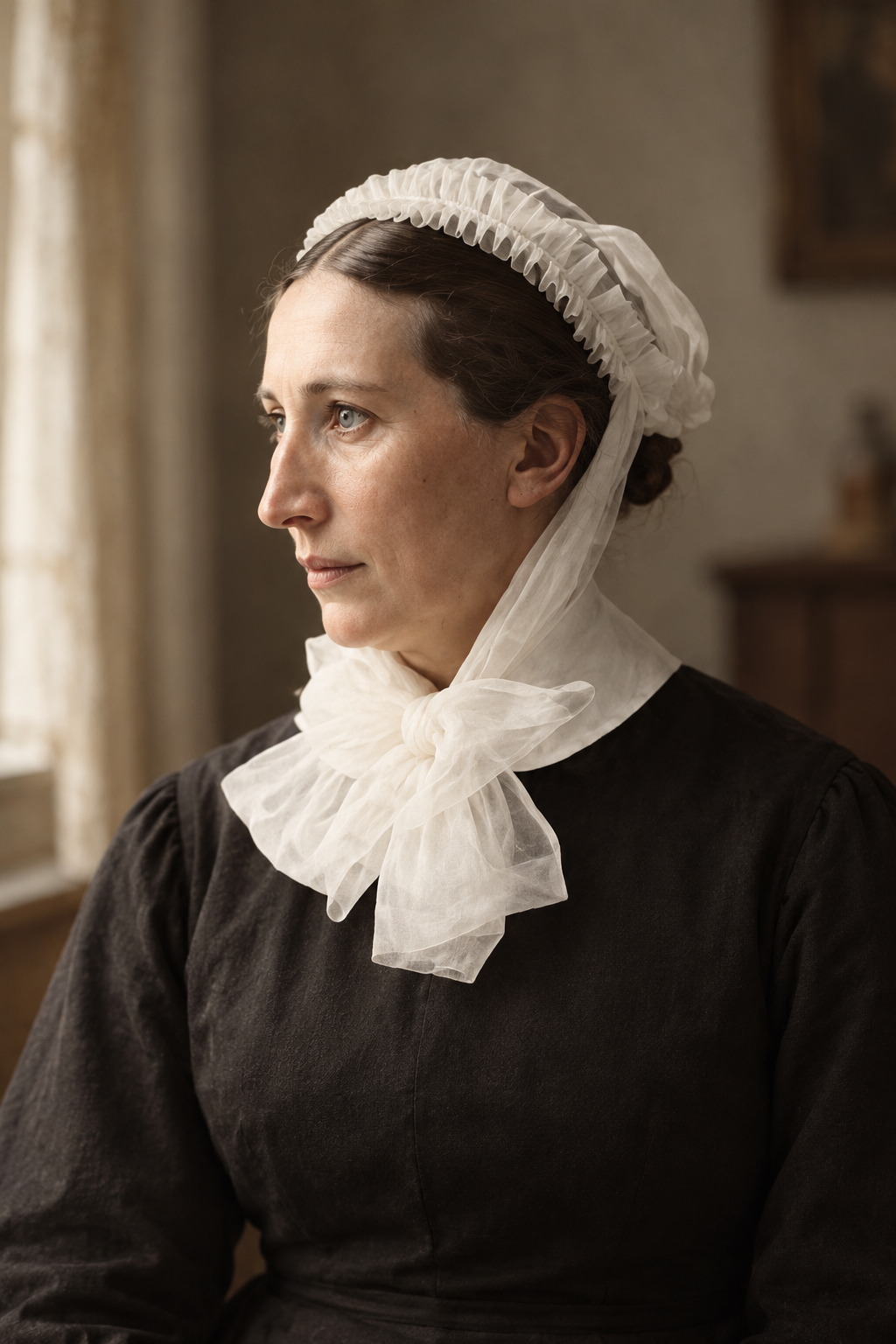
About Elizabeth Fedde
Born in 1850 in Kvinesdal, Elizabeth Fedde grew up on a farm in southern Norway. Her father had left seafaring because of her mother’s poor health. After her mother died, Elizabeth helped her older sisters with the household. Following her father’s death in 1873, she entered the deaconess house in Christiania.
The deaconess movement linked religious formation with organized care. In their history of the movement, Elizabeth Steele and Sally Kerr trace its German roots through Theodor Fliedner and Wilhelm Löhe, whose communities trained women for service. It reached America before Fedde: William Passavant brought deaconesses to Pennsylvania in 1849. Fedde belonged to the later Norwegian contribution to that wider movement. Steele and Kerr distinguish her circumstances from the well-funded Philadelphia venture supported by banker John Lankenau; the Brooklyn work began without comparable financial backing.
Pennock’s account describes hospital experience before Fedde’s American mission. In 1875 she nursed medical patients at the Government Hospital in Norway. Later she worked in Tromsø, where the small hospital lacked adequate supplies: Pennock records thirty beds but only twenty-three blankets, twelve of them badly worn. Fedde herself developed a serious infection, followed by a long recovery that kept her from nursing until 1882. These details come from Pennock’s later historical account, rather than from clinical records inspected for this biography.
In 1883 Fedde came to New York to help Norwegian immigrants. With pastors and lay supporters, she established a relief society in Brooklyn. A small hospital and deaconess training followed in 1885.
Meta Rutter Pennock’s nursing history, published in 1940, describes the practical arrangements behind this work. The wife of Consul Bors promised an annual contribution of $150 toward the proposed mission. Once in Brooklyn, Fedde left a slate at her door to receive messages while she was away. She carried food and clothing in a basket on her neighborhood rounds, combining nursing with material assistance. Pennock also records visits to Norwegian patients at Ward’s Island and other hospitals. Her account places this visiting work before the hospital’s establishment: the institution grew out of care already being offered in homes and existing hospitals.
Historian Laura J. Gifford describes the practical beginnings of the Brooklyn organization. Three Lutheran pastors held the offices of chairman, secretary and treasurer, while Fedde found an apartment from which to work. The organization’s name and officers came before it had suitable premises. Her efforts to secure money also produced disagreements. Gifford recounts conflict with Pastor Carl Everson over raffles and other fundraising methods that he considered objectionable. The work nevertheless continued to expand: in April 1888, the Norwegian community marked the relief society’s fifth anniversary and laid the cornerstone for a new hospital and deaconess motherhouse. Gifford’s account draws on Gracia Grindal’s later study of Fedde; it presents an institution built through negotiation as well as nursing.
Her diary, quoted in Kelly-Ray Meritt’s study, brings the demands of that work into view. One entry describes visiting a hospital patient, looking for employment for a woman, and spending time with Scandinavian patients who welcomed someone with whom they could speak. Other entries record asking for donations, preparing a bazaar, and the arrival of a woman who hoped to join the deaconess work. Later entries describe the strain of sickness among the sisters and the departure of trainees. Such passages preserve both the daily labor and the difficulty of building a community able to sustain it. Her religious convictions also shaped her judgments: she worried about patients leaving Lutheran faith for Catholic care, even while she herself faced criticism for placing patients in Episcopal hospitals. These tensions belong to the account alongside her practical care for people in need. Meritt’s article presents the diary through an earlier English translation; the surviving excerpts are a selection, not a complete record of her work.
In Minneapolis, the organizers of a local hospital invited Fedde from Brooklyn following a meeting in 1888. The Norwegian-American Historical Association’s institutional account lists her among the first directors of the Norwegian Lutheran Deaconess Institute, alongside pastors, professors, and lay supporters. The organization acquired property for a motherhouse and hospital. Its later history shows the work continuing beyond her personal involvement: a nurses’ training school was established in 1916 under Inger Bergh, and the hospital eventually consolidated with Fairview. The nursing school graduated its final class in 1987. These later developments belonged to successive generations of staff and students who carried the institution forward.
After working in Minneapolis, Fedde returned to Brooklyn and eventually to Norway. She married Ole Slettebø and died in 1921.
Women of the ELCA includes Fedde among women remembered for caring in its educational resource I Am She. It records her commemoration on February 25 by both the Evangelical Lutheran Church in America and the Evangelical Lutheran Church in Canada. Her recognition here belongs to those Lutheran calendars.
Wondering how to weigh the stories and sources? Learn how to read a saint biography.