Biography
Elzéar of Sabran
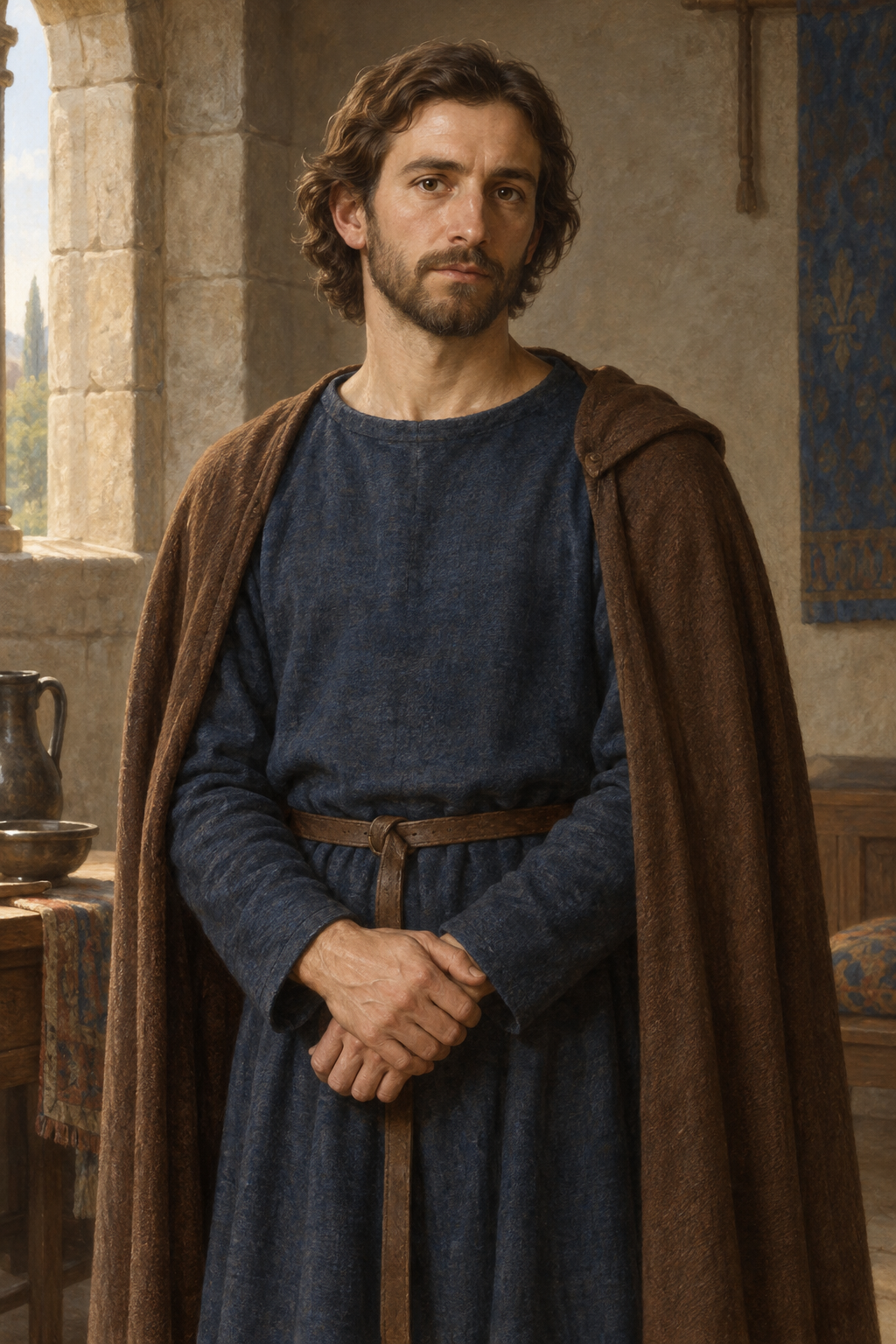
About Elzéar of Sabran
Elzéar of Sabran was a Provençal nobleman whose religious life unfolded within marriage, estate management and royal service. He held the titles of baron of Ansouis and count of Ariano. The traditional account places part of his education at Saint-Victor in Marseille under his uncle, Abbot William of Sabran. His marriage to Delphine brought together two aristocratic families, but the couple became remembered especially for an unusual commitment to chastity, prayer and charity within their married life.
The diocesan account dates their marriage to 1299 and describes Elzéar’s acceptance of Delphine’s wish to remain a virgin. Their shared religious commitment developed over time, including periods when his responsibilities in Italy separated them. The same account emphasizes their concern for the spiritual and material needs of servants, tenants and others living on their estates. Their household was therefore an important setting for their religious practice, alongside their personal prayer and penitence.
That choice was not easily understood by their relatives. Historian Florian Mazel discusses family pressure for children and a consultation with the physician Arnaud of Villeneuve in 1304. He also cautions that the Lives use the familiar theme of a saint misunderstood by family. These narratives reveal the tension between religious aspirations and the expectations of noble lineage, but their literary form requires care when reconstructing private conversations or motives.
Elzéar remained active in the political and military world of his class. He fought for the Angevin ruler of Naples against the forces of Emperor Henry VII and exercised authority at Ariano. The New Catholic Encyclopedia places him among the counsellors of Charles of Calabria from 1317. His responsibilities eventually included an embassy to Paris to arrange Charles’s marriage. His religious reputation developed alongside these duties, rather than through withdrawal into a monastery or abandonment of public office.
Mazel stresses this continuity with aristocratic life. Elzéar inherited estates, commanded troops and suppressed a revolt, even though the accounts also praise his clemency. He maintained his property and carefully arranged its succession. Delphine’s later choice of radical poverty as a widow should not be projected backward onto him. Their spiritual partnership was real, but their lives were not interchangeable, and his charity did not mean that he had ceased to be a powerful lord.
His remembrance also includes practical regulation of the household. The scholarly Franciscan Authors catalogue identifies rules associated with the castles of Ansouis and Puimichel, intended for their households and garrisons. These are described as rules shaped by the Gospel. The catalogue is evidence for the existence and transmission of these attributed regulations; it does not supply their full text. They belong to a tradition that sought to connect ordinary responsibilities with religious discipline rather than reserving holiness for a cloister.
Lamberto de Echeverría’s devotional account describes daily Mass, shared religious instruction and care for people who were poor or ill. It also presents Elzéar as a skilled participant in the courtly life around him. Echeverría explicitly warns that the historical forms of asceticism in such lives are not all suitable for imitation. The enduring emphasis of his reading is generous service within a lay vocation, not the reproduction of every demanding penitential practice reported about the couple.
Elzéar died in Paris on September 27, 1323, before the marriage ceremony he had been sent to help arrange. Françoise Baron records his earlier testamentary request for burial with the Franciscans at Apt. His body rested temporarily with the Paris Franciscans before being taken to Provence. The campaign for his canonization included a petition from Apt’s bishop and inhabitants in 1327, an inquiry in 1351–1352 and testimony from Delphine.
Urban V proclaimed him a saint in 1369. Gregory XI promulgated the bull in January 1371, after Urban’s death; these are separate stages of the cause. Baron also describes the elaborate monument and reliquaries created for his remains. Their history shows how liturgical remembrance, civic devotion and artistic patronage developed around his tomb. The reported miracles belonged to the testimony supporting the cult and should be distinguished from independently established medical events. His remains were transferred to the cathedral of Apt in 1791.
Nicole Archambeau’s study of Delphine’s later canonization inquiry explains the importance of family and political relationships in such testimony. Witnesses remembered Elzéar’s widow as both a holy woman and a countess connected to royal power. Their accounts were shaped by personal relationships and by the formal setting of an inquiry. Recognizing that context need not reduce devotion to manipulation; it helps readers understand how memories of sanctity were preserved and presented.
The Archdiocese of Avignon commemorates Elzéar with Blessed Delphine on September 26. Its account remembers prayer, Eucharistic devotion, justice and care for the sick as parts of their life together. Their story offers a distinctive example of married lay holiness, while retaining the social tensions and historical distance that shaped it.
Wondering how to weigh the stories and sources? Learn how to read a saint biography.