Biography
Emily Cooper
About Emily Cooper
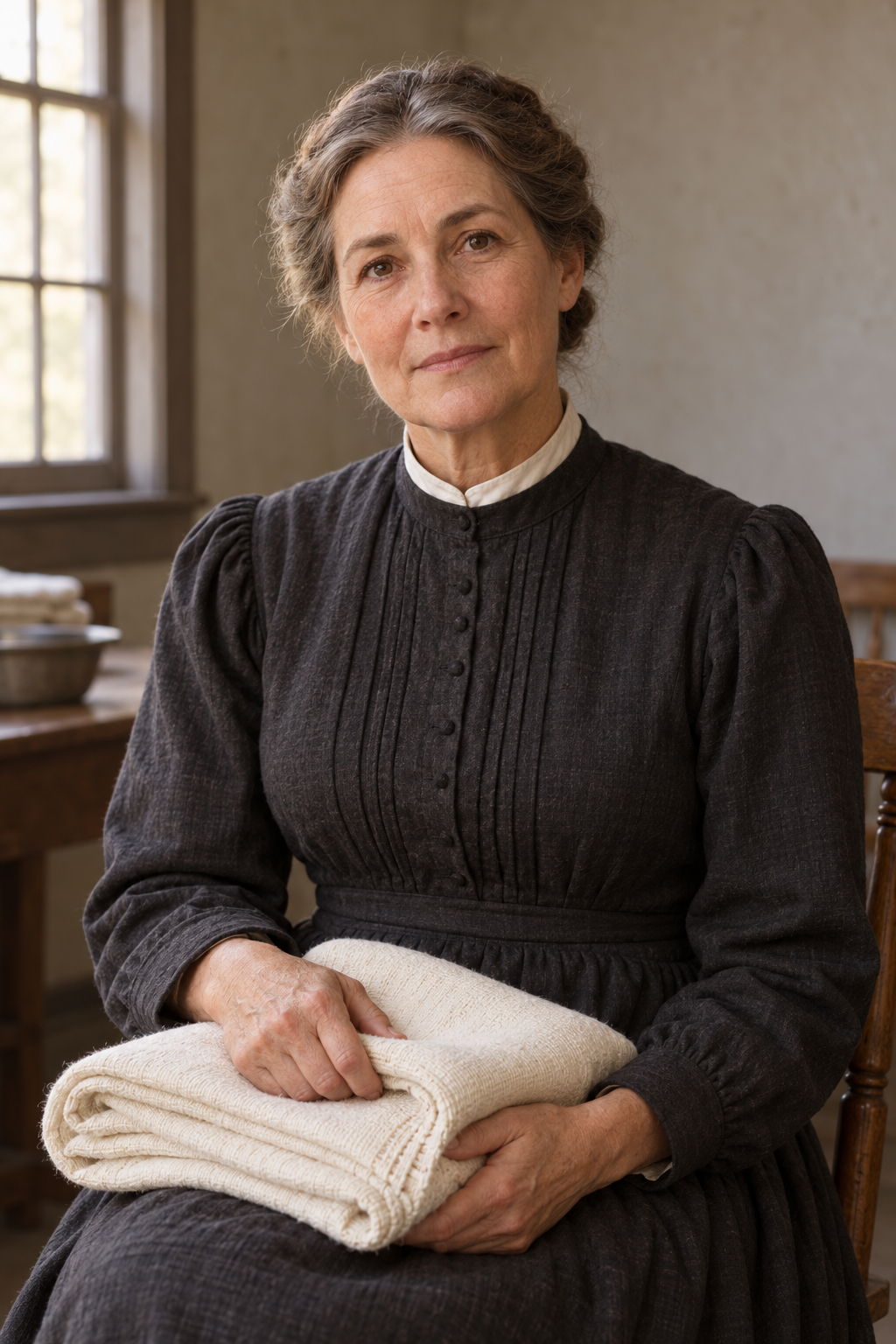
Emily Cooper helped establish a home for vulnerable children in Louisville, Kentucky. When the Episcopal minister James Taylor Helm opened the Home of the Innocents in 1880, Cooper supported its work as a deaconess. The institution’s history describes its first purpose as caring for children whose mothers were working or living in poverty. Its first accommodation had room for eight children.
A native of Kentucky, Cooper trained for service at St. Mary’s Episcopal Church in Brooklyn. She was admitted to the office of deaconess on June 11, 1873. Bishop Benjamin Bosworth Smith called her back to Kentucky, where she became director of the Home of the Innocents in 1880. Her ministry included caring for children who arrived without names and helping at their baptisms and burials.
Education also became part of her work. In February 1888, Cooper urgently requested a kindergarten for the Home. Lucy Gage’s history of early childhood education records that Emily P. Beeler served as its principal for the first five months. Eva Magruda, a graduate of Louisville’s early training program, took charge in the autumn. This account gives the teachers their place alongside Cooper, whose request helped bring the school into being.
The kindergarten belonged to a wider local movement. Louisville’s first free kindergarten had opened in 1887, and a training class for teachers followed later that year. The Home’s kindergarten was the second in this sequence. Cooper’s contribution was therefore a particular initiative within a growing effort to make early education available to children in need.
The earlier history does not support the later claim that hers was the first kindergarten in Kentucky.
Cooper continued directing the Home until 1904. The state historical marker at her burial place records that failing health brought her retirement and that she spent her remaining years at the Orphanage of the Good Shepherd. She was buried in Cave Hill Cemetery, among children from the Home whose graves were unmarked. The marker identifies seventy-seven children in this burial area who had died between 1880 and 1900.
Recovering the children’s names became part of remembering her work. In 2009, diocesan historiographer Sharon Receveur reported that a local committee had searched records at the cemetery, the Filson Historical Society, and the Home. The committee raised money for memorials at two burial plots and established an endowment to help mark other children’s graves.
One of the commissioned sculptures, Meg White’s Metamorphosis, depicts Cooper shaking out a blanket patterned with butterflies. The butterflies gradually become three-dimensional and appear to fly away. White explains the blanket as a symbol of the care the children received, and the butterflies as symbols of their release from this world. This is a modern memorial interpretation of Cooper’s ministry, rather than a scene documented from her life.
In 2010, the Diocese of Kentucky established April 16 as a local commemoration of Cooper and all forgotten children.
The remembrance continued publicly in June 2011, when Episcopalians and friends gathered to give thanks for her ministry and remember the children. A report by commemoration committee member Ken Thompson describes the gathering as recognition of the deaconess who had cared for sick and abandoned children at the Home. Her commemoration thus keeps the children’s memory beside her own.
Wondering how to weigh the stories and sources? Learn how to read a saint biography.