Biography
Emily Malbone Morgan
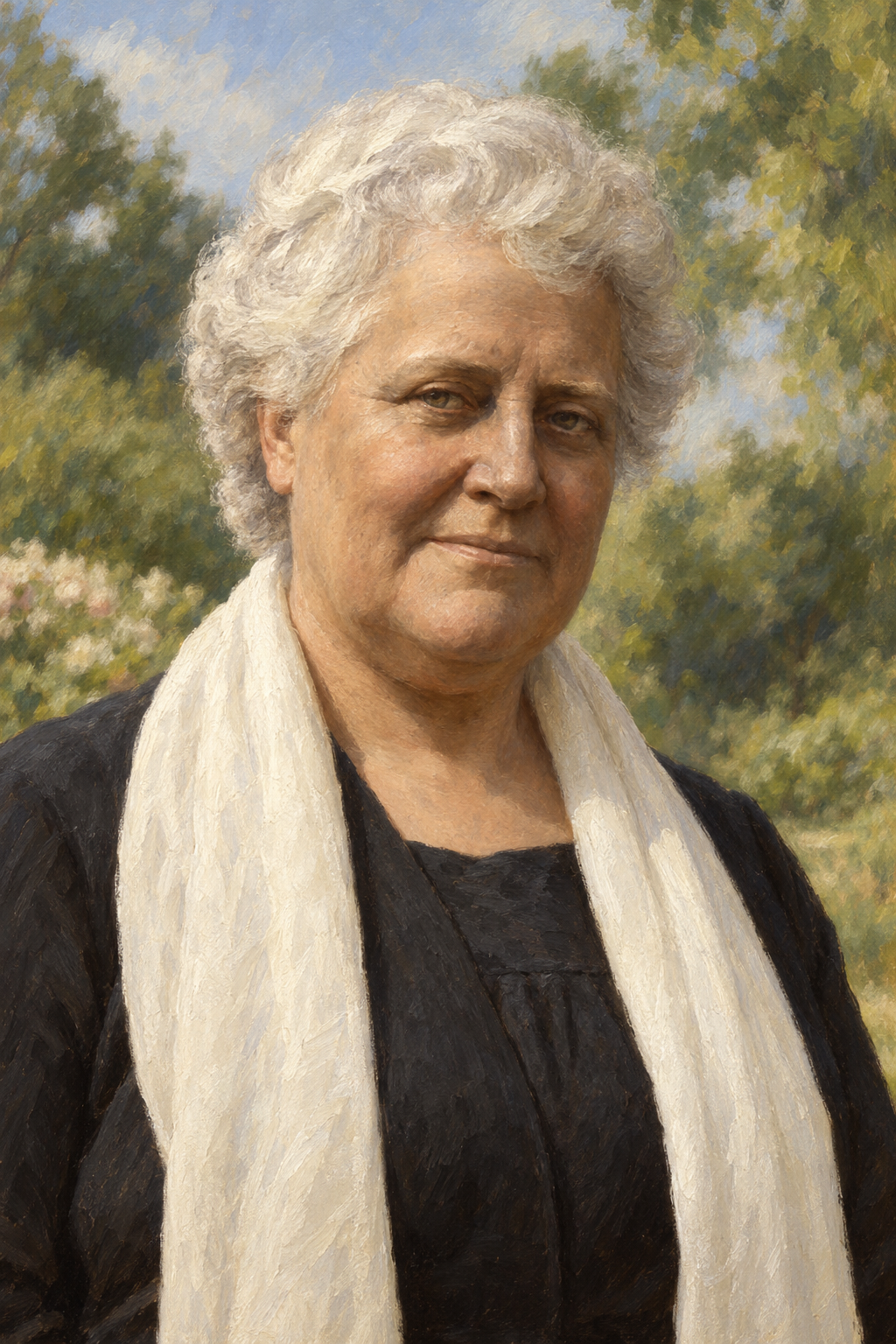
About Emily Malbone Morgan
Emily Malbone Morgan brought women together through prayer and practical hospitality. She grew up in Hartford, Connecticut, in a family that encouraged reading, travel, and an appreciation of art. As a young woman, she questioned religious observance that seemed detached from other people’s suffering. Her later biographer, Emily Sophie Brown, connected that struggle with her growing commitment to service.
A friendship helped give that commitment a lasting form. In a retrospective account, Morgan recalled that her friend Adelyn Howard had moved away from familiar people and was confined to bed by illness. Morgan wanted to bring companionship and cheer to her life, but Howard particularly wanted a religious society that would offer spiritual fellowship. Morgan discussed the idea with Harriet Hastings during a visit to Boston in the winter of 1884. They drew up rules and aims and selected an existing collect rather than composing a new prayer. Morgan emphasized that Howard was consulted before decisions were made. The first companions were invited that spring. Her recollection gives Howard an active part in shaping the society, rather than presenting her only as the recipient of help. She recalled choosing the name Companions of the Cross because Howard’s experience of suffering gave it meaning. The group formally began on the feast of the Invention of the Cross that May, according to Morgan’s retrospective.
The Society of the Companions of the Holy Cross began with seven women. They adopted a rule of prayer, thanksgiving, and simplicity of life. A written Intercession Paper organized their shared prayer even when they were apart. During the next decade, the society grew to about one hundred members, with chapters in New York, Hartford, Philadelphia, and Boston. Vida Dutton Scudder helped shape its work through many years of responsibility for women preparing to join.
Morgan also organized places where women and children could rest. Heartsease opened at Saybrook in 1889, followed by Beulahland at Blandford in 1894. She helped fund these ventures through art lectures and the sale of her books. Brown’s account describes the practical work behind hospitality: correspondence, schedules, furnishings, and careful accounts. Guests joined the cooperative effort by making household linens.
In 1906 she purchased Putnam Elms, a house associated with her family in Brooklyn, Connecticut. She opened it as a vacation home for working women. Her arrangements for the property after her death included family members and the Colonel Daniel Putnam Association, preserving a connection between hospitality and the house’s history.
Putnam Elms had another public purpose alongside its use as a vacation house. A county history published during Morgan’s lifetime describes it as a gathering place for the Putnam family and the Daniel Putnam Association. The association marked historic sites with memorial tablets and preserved old records, sometimes publishing them. The account places Morgan’s home within a local effort to preserve the past, as well as identifying her as its resident owner.
The Companions also developed a place for their own common life. Their institutional history dates the completion of Adelynrood in Byfield, Massachusetts, to 1914. Its libraries, chapels, and gardens provided space for study, prayer, and gathering.
Historian Mary Sudman Donovan describes the Companions as a meeting place for women whose work otherwise kept them apart. Their summer conferences connected prayer with discussion of labor conditions and social reform. Speakers included members themselves: Genevieve Cowles discussed prison reform, while Maud Foley encouraged support for the Women’s Trade Union League. These were contributions by particular Companions, showing how the society Morgan led made room for other women’s experience.
The two forms of hospitality did not always fit easily together. Writing after Morgan’s death, her colleague Vida Dutton Scudder recalled that the vacation houses had long taken precedence over the Companions in Morgan’s attention. Scudder described a gradual shift in responsibility and a difficult inner struggle in 1920, which she found expressed in Morgan’s annual letters. Her account presents that change as an emotional decision about competing commitments. It also places Morgan’s work within a wider movement toward social fellowship, while emphasizing personal sympathy rather than a developed social theory as her motive.
In her later years she taught a Bible class for young women at Trinity Church in Boston. Brown remembered her efforts to make worship at Adelynrood welcoming to people with different forms of Episcopal churchmanship.
She died in 1937.
The house’s later history reflects the family ties that Morgan sought to preserve. The Colonel Daniel Putnam Association records that her will provided life interests for two relatives, followed by interests for two grandnieces, with the remainder going to the association as a memorial to her mother. In 1938, Julia Morgan Firth transferred her interest to the association. This account describes the arrangements for Putnam Elms specifically; it does not establish how Morgan disposed of every part of her estate.
The Episcopal Church commemorates her on February 25 as a lay leader and contemplative; final calendar authorization came in 2022.
Wondering how to weigh the stories and sources? Learn how to read a saint biography.