Biography
Emma of Lesum
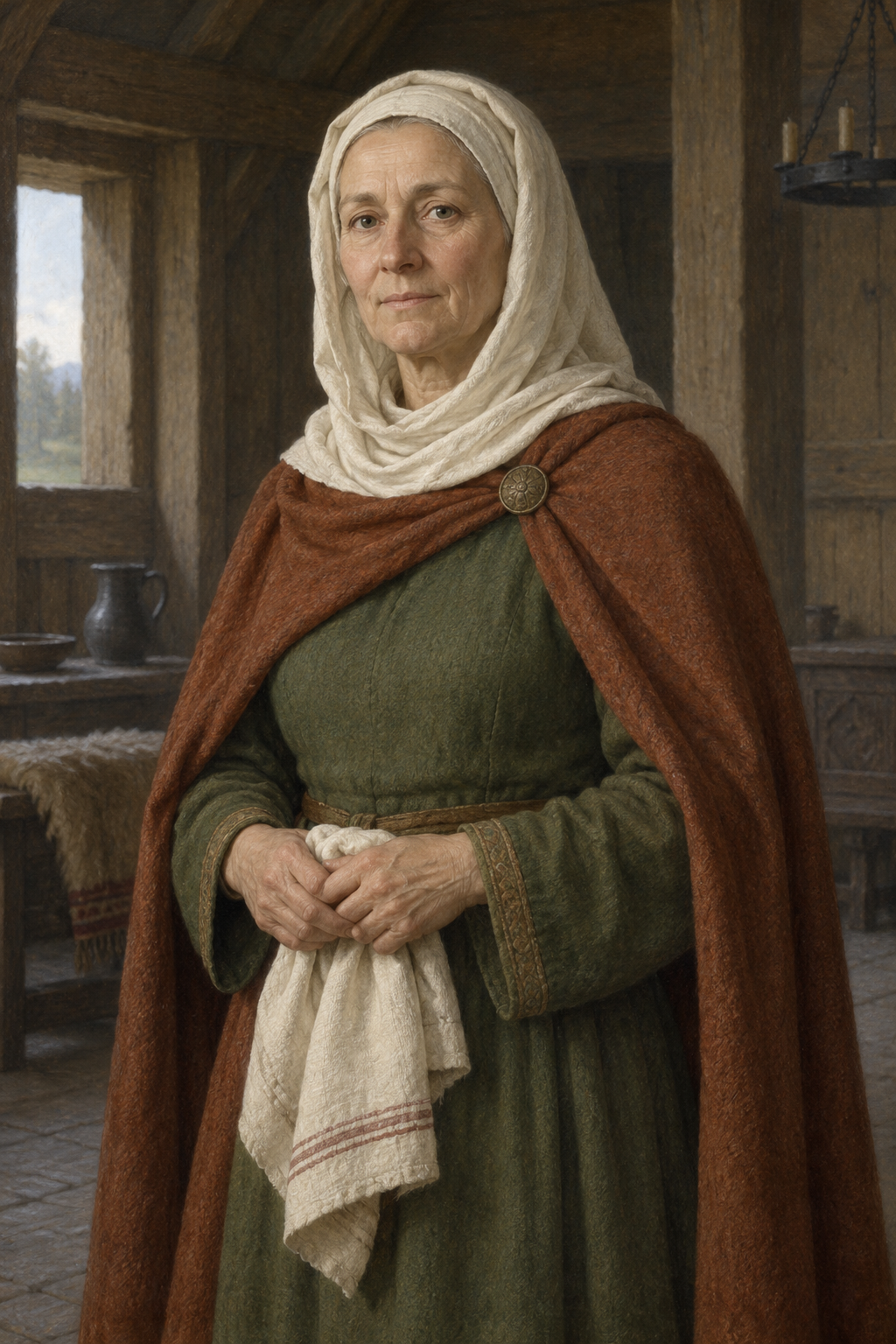
About Emma of Lesum
Emma of Lesum is remembered as a wealthy widow and benefactor of the Church at Bremen. She was married to Count Liudger, who died in 1011. The near-contemporary account of Adam of Bremen praises her generosity to poor people and the Church, including her gift of the Stiepel estate. That testimony provides a firmer basis for her remembrance than the detailed stories later attached to her name.
Her family history remains disputed. The claim that she was Bishop Meinwerk of Paderborn’s sister appears in later versions of Adam’s text, rather than its earliest form. Raimund Trinkaus, following Paul Derks, cautions against building a secure genealogy on that addition. The traditional association with Lesum is also less straightforward than many short biographies suggest.
Other researchers interpret the surviving evidence differently. Dieter Riemer accepts that Emma and Liudger had a daughter whom Adam does not name, and argues that she may be identified with the religious woman Rikquur. He also discusses the loss of the Lesum holding after Emma’s death. This is a historical reconstruction, not an established family relationship that can safely be stated without qualification.
The date usually given for Emma’s death is December 3, 1038. She was buried in Bremen Cathedral. Her reputation for generosity continued to grow, and she came to be venerated as a saint. A later legend says that her charitable right hand remained intact when the rest of her body decayed. The story expresses the religious meaning given to her almsgiving; it is not a verified account of bodily preservation.
Bremen’s best-known story about Emma concerns pastureland. She promises the townspeople as much land as one man can cover in a day. A relative anxious to preserve his inheritance chooses a man unable to walk, but the man crawls around a far larger area than expected. The Bürgerpark’s own historical account identifies this as legend, not proof that Emma donated the Bürgerweide. Its documented history instead includes a charter issued by Archbishop Hartwig in 1159.
That distinction does not erase the story’s importance to Bremen. The Emmasee, a commemorative bench and other memorials preserve her association with generosity and shared land. The park itself grew from nineteenth-century civic initiatives, long after her lifetime. Emma’s remembrance therefore combines a medieval record of benefaction with later religious devotion and civic storytelling; the layers should not be mistaken for a continuous, fully documented biography.
Wondering how to weigh the stories and sources? Learn how to read a saint biography.