Biography
Fabiola
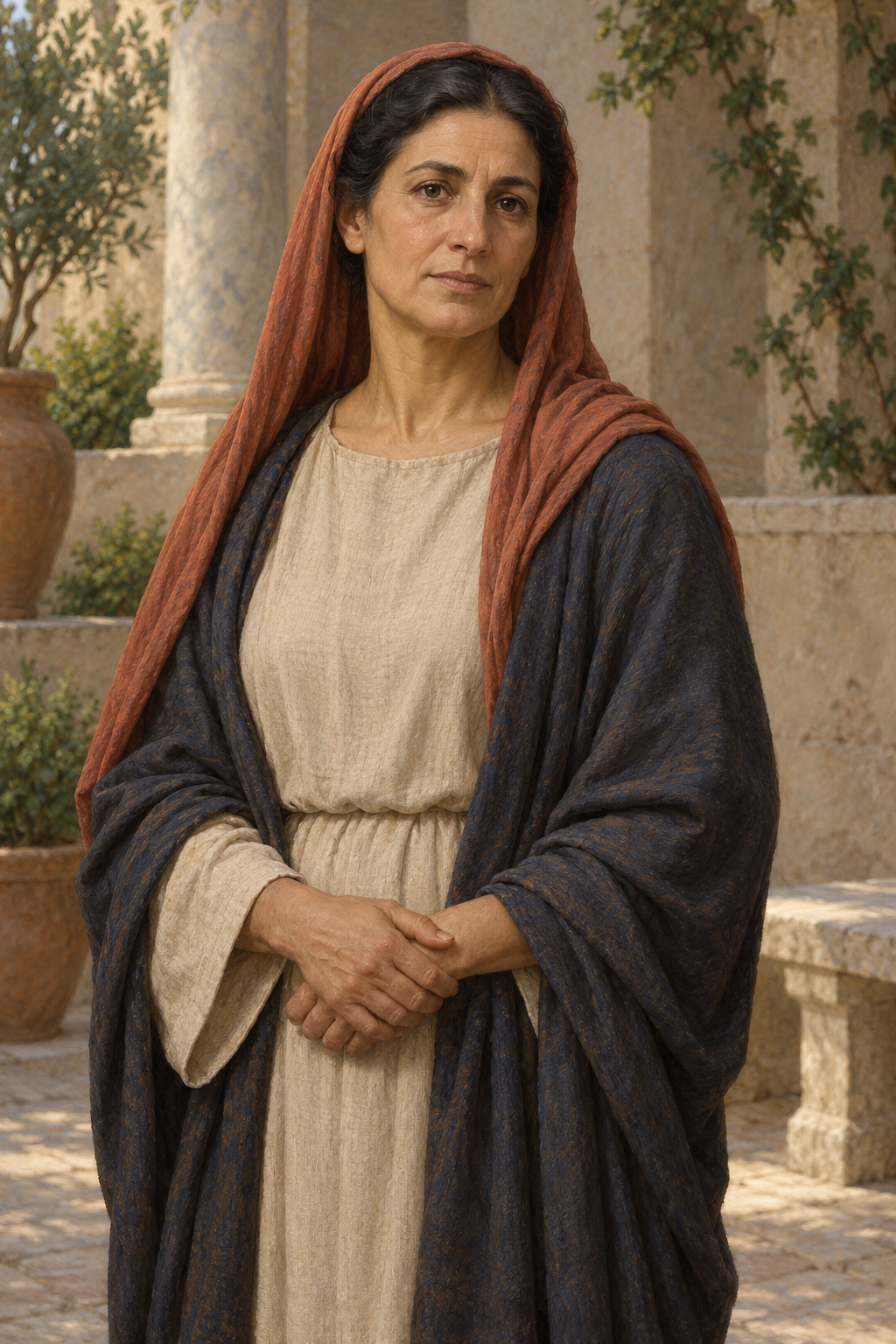
About Fabiola
Fabiola was a Roman Christian woman remembered for direct care of people who were sick and poor. Most of what survives about her comes from Jerome’s letter to Oceanus, written after her death. It is a eulogy by someone who knew her, not a neutral register of dates. The letter makes her visible through choices that challenged Jerome’s expectations about wealth, marriage and public religious life. Her birth year is unknown.
Jerome says Fabiola belonged to a distinguished Roman family. She separated from her first husband and married again while he was alive, a decision criticised under the church discipline of her time. Jerome defends her separation by alluding to the husband’s conduct, but he does not give a record through which a later reader could independently judge the marriage. After her second husband died, she undertook public penance. Her later work cannot be understood by simply erasing that difficult chapter.
The Catholic Encyclopedia describes her appearance among penitents at the Lateran basilica before Easter. Jerome’s letter presents the scene with vivid imagery and biblical parallels; its purpose is to praise reconciliation. The core fact is that she returned to the church’s communion after a public act of penance. The details of gesture, clothing and crowd belong to Jerome’s rhetorical account and should be read with that genre in mind.
Her resources then went toward practical help. Jerome says she gathered sick people from Rome’s streets into an institution devoted to their care. He stresses that she carried, washed and fed patients herself, including people whose wounds others avoided. The description is unusually concrete about the work of care, even as his language aims to move readers. She also supported religious communities and supplied clothes and food to people in need beyond the city.
The history of the institution needs precision. Scholar Isabella Bonati places Fabiola’s Roman hospital around 397 and distinguishes it from earlier charitable and medical facilities elsewhere in the empire. The familiar claim that she founded the first hospital anywhere would overstate the evidence. Her Roman work is significant as an early public place for the sick in the Latin West, with attention to people who lacked other support.
Fabiola travelled east and stayed briefly with Jerome’s circle near Bethlehem. According to his letter, she questioned him closely about passages in Scripture, especially the book of Numbers. Jerome’s Letter 64 was addressed to her and discusses the vestments of the high priest. These texts show an interest in learning that sits alongside her practical service. The threatened approach of the Huns helped bring her visit to an end, and she returned to Rome.
Back in Italy, she and Pammachius supported hospitality for travellers at Portus near Rome. The Catholic Encyclopedia distinguishes this project from the hospital that cared for the sick in Rome itself. Jerome’s letter depicts their cooperation as a friendly contest in generosity. She continued giving and serving until her death. A large gathering at her funeral appears in Jerome’s eulogy, a sign of the esteem he wanted readers to remember.
Catholic remembrance marks Fabiola on 27 December. Later health care history continues to cite her because Jerome left a rare account of hands-on nursing in late antique Rome. The letter also preserves a more complicated person: someone whose earlier decisions drew criticism, who sought reconciliation, studied Scripture and spent her resources on people whom the city could easily overlook. Her significance rests in that sustained service rather than a claim of medical priority that cannot be demonstrated.
Wondering how to weigh the stories and sources? Learn how to read a saint biography.