Biography
Fantinus the Elder
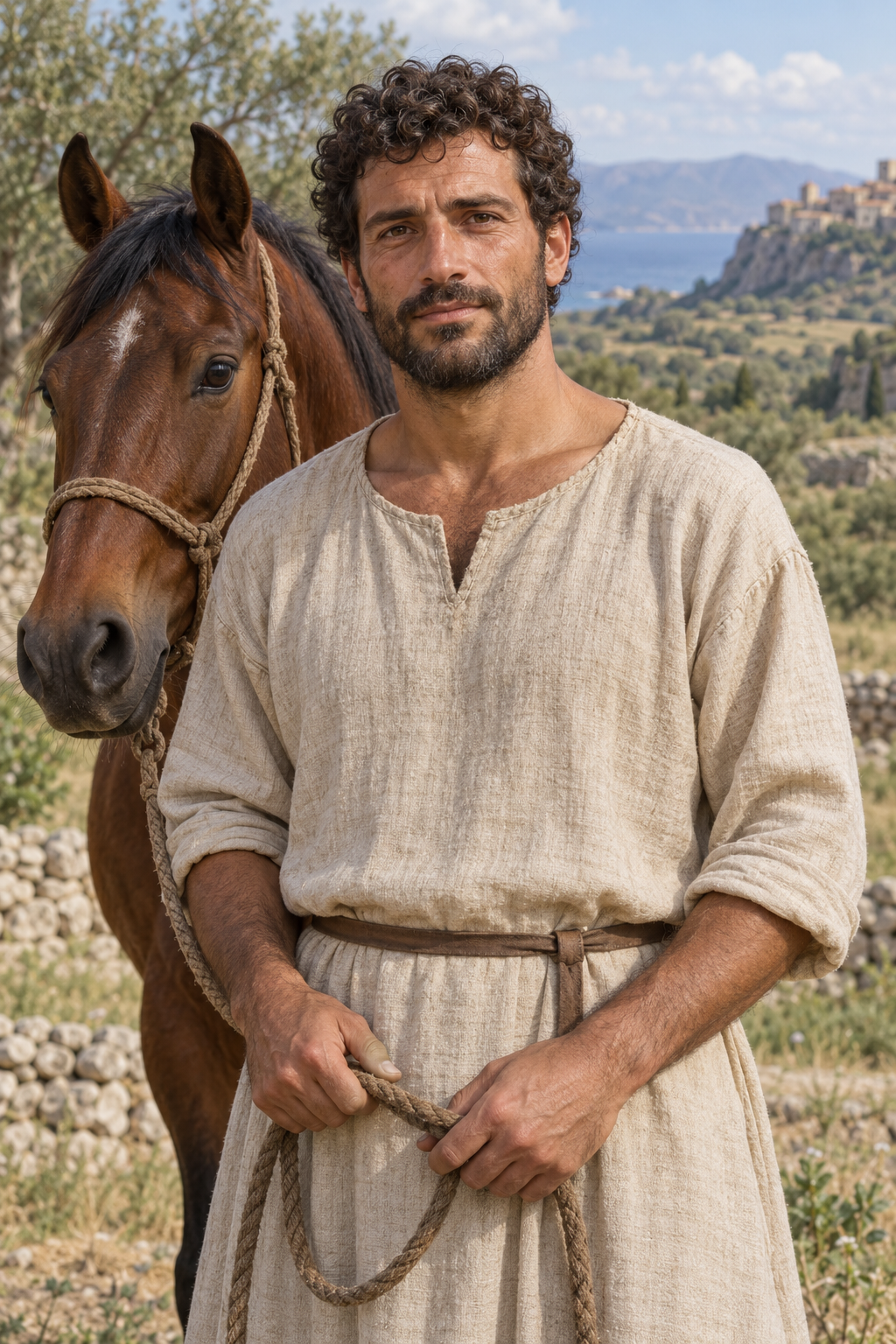
About Fantinus the Elder
Fantinus the Elder is remembered at Taureana in Calabria as a horsekeeper who helped poor neighbors with their harvest. In the account preserved by the local parish priest, he worked for a pagan landowner named Balsamius and used his employer’s horses to thresh other people’s grain at night. The story then becomes miraculous: when Balsamius discovered what was happening and pursued him, Fantinus prayed at a swollen river, crossed through its divided waters, and brought his astonished employer to the Christian faith. These episodes belong to the saint’s later religious tradition; they are not independently documented incidents.
The surviving evidence gives much firmer access to devotion around Fantinus’s tomb than to the circumstances of his lifetime. Enrica Follieri’s study of his Greek hymn describes the Life as dependent on vague legendary material, in contrast to the more concrete setting of the posthumous miracle stories. Even the Life’s author acknowledged that he did not know how Fantinus died. Exact dates repeated in popular accounts therefore cannot be treated as established chronology.
Nor was the surviving collection necessarily written all at once. In her later survey of Greek saints in Italy, Follieri distinguishes the Life and the final two miracles, associated with a bishop named Peter, from an independent collection of eighteen miracles already known to Joseph the Hymnographer. She identifies Peter as probably a bishop of Syracuse, rather than confidently assigning him to Taureana.
Fantinus’s commemoration nevertheless had a durable place in Greek Christian worship in southern Italy. Medieval liturgical books associated with the Patire monastery and the monastery of the Holy Savior at Messina remembered him on July 24. Manuscripts from those communities also preserved his Life and miracles. Follieri reported that his office was still used at Grottaferrata when she published her study in 1961. This earlier Fantinus must be distinguished from the tenth-century Calabrian monk who died at Thessalonica.
The local observance also continues in the Latin Catholic tradition. A 2019 diocesan account describes July 24 celebrations that include the blessing of horses and riders at Taureana, followed by a procession carrying the saint’s icon to the crypt.
Care for the place associated with him has also become a local cultural undertaking. The Movimento San Fantino association records an agreement with heritage authorities and the municipality of Palmi in March 1998 to adopt the historic complex, followed by further arrangements for its care and public access. Alongside worship, the association’s work includes historical education and guided visits.
Wondering how to weigh the stories and sources? Learn how to read a saint biography.