Biography
Frances Perkins
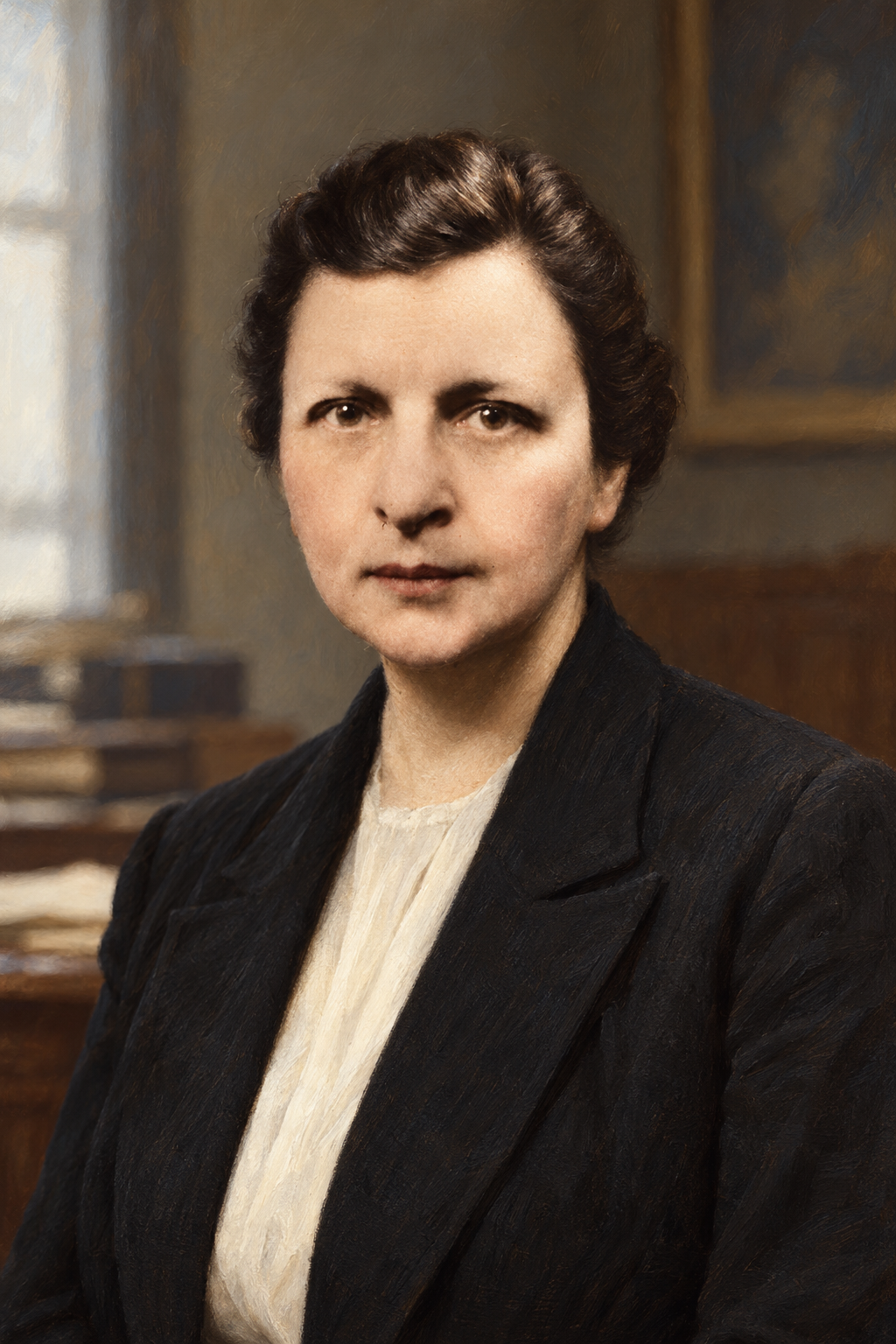
About Frances Perkins
Frances Perkins brought experience in social work and labor reform to the highest levels of American government. Born in Boston on April 10, 1880, she studied at Mount Holyoke College and later earned a master’s degree at Columbia. She worked with the New York Consumers League before entering state government. In 1933, Franklin Roosevelt appointed her secretary of labor, making her the first woman to serve in a presidential Cabinet. She remained in that office until 1945.
Faith informed her public vocation. Raised in the Congregational tradition, she joined the Episcopal Church in 1905. The Perkins Center connects her faith with justice and practical care. At her family’s Maine homestead, her parish was St. Andrew’s in Newcastle.
One experience she returned to throughout her life was the Triangle Shirtwaist Factory fire of 1911. Speaking to Cornell students in 1964, she remembered visiting a friend near Washington Square when the alarms and cries drew them outside. She saw workers jumping from the burning building. Her recollection linked the horror of that afternoon with the public demand for action afterward. She also remembered the force of union organizer Rose Schneiderman’s speech at a public meeting. In Perkins’s account, grief became a campaign for investigation and legislation. Al Smith advised seeking a legislative commission so that lawmakers would take responsibility for its findings. Perkins described investigations that expanded beyond fire hazards to include sanitation, long hours, low wages, child labor, and work sent into homes. Her later lecture was a witness’s interpretation of events more than fifty years earlier; its central emphasis was the work required to turn outrage into enforceable protections.
As secretary of labor, Perkins helped develop Social Security. In a 1962 address, she recalled asking Roosevelt for permission to try to establish unemployment and old-age insurance before accepting office. The eventual Committee on Economic Security depended on many people: lawyers, statisticians, actuaries, administrators, and advisers. She credited Edwin Witte with directing a difficult process involving strong opinions and limited time. The committee had to decide who would be covered, how benefits would be financed, and what responsibilities states and the federal government would hold. Perkins remembered prolonged disagreement over unemployment insurance and the compromises needed to produce a bill. She also acknowledged giving up universal coverage to secure the legislation’s passage. She recalled that public speeches and hearings helped explain unfamiliar proposals and build support among voters and legislators. Her account presented reform as collective work conducted through argument, public explanation, and imperfect decisions, rather than a policy that emerged fully formed from one person.
Those compromises left substantial gaps. The original contributory old-age insurance program excluded agricultural and domestic workers, among other groups. Many African Americans worked in those occupations and were disproportionately affected. Historian Larry DeWitt distinguishes this insurance program from the public assistance provisions within the same legislation. He argues that administrative concerns explain the coverage exclusions, while discussing scholars who emphasize racial politics. The existence and unequal effects of the exclusions remain essential to understanding the program’s limits, whatever explanation is offered for their origins.
Her department also had responsibilities for immigration. During her Cabinet service, the State Department issued visas, while the Immigration and Naturalization Service within Labor decided admission at the border. Perkins sought ways to assist people endangered by Nazi persecution within a restrictive system. After the violence of Kristallnacht in 1938, Roosevelt permitted her to extend visas for Germans and Austrians already in the United States. Such measures did not remove the barriers facing refugees trying to enter the country. In 1940, the immigration service moved from Labor to the Justice Department, ending her authority over it. The United States Holocaust Memorial Museum’s account places her efforts within these divided responsibilities and political constraints. It does not make her responsible for every refugee admitted during the Roosevelt administration.
After federal service, Perkins continued teaching. Cornell’s School of Industrial and Labor Relations records her visiting lectureship from 1957 to 1965. She came for periods of several weeks, drawing on her experience in government and the labor movement. At times she lived at Telluride House, where she was the only woman. Her surviving lectures, correspondence, photographs, and interviews became part of the university’s archival record. They preserved opportunities for later students to hear how a participant understood the making of public policy.
She died in New York City on May 14, 1965, and was buried in Newcastle, Maine.
On April 10, 1980, Jimmy Carter dedicated the Department of Labor headquarters in her name at a ceremony attended by her daughter and grandson. He marked the hundredth anniversary of her birth and connected her public service with her religious conviction that social and economic justice were obligations. His tribute reflected the enduring public significance of her work.
The Episcopal Church commemorates Perkins on May 13.
Wondering how to weigh the stories and sources? Learn how to read a saint biography.