Biography
Gerhard of Csanád
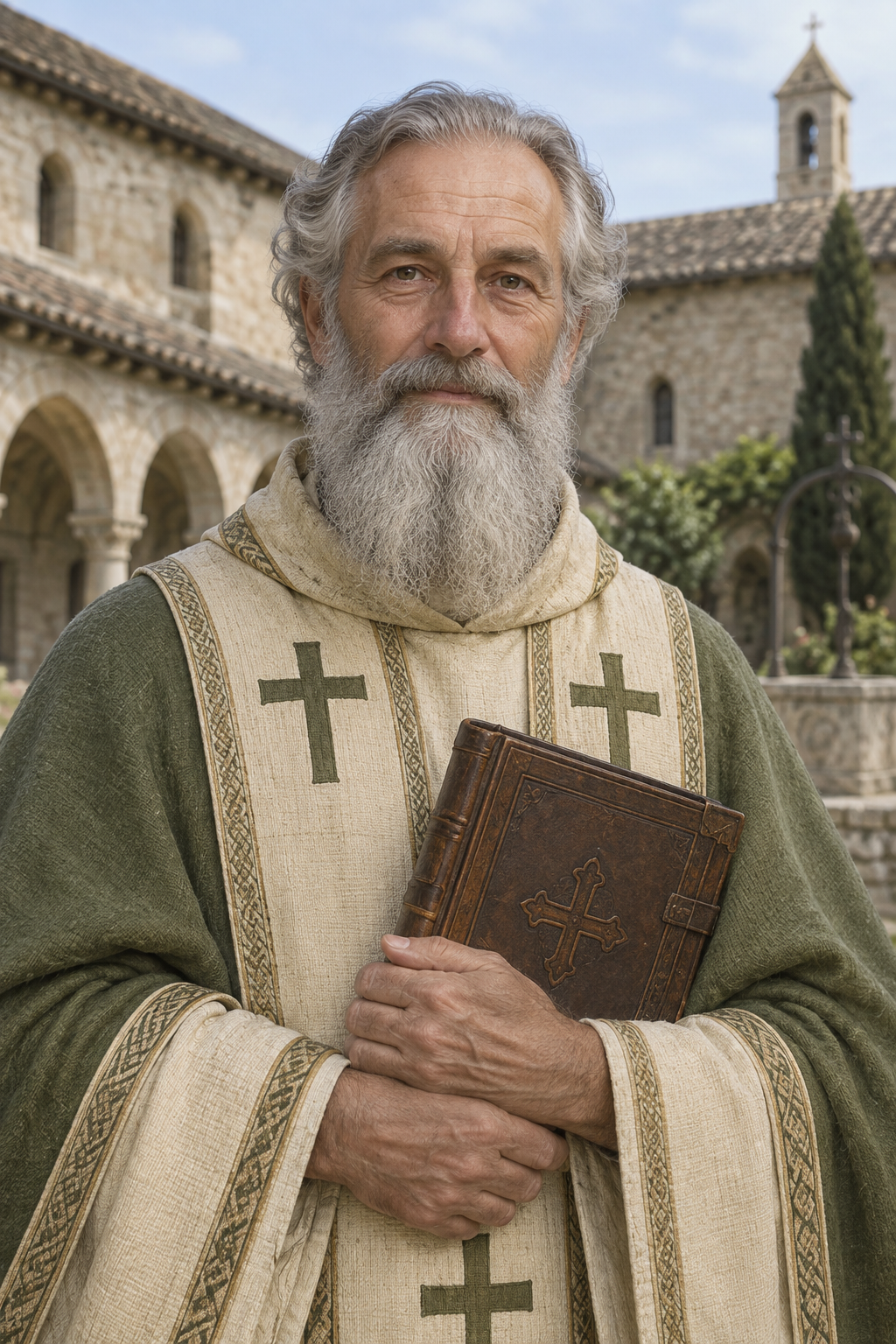
About Gerhard of Csanád
Gerhard of Csanád lived at the meeting point of Venice's monastic world and the young Christian kingdom of Hungary. The evidence for his life is unusually uneven: his own theological book survives, but no contemporary biography does. Two anonymous medieval Lives became the main narrative sources, and the longer version is rich in conventional hagiographic scenes. Modern historians therefore recover a small secure outline while treating many attractive details as received tradition. That distinction is essential to understanding both the bishop and the stories later communities told about him.
He was probably born around 980 in Venice or the surrounding Veneto. His original family and childhood cannot be reconstructed securely. The surname Sagredo entered his story in a Venetian publication of 1516, centuries after his death. Later accounts also say that he was offered to the monastery of San Giorgio as a child, studied at Bologna, became abbot, and took his father's name. These episodes remain traditional rather than established biographical facts.
A more restrained early Life calls him Venetian, which gives some support to the broad regional origin. Gerard was probably formed as a monk, although even his precise Benedictine affiliation has been questioned. Later tradition sends him toward the Holy Land and explains his arrival in Hungary through a storm and a providential meeting. The actual reason for his journey to Hungary in the 1020s is unknown. The story that King Stephen I made him tutor to Prince Emeric is long received in Catholic memory, but its details are not independently documented.
The firmer record begins around 1030, when Gerard became the first bishop of the missionary diocese centered on Marosvár. That settlement was subsequently called Csanád, and its historical region now lies across modern borders in the Banat. Stephen's government was building durable Christian institutions in a kingdom whose conversion was still incomplete. Gerard's episcopal office placed him within that institutional effort rather than in an isolated preaching mission. His title accordingly joins three roles that later Catholic sources emphasize: monk, missionary bishop, and martyr.
A papal letter drawing on the medieval Lives says that Gerard organized the new diocese with twelve monks. It credits him with a cathedral, a church dedicated to Mary, and a school for the formation of clergy. Those institutional details are plausible, but their narrative form is later and should not be treated like a contemporary foundation charter. They nevertheless describe the practical work expected from a founding bishop: gathering clergy, teaching, and creating stable places of worship. His ministry was therefore remembered through institutions as well as through itinerant evangelization.
Gerard's own surviving work gives a more direct view of his learning. The unfinished Deliberatio supra hymnum trium puerorum comments on the song of the three youths in Daniel. Scholars date its composition within his episcopate, between about 1030 and 1046, without claiming a more precise year. A single manuscript, Munich Clm 6211, copied in the later eleventh century, preserves the text. The work ranges beyond its biblical passage into theology, philosophy, scriptural interpretation, and the religious disputes Gerard perceived around him.
The Deliberatio shows that Gerard read widely, often through inherited compilations such as Isidore of Seville's works. Its language is difficult and highly rhetorical, which makes isolated autobiographical allusions hard to interpret. Gerard also refers to other writings, including commentaries on Hebrews and First John, but those works have not survived. One located passage describes his teaching of people who did not know Christ. The packet preserves six Latin words from that passage rather than assigning him an unverified English translation.
King Stephen died in 1038, and the succession brought repeated conflict over royal authority and Hungary's political alignment. Gerard's later years unfolded within those struggles. Treccani's reconstruction places him cautiously among shifting factions and ultimately among those preparing to receive Prince Andrew. The Deliberatio itself reflects anxiety about political and religious disorder, although it does not provide a simple diary of events. Claims that Gerard personally refused to crown particular rulers belong to contested hagiographic reconstruction and are not retained as fact here.
On September 24, 1046, Gerard was traveling toward Buda when armed supporters of the pagan rebel Vata attacked his party near the Pest crossing. He was killed during the broader anti-Christian uprising that accompanied the return of Prince Andrew. A modern academic history identifies him as a Venetian monk, bishop of Csanád, and victim of pagan rebels after Stephen's death. Later narratives add stones, a cart or barrel, lances, a descent from Kelen Hill, and the Danube. Because those mechanisms vary and derive from hagiography, the packet records the killing and probable place but not one dramatic sequence as documented fact.
Gerard's cult was formally recognized in Hungary in 1083 alongside those of King Stephen, Prince Emeric, and the hermits Zoerard-Andrew and Benedict. Recent scholarship describes these as local canonizations initiated most probably by King Ladislaus I. The political setting does not erase devotion, but it shows that medieval recognition also served the needs of a kingdom emerging from civil conflict. Hungary's current Roman Catholic calendar celebrates Szent Gellért as bishop and martyr on September 24. The calendar gives the observance the rank of feast within its Hungarian jurisdiction.
Gerard remains significant because a working bishop's voice survives beside the later saintly portrait. The Deliberatio connects the institutional formation of the Csanád church with the intellectual world of eleventh-century Latin Christianity. The Lives, read critically, preserve communal memory without supplying equal confidence for every scene. His career also shows how migration, royal policy, monastic practice, education, and violence met during Hungary's Christianization. A careful account honors that history best by keeping Gerard's attested writing and office in view while labeling the traditions that grew around them.
Wondering how to weigh the stories and sources? Learn how to read a saint biography.
Explore similar vocations
Prayers for Gerhard of Csanád
Szent Gellért: intercession excerpt
az általa elvetett evangéliumi mag százszoros termést hozzon