Biography
Henri Vergès
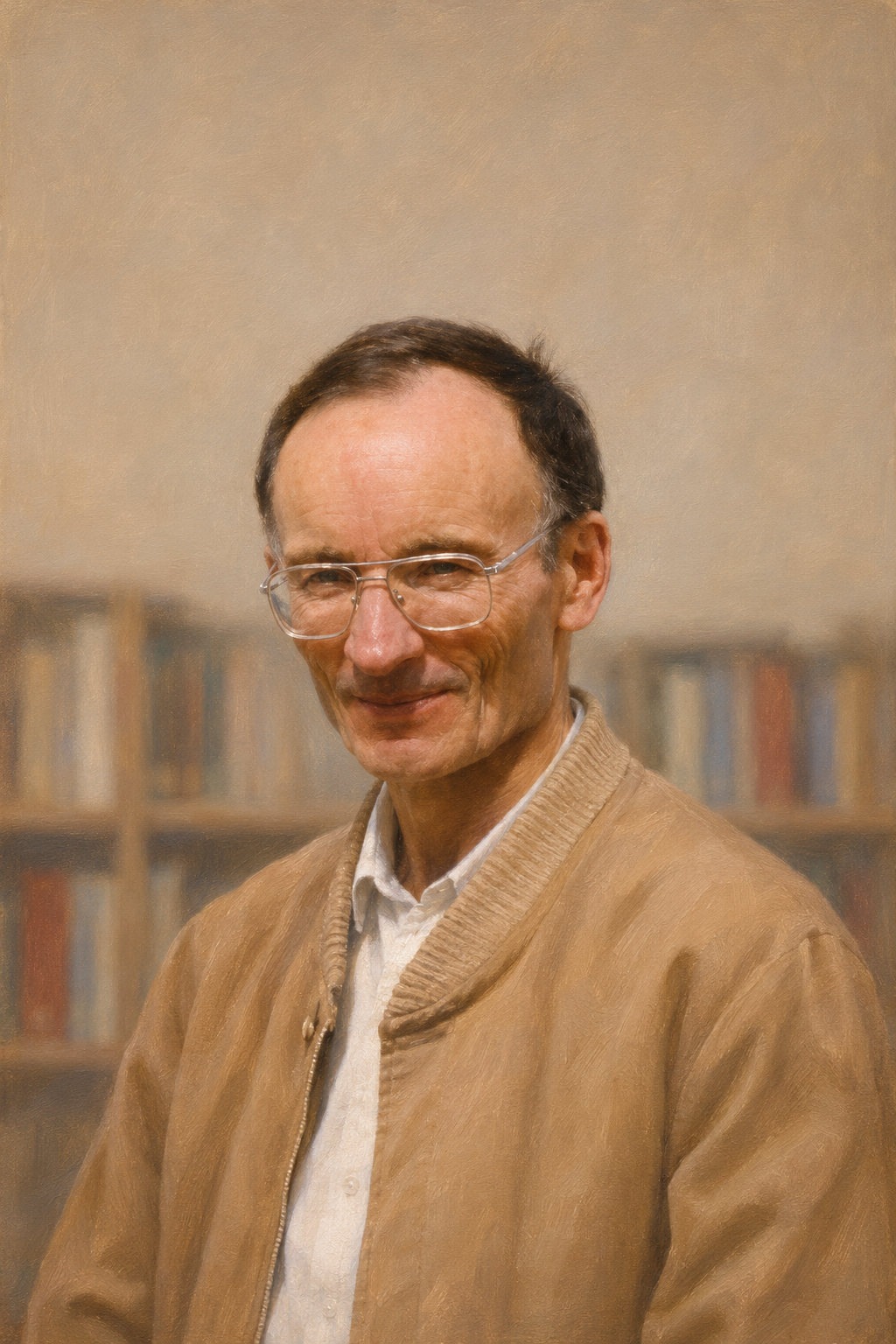
About Henri Vergès
Henri Vergès grew up in Matemale, a village in the French Pyrenees, and became a Marist teaching brother. He entered the brothers’ juniorate as a boy during the Second World War. Separation from his family was difficult, and wartime shortages made institutional life demanding. After training, he began teaching young children at Saint-Geniez-d’Olt. Illness interrupted this early work and required a lengthy stay at a sanatorium near his home region. His later responsibilities included teaching and helping to form young religious. He continued his own studies while carrying out those duties.
His desire to work abroad was longstanding, but for years his assignments kept him in France. Michel Voute, who later shared community life with him, recalled that he accepted those responsibilities while continuing to prepare himself. He finally went to Algeria in 1969. After a year at Saint-Bonaventure, he became the school’s director in 1970. The nationalization of private schools in 1976 changed the conditions of his work. He continued in education as a teacher at Sour-El-Ghozlane, teaching mathematics and later French. His contract was renewed over twelve years. For five of them he lived without another Marist brother, maintaining friendships with Muslim colleagues and neighbors.
Henri’s concern for students included the practical conditions that allowed them to learn. Thizy and Delorme describe his efforts to make Saint-Bonaventure accessible through fees adjusted to family income. Later, at the Ben Cheneb library, he sought support for the work, brought back useful books from local bookshops and strengthened fragile bindings himself. His office remained open to young people looking for information or encouragement. These details connect his educational ideals with ordinary tasks that kept a place of study usable.
The library became his principal work in Algiers from 1988.
During the growing violence of the 1990s, its quiet space mattered to young people seeking somewhere to study. A later Marist account explains his decision to remain through this service: he did not want to leave while he could still help Algerians who themselves could not escape the danger. His relationships also extended beyond the library. He participated in Ribat al-Salaam, which brought Christians and Muslims together for dialogue and reconciliation. His work among Muslim neighbors was part of his religious vocation rather than an activity separate from it.
His own 1986 reflections put patience at the center of education. He asked for gentleness toward himself and toward the young people entrusted to him. He compared an educator’s work with sowing seed and allowing time for growth. In that image, the teacher cannot dictate every stage of a student’s development. Henri acknowledged that he did not know each young person’s rhythm. His reflections also understood difficulty as part of the work, without making discouragement the final word. These notes preserve the standards by which he tried to guide his own conduct.
Henri and Paul-Hélène Saint-Raymond were killed at the library on 8 May 1994. Voute’s account records that Christian and Muslim friends joined the gathering for their funeral at Notre-Dame d’Afrique.
A former student, whose name is not supplied in the cause website’s excerpt, remembered Henri’s love of teaching mathematics and his respect for Islam and Muslims. He mourned the loss as a human tragedy that no religion or conscience could justify. Christian de Chergé also remembered him through the patience of daily service. In his reflection, Henri’s final death belonged to a life already given through many ordinary acts. These responses preserve different perspectives: gratitude from a pupil and a spiritual interpretation from a friend in religious life.
Matemale later gave his name to a public square. At its dedication in 2004, Alain Delorme connected the village’s remembrance with the republican ideals of liberty, equality and fraternity. He described Henri’s religious commitments as compatible with service to those civic ideals. His address thanked the municipality on behalf of the family and the Marist brothers. It also recalled the esteem of an employee at Saint-Bonaventure, who had described Henri as a person who brought people together. The ceremony situated his memory within his birthplace as well as within the Church. Delorme also noted that Henri had been included in a school religious education book, bringing his example to children who had never known him.
Henri was beatified with the other eighteen martyrs of Algeria on 8 December 2018. His life also inspired Adrien Candiard’s play Le cinquième évangile. The work uses an imagined exchange of letters between Henri and a former pupil; its dialogue is a dramatic interpretation, not a newly discovered correspondence. Priscilia de Selve’s account of a 2019 performance describes the Marists’ wish to make him known through this production. The distinction matters when remembering him: the play offers an artistic reading of his commitment, while his own notes and the testimony of people who knew him provide the historical evidence.
Wondering how to weigh the stories and sources? Learn how to read a saint biography.