Saint profile
Henry II
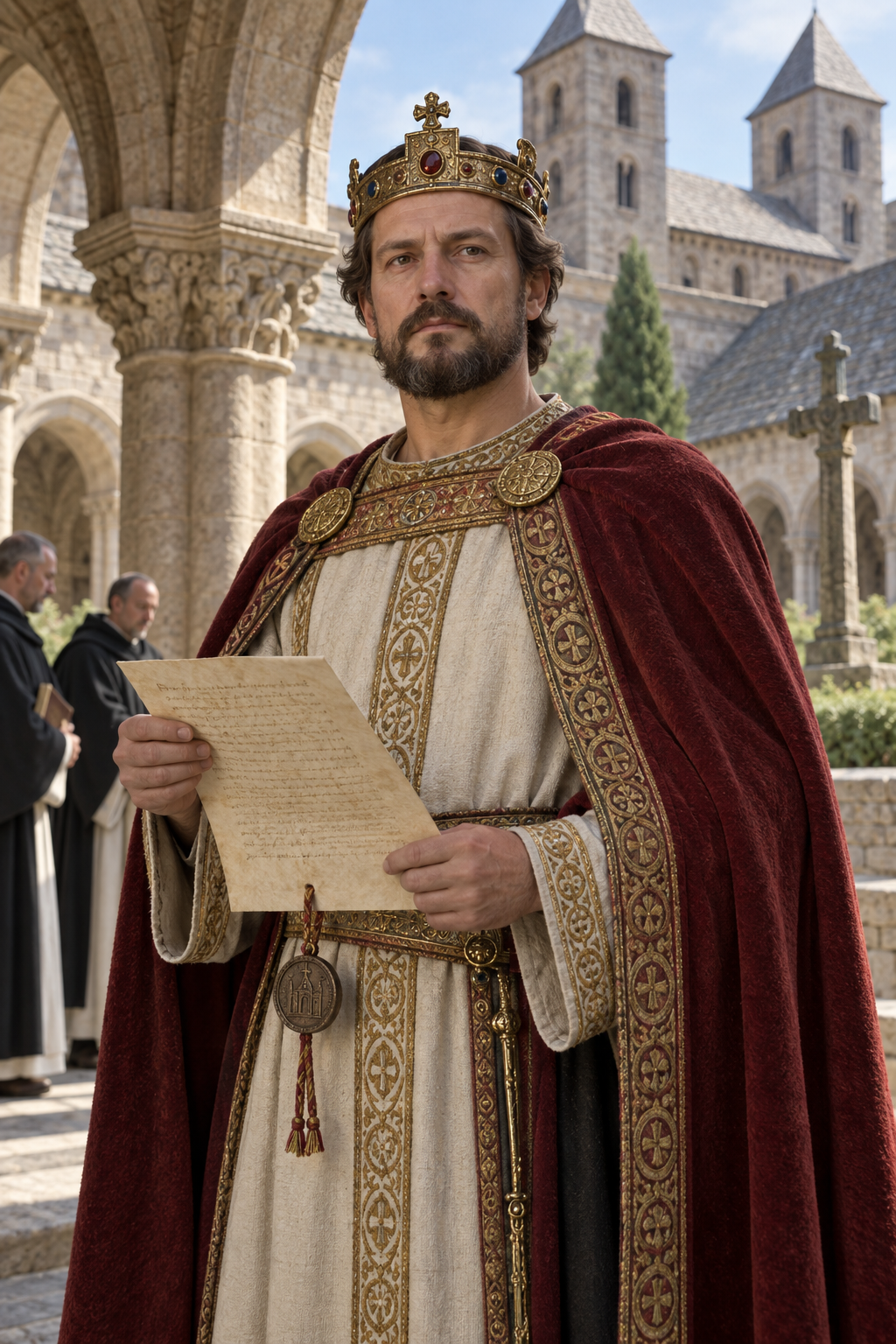
About Henry II
Henry II belonged to Bavaria's ruling family and was born around 973. The Archdiocese of Bamberg locates his birth near Regensburg, while other accounts give a different town; the precise birthplace should therefore remain open in structured data. He studied at the cathedral school at Hildesheim and encountered church and monastic reform currents at Regensburg. This education helped shape a ruler whose religious commitments later had political consequences.
Henry married Cunigunde around 1000. He had succeeded his father as duke of Bavaria and, after the death of Otto III, competed for the kingship. The Bamberg account describes his seizure of the imperial regalia before his coronation at Mainz on 7 June 1002; this was a contested political accession, not a simple succession. Cunigunde was crowned later that summer. Their marriage was childless, and the couple's partnership appears repeatedly in accounts of the reign.
As king, Henry and Cunigunde established and richly endowed the diocese of Bamberg in 1007. The Bamberg church history suggests several motives, including regional organization and remembrance of a childless couple. A single private motive cannot be established. Henry became emperor in 1014.
Henry’s gifts to Bamberg included valuable art and manuscripts. These books and objects are more tangible evidence of his patronage than later idealized stories. The surviving material also shows how closely royal power and church institutions could be linked in his age.
Henry died on 13 July 1024. He is remembered for church reform and the diocese of Bamberg, and the Catholic feast attached to his memory is 13 July. His reign remains a subject of historical study as well as religious remembrance.
Wondering how to weigh the stories and sources? Learn how to read a saint biography.