Biography
Henry Melchior Muhlenberg
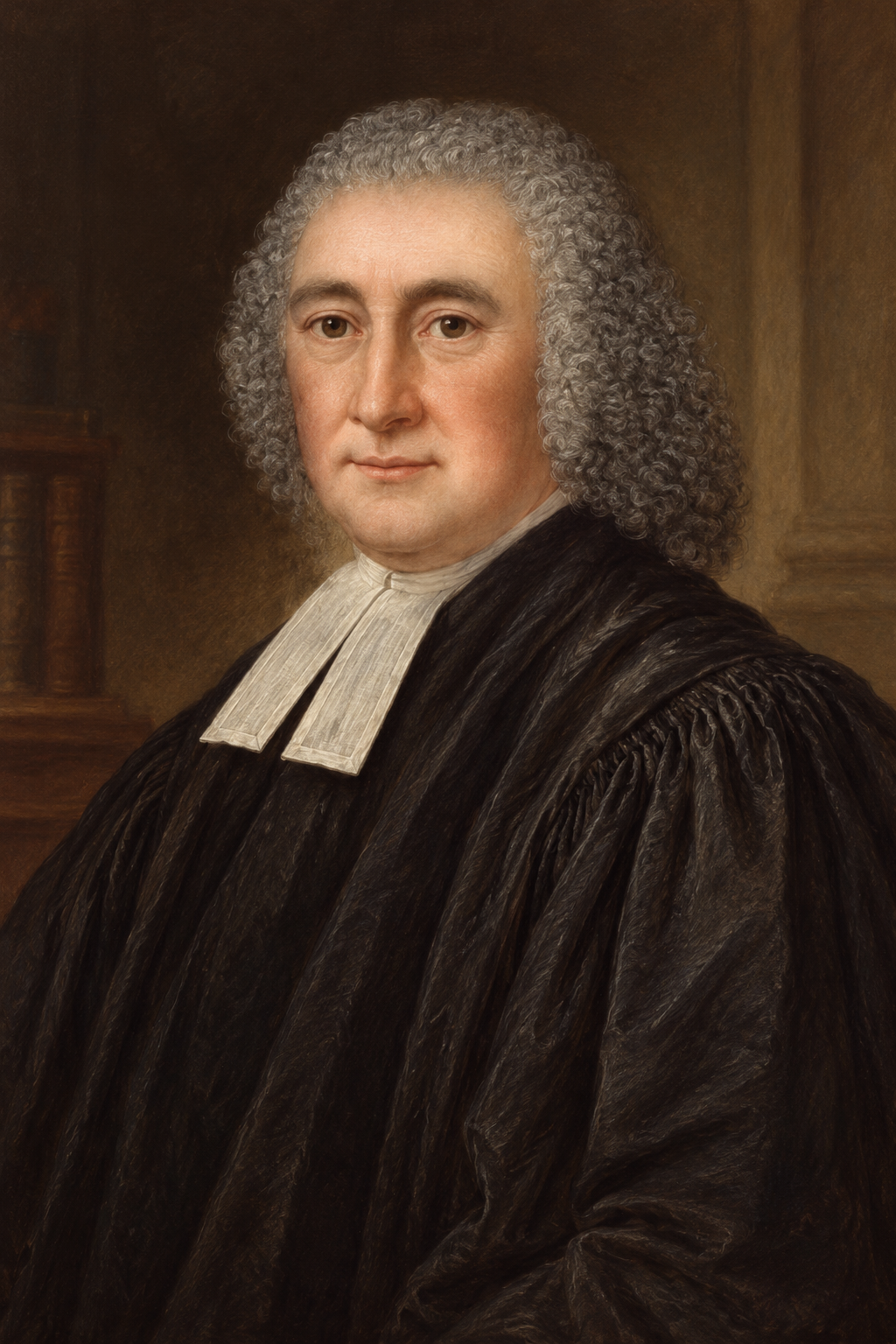
About Henry Melchior Muhlenberg
Henry Melchior Muhlenberg helped scattered Lutheran congregations in colonial America develop a shared church life. Born in Einbeck in 1711, he continued pursuing an education while contributing to his family’s support after his father’s death. Study at Göttingen brought him into contact with Pietist circles, which emphasized personal faith and Christian practice. He later taught at the Francke institutions in Halle and was ordained in Leipzig in 1739. Although he had hoped to join the mission in India, Gotthilf August Francke offered him a call to three Pennsylvania congregations. He accepted and arrived in America in 1742.
The need for pastors required both patience and adaptation. Historian Paul Baglyos examines this through Muhlenberg’s work with John Nicholas Kurtz, who arrived as a catechist rather than an ordained minister. Kurtz could assist with teaching and preaching but could not take on every pastoral responsibility. Muhlenberg urged that he be prepared for ordination, while Francke advised careful assessment of his abilities and character. Over three years, Kurtz received theological instruction and supervised experience. A formal examination preceded his ordination in 1748, with church representatives and other ministers present. Baglyos argues that Muhlenberg was seeking an orderly way to meet local needs without simply reproducing European arrangements. The episode shows a practical concern behind his insistence on credentials: congregations needed reliable ministers whose preparation and authority could withstand scrutiny. A dispute among congregations near the Raritan River had already exposed the shortage of qualified clergy. An assistant could help, but that did not resolve the need for someone able to undertake full pastoral duties.
His work also rested within a household. After his marriage to Anna Maria Weiser in 1745, the couple built a house near Augustus Lutheran Church in Trappe with money supplied by her father, Conrad Weiser. It served as both family home and parsonage. Eight of their eleven children were born there before the family moved to Philadelphia. Historic Trappe’s study of the surviving building describes a substantial stone house with several rooms, two stories, and an attic. The parsonage was a different building from the house to which the family returned during the Revolution.
Muhlenberg’s organizational work included a common liturgy, prepared with Peter Brunnholtz and John Frederick Handschuh, and the formation of the Pennsylvania Ministerium in 1748. Historian Peter Vethanayagamony emphasizes the limits on that body’s authority: it did not claim legal control over congregations, and arbitration required the consent of both sides. Muhlenberg worked across several Protestant traditions, offering pastoral service beyond German Lutheran congregations and maintaining relationships with figures associated with the Great Awakening. Those relationships did not erase theological boundaries. He objected to Quaker understandings of the sacraments and Baptist rejection of infant baptism. His cooperation with others coexisted with a strong concern to preserve Lutheran teaching and worship.
His response to slavery also had serious limits. Vethanayagamony records his early criticism of the institution, his baptism of enslaved Africans, and his refusal to accept an enslaved person offered to him. The historian also notes that he took no measures to abolish slavery.
Later scholarship challenges a simple portrait of German immigrants as opponents of slavery. In her introduction to Babel of the Atlantic, Bethany Wiggin describes Birte Pfleger’s comparison of Muhlenberg’s writings from 1742 with those of the 1770s. The study traces how language about race increasingly made hereditary slavery appear natural, while distinguishing the rights of European servants from the exclusion of enslaved Africans. Wiggin also warns that translations of Muhlenberg’s journals can alter the meaning of particular passages. This scholarship requires his early protests to be read alongside the development of racist assumptions, rather than treated as proof of consistent opposition to slavery.
The American Revolution tested his wish to remain publicly neutral as a pastor. His sons Peter and Frederick took different paths into military service and politics. Lisa Minardi’s account distinguishes that public restraint from his private sympathy with the struggle for independence. In July 1776, he heard the Declaration read in Philadelphia and soon moved with his wife and youngest daughter to Trappe. The household became a refuge for relatives and friends during the war. His journals recorded political events, casualties, and the upheaval around him. These writings preserve the experience of a pastor trying to sustain family and church life while the society around them changed.
He continued contributing to Lutheran worship in his later years, including the ministerium’s hymnbook and church agenda of 1786. He died in Providence, Pennsylvania, the following year. He never entirely loosened his ties to Europe. Strohmidel notes that he sought to strengthen transatlantic connections even after independence and remained hesitant about the ministerium becoming a fully autonomous source of church authority.
The Lutheran Church—Missouri Synod commemorates him on October 7 as a pastor. That remembrance centers on the church life he helped organize through congregations, shared worship, and pastoral service.
Wondering how to weigh the stories and sources? Learn how to read a saint biography.