Biography
Herman of Alaska
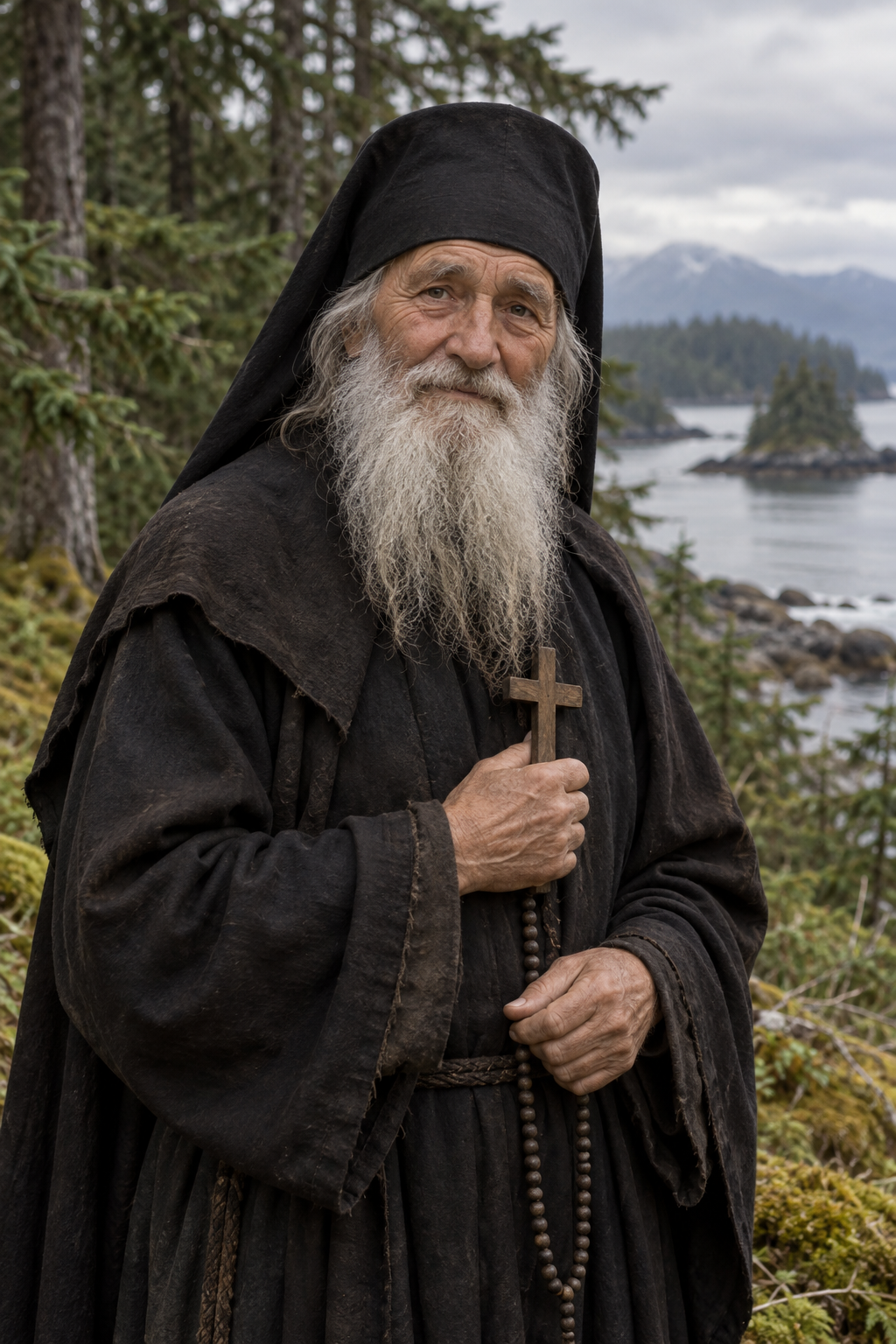
About Herman of Alaska
Herman of Alaska was born in the eighteenth century in Serpukhov, in the Moscow Diocese of Russia. The Orthodox Church in America gives his birth as around 1756-1760, so the catalog should keep the existing approximate midpoint of 1758 and mark it as approximate. His baptismal and family names are not firmly preserved in the reviewed OCA sources. The historical record can say that he came from Serpukhov and entered monastic life young; it should not invent a childhood scene or family story beyond the official account.
The OCA life places his early monastic formation first at the Trinity-Sergius Hermitage near Saint Petersburg and then in the Valaam tradition. That setting matters because Herman's later Alaskan ministry was not detached activism. It grew from the habits of prayer, ascetic simplicity, obedience, and service that formed him as a monk. Later traditions remember miraculous healing and other signs from this early period, but those elements should be labeled as traditional or legendary when they appear. The main historical line is secure without requiring every devotional episode to be treated as documented fact.
In 1793 a mission was organized from Valaam and related monasteries to Russian America. OCA sources name Herman among the monks selected for that work. The OCA chronology records the missionaries' departure from Saint Petersburg in December 1793 and their arrival at Kodiak in September 1794. The mission took place in a colonial world shaped by Russian fur trade, Native Alaskan communities, and ecclesial concern for preaching, worship, and pastoral care. The final profile should keep those layers distinct. It can name the mission and its Orthodox purpose while avoiding a triumphalist account of colonization.
Herman's longest and most distinctive ministry was on Spruce Island near Kodiak. He called the place New Valaam. OCA life material describes a simple cell, chapel, garden, schoolhouse, and guest house associated with his life there. Those details should be handled as part of the OCA narrative, not as archeology unless separately sourced. The important point is that Herman's monastic solitude did not isolate him from people. Native Alaskan visitors, children, and families came to him for teaching, counsel, and help. His sanctity is remembered through practical care as much as through prayer.
The OCA life repeatedly presents Herman as an advocate for Aleut people when they were vulnerable to oppression, poverty, or poor treatment by colonial officials and traders. A careful biography should preserve that advocacy without turning Native Alaskans into passive scenery. Herman's role was pastoral and protective, and the sources show his concern for people who were being governed and economically pressured by others. The catalog can say that he interceded for those who were harmed and taught children, while leaving unsupported numerical claims or sentimental embellishment out of the record.
One of the most concrete episodes in the OCA life is the epidemic that struck the Kodiak area after a contagious illness arrived by ship. The account describes severe suffering and a lack of medical help. Herman is remembered as visiting the sick, praying with them, preparing the dying, and continuing this care without sparing himself. This episode makes a strong featured event because it connects his monastic life with direct pastoral service. The final importer should cite the OCA life for the event and avoid adding a modern disease name unless a reliable medical or historical source supports it.
Herman died on Spruce Island on December 25, 1837, according to the OCA profile. The OCA also commemorates his repose on December 13 in its liturgical lives material, while August 9 marks his glorification. The legacy field currently stores August 9 as the Eastern Orthodox feast; a complete packet should add normalized feast observances so both the glorification and repose commemorations can be represented without erasing either.
Herman was glorified in 1970. The OCA profile and pilgrimage material connect that event with continuing veneration at Kodiak and Spruce Island. This later recognition should be treated as a distinct event, not blended into the eighteenth-century mission. It explains why Herman became an especially important saint for Orthodox Christians in North America, but it does not make the devotional portrait a historical likeness or justify unsupported patronage claims.
The final record should therefore present Herman as a monk, missionary, and pastoral defender whose remembered holiness took shape through prayer, poverty, teaching, advocacy, and service in illness. It should explicitly distinguish well-supported chronology from traditional miracle stories. Quotations, prayers, miracle narratives, and precise geographic coordinates should remain empty until separately reviewed. This keeps the profile useful for readers while respecting the limits of the surviving evidence.
The same restraint should shape the way Native Alaskan communities are described. OCA sources preserve Herman's concern for Aleut people, but the biography should not treat them as a single undifferentiated audience or as passive recipients of someone else's story. The final packet can say that Herman served, taught, and interceded for people living under colonial pressure. It should leave broader claims about Native culture, numbers of converts, or the motives of colonial officials to separately cited historical sources.
Herman's life also shows why the profile should include later veneration without letting it overwhelm the earlier life. Pilgrimage to Spruce Island, care for his grave, and the 1970 glorification explain his continuing place in Orthodox memory in North America. They belong after the main life narrative, as evidence of how the Church remembered him, not as proof for every traditional story attached to his name.
Wondering how to weigh the stories and sources? Learn how to read a saint biography.