Biography
Hor of Abrahat
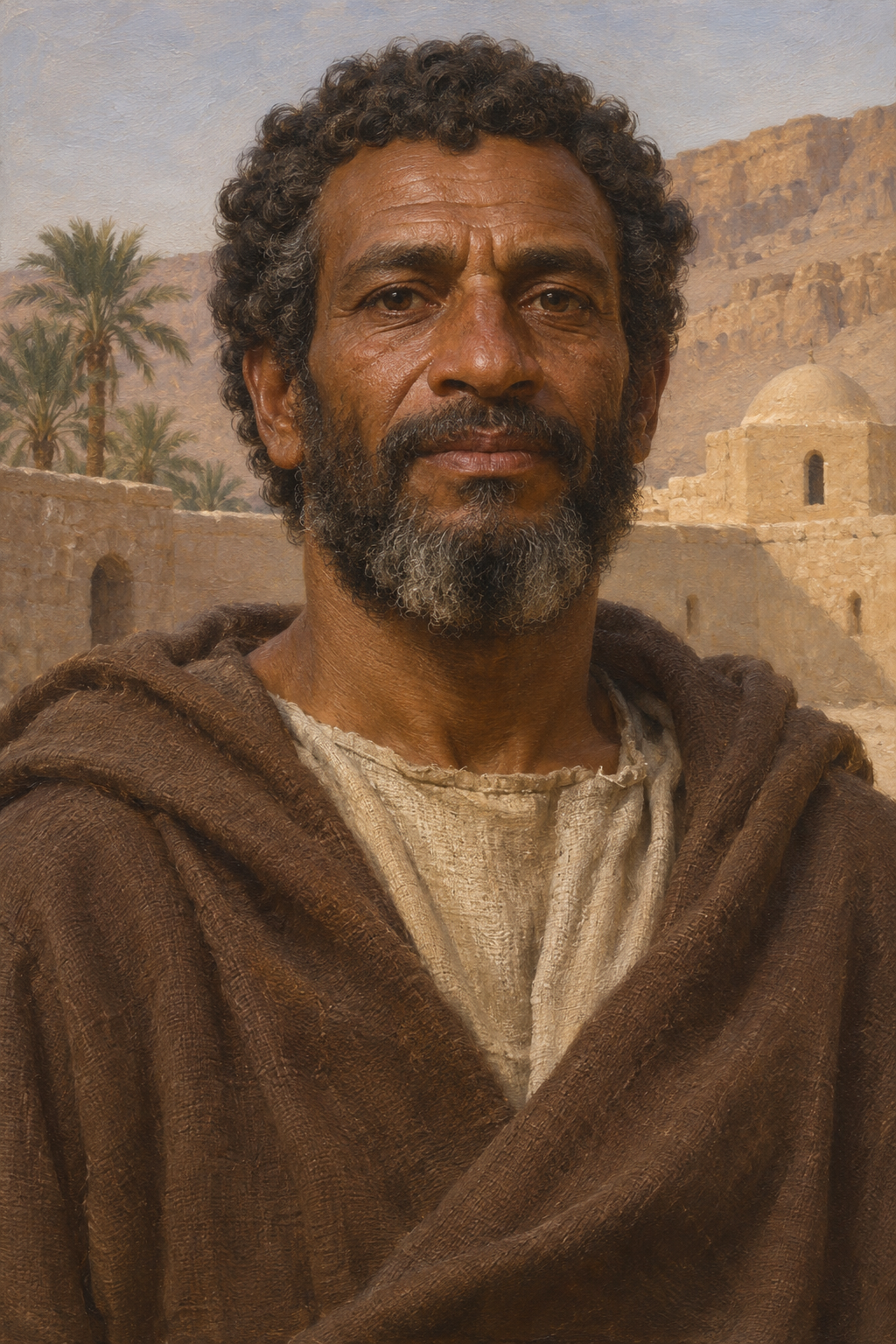
About Hor of Abrahat
Hor of Abrahat is remembered as a monk of fifth- or sixth-century Upper Egypt. The Coptic Encyclopedia identifies his birthplace as Preht, also called Abrahat or Qasr Abrahat, a military settlement near al-Shaykh Abadah. A later geographical identification places it near Dayr al-Barshah. The place-name is uncertain in the manuscript tradition: many Lower Egyptian Synaxarion copies instead read “Atrib,” a different place. The evidence locates Hor within the Nile Valley but does not provide a secure year of birth or a dated itinerary.
The Synaxarion and fragments of Coptic monastic texts portray Hor as leaving ordinary life for the desert. The story then moves him to Alexandria, where he is said to have given drink to prisoners. It also recounts that he restored to life a child killed by a passing horse through the sign of the cross. These are traditional miracle episodes, not independently documented events. Their placement in the narrative shows how the saint’s desert withdrawal was remembered alongside care for people in the city.
After the Alexandrian episode, Hor is said to have withdrawn again, this time to a monastery, because people sought to honor him. The account suggests that he gathered disciples, though it gives no names or numbers. This retreat presents a familiar tension in early monastic memory: a person seeks solitude, yet the reputation for prayer draws others who want instruction. For Hor, the sources do not tell us what rule he gave disciples or how long he remained at any one monastery.
The fullest thread in Hor’s remembered life is his association with Anba Harmina. Hor is described as Harmina’s friend and biographer and as a companion on journeys to Christian sanctuaries in Egypt. A fragment of Harmina’s Life is explicitly attributed to Hor, giving his memory a connection to the preservation of another monk’s story. The Coptic Encyclopedia places him at Psoun, near Akhmim, but phrases the location tentatively. It also suggests that he lived under Emperor Anastasius, whose reign ran from 491 to 518; no precise date is established.
The record for Hor consists of Coptic fragments, two recensions of the Synaxarion, and the Arabic fragment about Harmina edited by Jean Muyser. They do not provide a continuous life, a securely dated death, or independent confirmation of the miracle stories. Hor is therefore best remembered as an Upper Egyptian desert monk whose surviving tradition links ascetic withdrawal with hospitality and pilgrimage, and as a narrator whose account helped preserve Harmina’s journeys.
Wondering how to weigh the stories and sources? Learn how to read a saint biography.