Biography
Horsiesios of Pbow
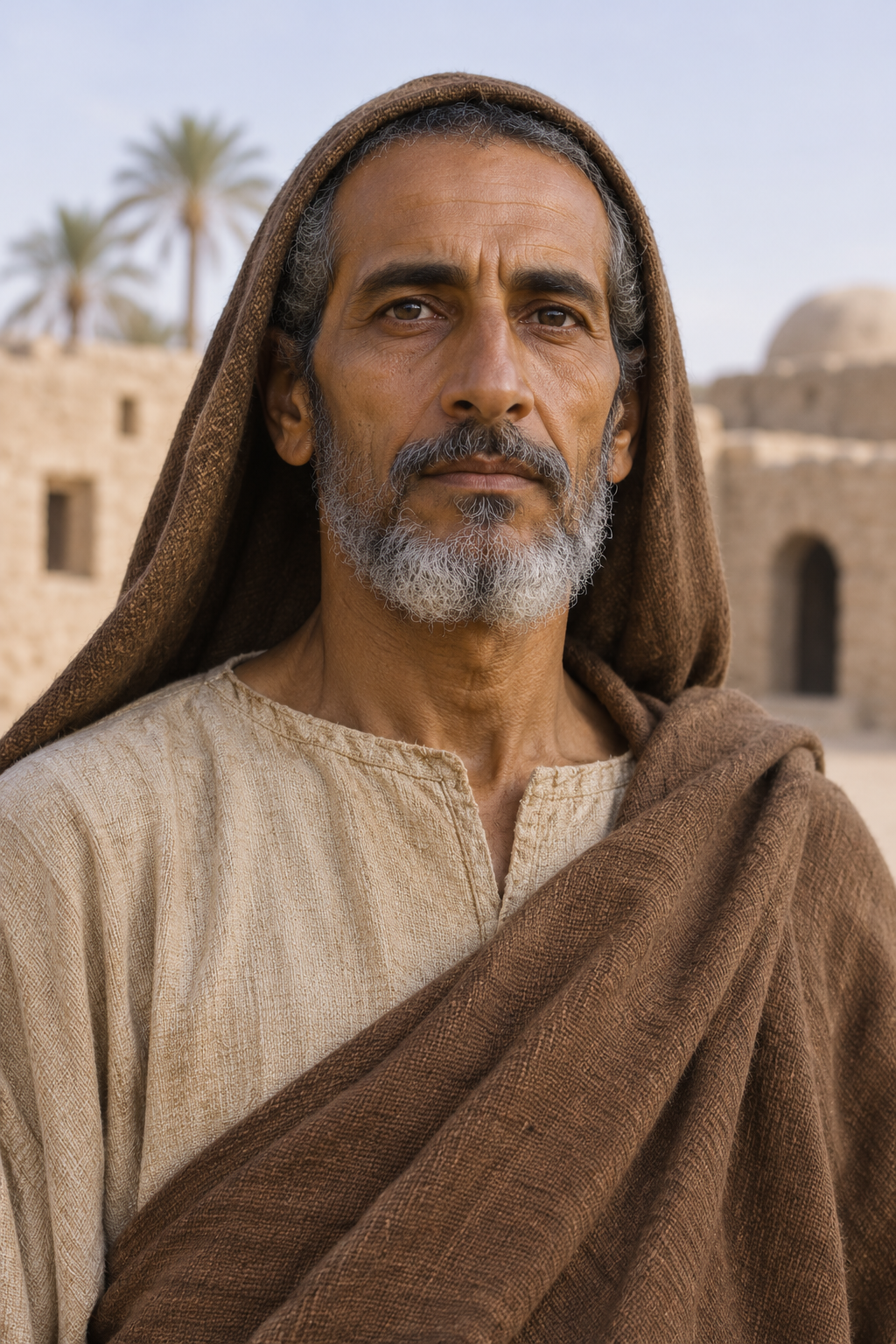
About Horsiesios of Pbow
Horsiesios became head of the Pachomian federation in fourth-century Egypt through a succession shaped by the community’s own leaders. According to the Coptic Encyclopedia’s account of the Bohairic and Greek Lives of Pachomius, Pachomius asked the brothers whom they wished to succeed him. They favored Theodore, but did not name him openly; Pachomius appointed Petronius instead. Petronius was ill and died a few months later, naming Horsiesios as his successor. The episode places Horsiesios inside an organized network of monasteries rather than in solitary desert life.
Horsiesios had already served as superior of Sheneset, near Nag Hammadi. Although relatively young, he had been given responsibility for that monastery, and the appointment met resistance. The Lives say that his elevation over the wider Koinonia also displeased senior brothers. They describe him as humble and holy, but not as a forceful speaker like Pachomius or Theodore. In the narrative, his authority depended on patient service and the effort to retain the brothers’ trust.
For about five years Horsiesios led the federation. The Lives then describe a revolt encouraged by Apollonius, the superior of Tmoushons. Horsiesios had accepted leadership out of obedience, but feared that the dispute would damage the monks. After spending a night in prayer, he called the senior brothers and said Theodore should take the office they had wanted. He withdrew to Sheneset. The story records an unusual choice: he gave up authority to preserve the community’s unity, rather than turning the conflict into a contest over his position.
Theodore later brought Horsiesios back to share the work of leadership. The Coptic Encyclopedia says this occurred near the end of Theodore’s eighteen years as head. When Theodore died in 368, Horsiesios resumed the office. He served for several more years and died after 387, though the exact date is unknown. The sequence comes from the Pachomian Lives, composed and transmitted within the community; it supplies the broad order of events but not a modern administrative record or exact chronology for every transition.
Horsiesios is also remembered through the work most closely associated with him, the spiritual Testament preserved in Jerome’s Latin translation as the Liber Orsiesii. Jerome translated it in 404. The Coptic Encyclopedia says it was written during an internal crisis, perhaps the conflict around Horsiesios’s resignation. The problem was the growing wealth of the monasteries and the tendency of individual houses or monks to claim property for themselves. The Testament answers that crisis by treating shared life as a spiritual obligation, not merely a practical arrangement.
The Testament objects to private accumulation within the Koinonia. It warns monks against keeping gifts or possessions in their cells and against arranging for personal property to pass to someone after death. The text’s instructions on property make visible the pressure that wealth placed on the common life. For Horsiesios, possession was not a private matter when it could divide the community: goods and work belonged within the network of brothers whose labor sustained one another. The surviving work connects such rules to scriptural teaching and the common discipline of the federation.
The work is often called a “mirror of the superior” because it sets out responsibilities for leaders at several levels of the federation. Its concern is not simply that a superior issue commands. The Testament asks leaders and house officers to watch over the people entrusted to them, take faults seriously, and protect the community’s common life. It also addresses the brothers’ mutual obligations. Read alongside the story of Horsiesios’s resignation, these instructions show why unity recurs in his remembered legacy: leadership should serve the spiritual good of the whole community, not the status of the person who leads.
Scripture saturates the Testament. The Coptic Encyclopedia notes that it quotes from nearly every book of the Old and New Testaments. These quotations are woven into practical instructions about obedience, correction, possessions, and daily monastic discipline. Rather than presenting a theory detached from the monasteries, Horsiesios’s text treats the biblical passage as a guide for handling ordinary disputes and responsibilities. Its repeated scriptural appeals also help explain why Jerome translated it: the work gave Latin readers access to a detailed account of the Pachomian ideal of communal ascetic life.
Four Coptic letters associated with Horsiesios have also survived. Veilleux notes that two came from one manuscript and two more from the Chester Beatty collection; one is addressed to Theodore. A letter to absent brothers urges them to comfort one another, and another warns against passing judgment on a brother while overlooking one’s own fault. Both weave scriptural passages into immediate concerns about common life. Some lines are damaged, and the letters do not supply a continuous account of Horsiesios’s years in office. They do, however, extend the picture offered by the Testament: a leader trying to hold prayer, correction, and mutual care together.
Wondering how to weigh the stories and sources? Learn how to read a saint biography.