Biography
Hunna of Hunawihr
About Hunna of Hunawihr
Hunna is remembered as an Alsatian woman who supported Deodatus together with her husband, Hunno. Their story appears in the Life of Deodatus, written by a monk of Moyenmoutier in the eleventh century. It is a later account, not testimony from their lifetime.
The Life describes Hunna and Hunno as neighbors and friends of Deodatus, who baptized their child. In another episode, Hunno learns in a dream that Deodatus is hungry in the wilderness. Hunna urges him to act quickly, and provisions are sent. The narrative also records a gift of Hunawihr and its church, where it says the couple were buried.
Historian Steven Vanderputten reads this account in the setting of the canons of Saint-Dié’s efforts to recover property. He suggests that its favorable portrayal of Hunna may also reflect plans to encourage pilgrimage at her burial place. These are interpretations of the medieval community’s concerns, rather than independent confirmation of every episode in her life.
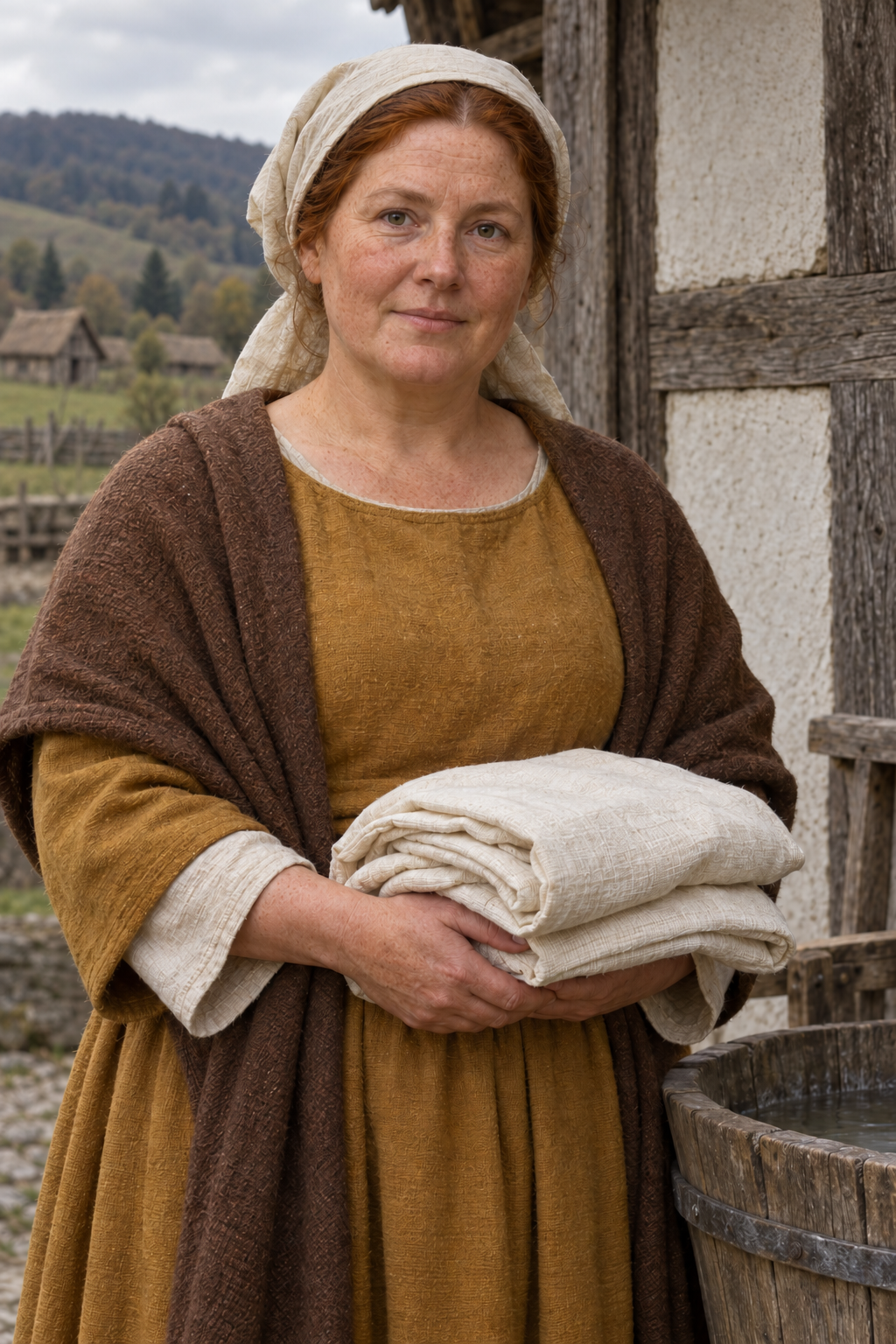
Later tradition gives her a more personal place in local memory: she cared for sick people and washed their soiled linen at the village fountain. This is the story behind her enduring identity as the saintly washerwoman.
Her cult has a firmer place in the history of Hunawihr’s church. An elevation of her relics took place on April 15, 1520, and donations associated with it helped finance work on the Gothic choir. The relics were later dispersed during the Reformation. The choir’s stained glass continues to tell her story, although the church itself is dedicated to James the Greater.
Wondering how to weigh the stories and sources? Learn how to read a saint biography.