Biography
Ida of Herzfeld
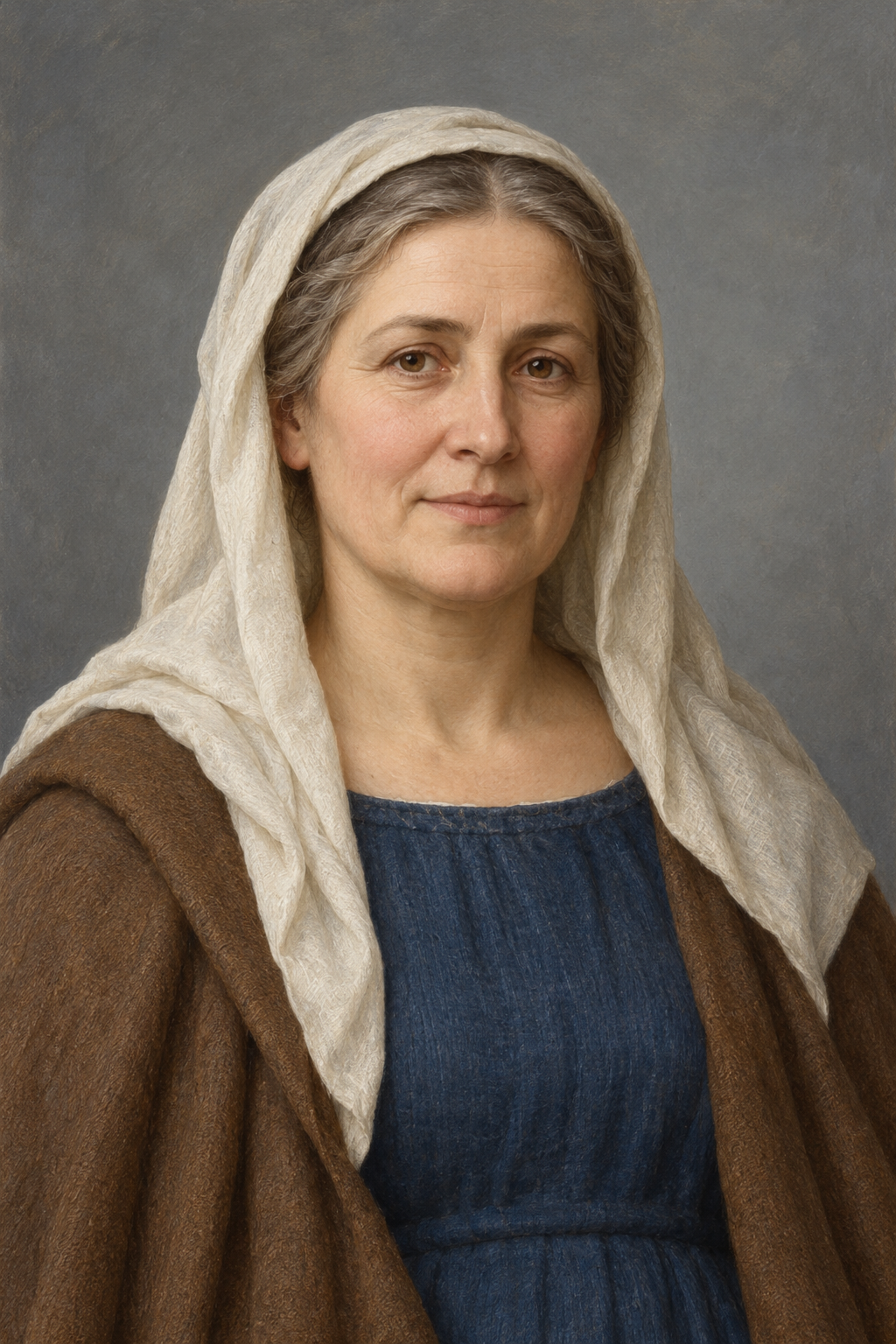
About Ida of Herzfeld
Ida of Herzfeld is remembered as a wife and widow whose care for people in need became the center of her religious life. She married the Saxon nobleman Egbert and helped establish the church at Herzfeld, in what is now Westphalia. After his death, her prayer and charitable work remained closely connected with that church.
Her principal biographer, Uffing of Werden, wrote around the time of the recognition of her cult in 980, long after her death. He drew on earlier records and local testimony. His purpose was to present a saintly example, not to assemble a modern biography, so the narrative must be read with that distance and purpose in mind.
The local tradition describes a journey with Egbert across the Lippe and a dream in which an angel instructed Ida to build a church. After she was widowed, she lived in a small chamber beside the church near her husband’s burial place. A stone coffin became a container for the gifts she distributed to the poor. These details belong to the remembered pattern of her life: prayer beside the church and practical care outside it.
Her family connections are less secure than many short accounts suggest. Claims that she was closely related to Charlemagne remain unproven. Uffing says nothing about children, while later historians have proposed different numbers and identities. His silence does not establish that the marriage was childless.
A deer also became part of her story. In the legend, it escaped its hunters by taking refuge with Ida and later helped carry stones for the church. The basilica’s account interprets the animal as an image of the Saxons seeking protection during their conflict with the Franks.
Archaeology has supplied another kind of evidence. Excavations in 1975–1976 followed the discovery of older walls and floors during work on the church’s heating system. A report of archaeologist Gabriele Isenberg’s later lecture describes the investigation of earlier buildings and the burial site. These physical remains help illuminate the setting of the tradition; they do not verify its miracles.
The modern crypt preserves remains of the earlier church and the place associated with Ida’s grave. Its consecration in November 1980 marked the millennium of her recognition as a saint. The New Catholic Encyclopedia gives her death as September 4, 825, while allowing 813 as another possibility. Her precise life dates remain unsettled here. Her principal feast is September 4, and she is especially invoked by expectant mothers.
The pilgrimage basilica at Herzfeld bears her name.
Wondering how to weigh the stories and sources? Learn how to read a saint biography.