Biography
Ignatius of Antioch
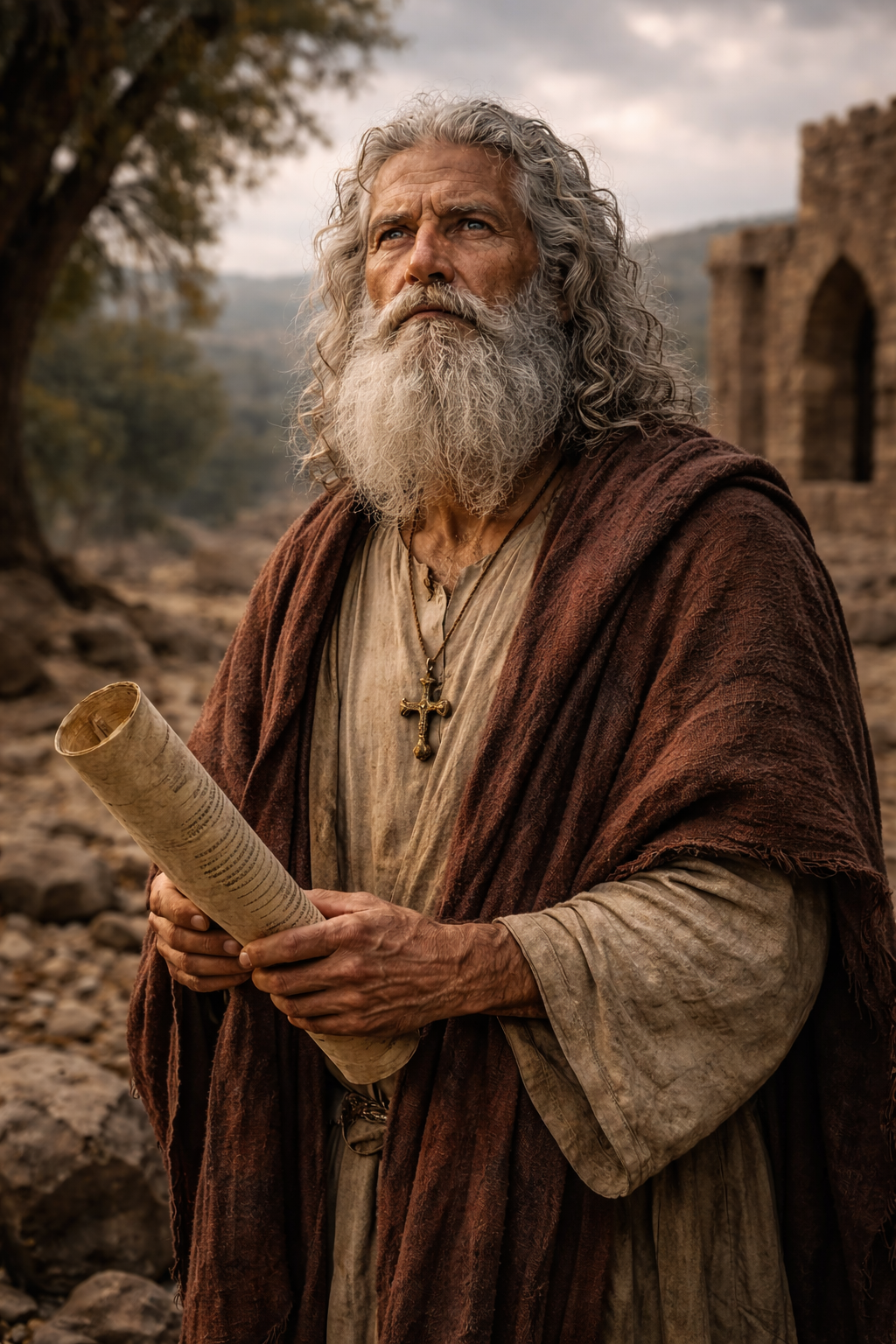
About Ignatius of Antioch
Ignatius of Antioch is known more clearly through his own letters than through later stories about his childhood. He identifies himself as Ignatius, also called Theophorus, and writes as bishop of the church in Syria. Seven letters preserved in a widely accepted middle recension address the Ephesians, Magnesians, Trallians, Romans, Philadelphians, Smyrnaeans, and Bishop Polycarp. Together they show a prisoner under armed guard moving westward toward Rome and expecting execution. They do not name his parents, birthplace, birth year, teacher, or date of ordination. Claims that he knew the apostles personally therefore belong to church tradition rather than to his surviving testimony.
Antioch was one of the ancient Mediterranean's major cities and an early center of the Christian movement. Ignatius's letters present him as responsible for its church, but they were written after he had been removed from the city. He repeatedly calls himself bishop of Syria and asks other communities to remember the church there. Later tradition numbers him after Evodius and links his formation to the apostle John. Those details cannot be recovered from the letters. What can be seen is a leader separated from his people who continues pastoral work by correspondence while facing a sentence he believes will end in death.
At Smyrna, Ignatius met delegations from nearby churches and wrote four letters: to Ephesus, Magnesia, Tralles, and Rome. His counsel is concrete. He asks communities to avoid faction, remain united in worship, respect presbyters and deacons, and gather around their bishop. These instructions provide early evidence for a threefold pattern of bishop, presbyters, and deacons in the communities he addressed. They should not be inflated into a universal administrative chart already identical in every city. Ignatius argues from the needs of actual divided congregations, presenting visible cooperation as a safeguard for common teaching and shared practice.
The letters are equally concerned with what Christians say about Jesus. Ignatius insists that Jesus was truly born, truly suffered under Pontius Pilate, truly died, and truly rose. This repeated language opposes teachers who treated Christ's bodily life and suffering as appearance rather than reality. Ignatius connects that confession with ordinary communal conduct: patience, mutual care, Eucharistic gathering, and refusal of divisive teaching. His sharp polemical language belongs to an early doctrinal conflict and should be explained rather than copied as a label for present communities. The central historical point is that embodied Christology and church unity were inseparable in his pastoral argument.
Ignatius's letter to Rome differs from the others because he does not give that church instructions. He fears that Roman Christians might intervene to prevent his execution and asks them not to do so. He describes himself as God's wheat, hoping to become Christ's bread through the teeth of wild beasts. The image is intense and can unsettle modern readers. It records one prisoner's interpretation of his approaching death, not a general command to seek harm or refuse lawful rescue. The letter establishes Rome as his intended destination and shows that execution by beasts was expected; it is not an eyewitness account that the sentence was completed in the Colosseum.
From Troas, Ignatius wrote to Philadelphia, Smyrna, and Polycarp. He had received news that peace had returned to the church at Antioch, and he asked communities to send representatives or letters of encouragement there. Even during imprisonment, his attention returned to the community from which he had been taken. This request supports a practical virtue: he used relationships among churches to repair isolation and offer reassurance. It also provides a map-safe connection among Troas, the recipient communities, and Antioch. The letters do not justify drawing a single precise route, identifying every overnight stop, or assigning modern coordinates to an unknown place of custody.
The letter to the Smyrnaeans contains Ignatius's earliest surviving use of the expression 'catholic Church,' meaning the church in its wholeness where Jesus Christ is present. In the same letter he links Eucharistic practice to confession that Christ truly took flesh. These statements later became important in Catholic and Orthodox accounts of ministry and sacrament. Historically, they reveal the vocabulary and disputes of one early second-century network. They do not by themselves settle every later controversy. Ignatius's value as a witness lies precisely in the letters' specific setting: a bishop addressing communities he knew while doctrinal disagreement and local division were active concerns.
Ignatius addresses Polycarp personally as bishop of Smyrna. He advises attention to individuals, care for widows, concern for slaves without encouraging pride, perseverance in prayer, and consultation with the community. Some counsel reflects the social assumptions of the Roman world and requires historical context. The letter nevertheless shows that Ignatius did more than defend offices in the abstract. He expected leadership to know people, bear burdens, and cultivate cooperation. Polycarp later knew a collection of Ignatius's letters, strengthening confidence that this correspondence circulated early. Their relationship is therefore documented through texts, while calling both direct disciples of John remains traditional.
Ignatius's execution is highly probable, but the surviving letters stop before it occurs. A death around 107 during Trajan's reign is a conventional approximation rather than an exact date established by a contemporary act of martyrdom. Eastern tradition commemorates him on December 20 and tells of death by lions, later translations of relics, antiphonal singing learned through a vision, and the name of Jesus found written in his heart. The Church of England observes him on October 17 as bishop and martyr. Those calendar dates document worship, not his day of death. Rome remains the probable endpoint; the Colosseum and detailed arena scene are not asserted here.
Ignatius remains significant because his letters join doctrine to visible habits of community. He argues for the reality of Christ's human life, urges Christians to resist faction, asks leaders to care for particular people, and keeps concern for Antioch while being carried away from it. His longing for martyrdom must be read within imprisonment and anticipated execution, not reduced to romantic admiration of violence. Historical restraint leaves a substantial portrait: a Syrian bishop writing under guard, sustaining relationships across cities, and pressing communities to make their professed unity concrete in worship, teaching, patience, and care.
Wondering how to weigh the stories and sources? Learn how to read a saint biography.