Biography
Irene Stefani
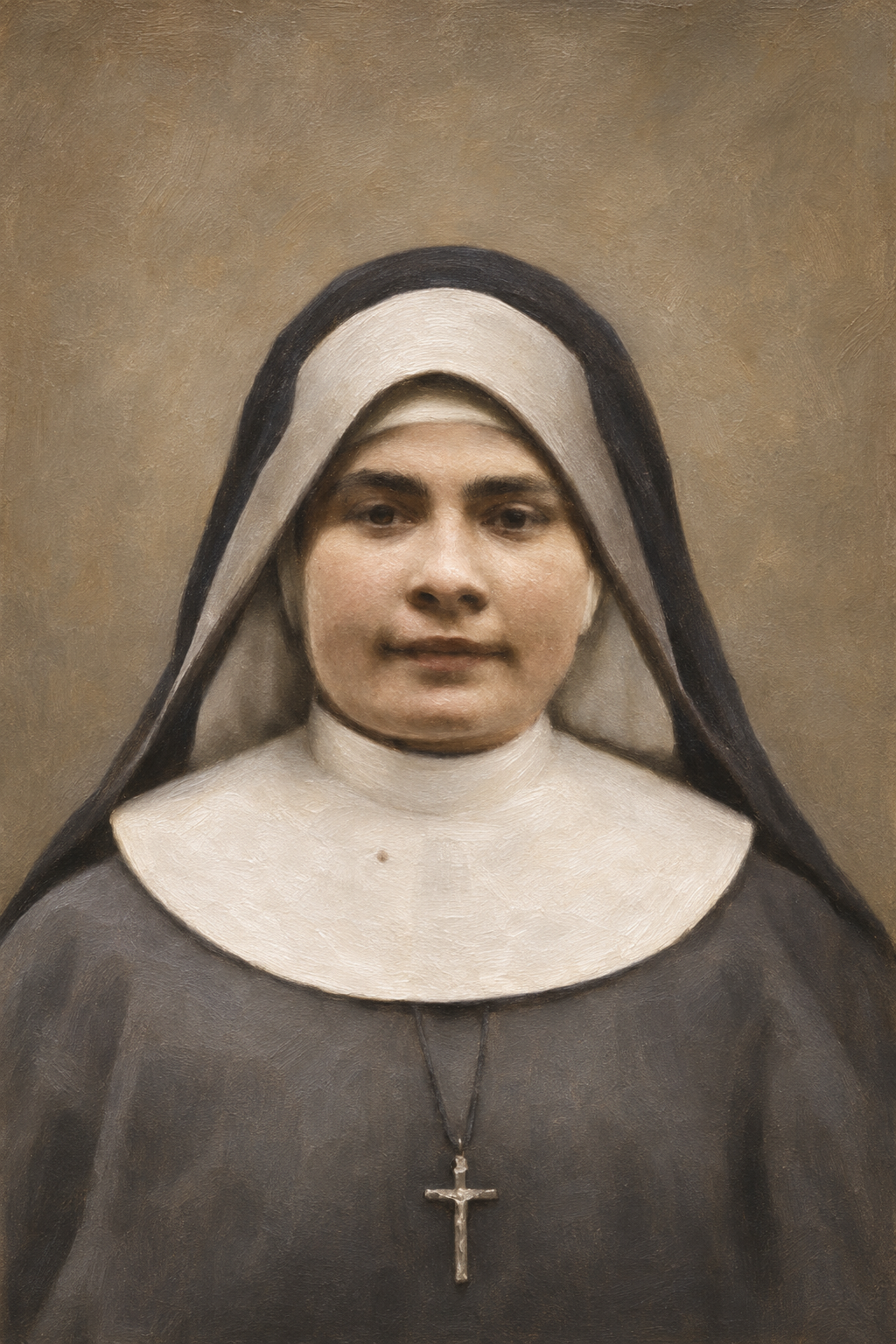
About Irene Stefani
Irene Stefani’s life of service began before she left her home in Italy. Born at Anfo in the Brescia region in 1891, she helped care for her younger siblings after her mother died. She also took part in the Christian education of young people in her parish. Paul Tablino’s account places that family responsibility alongside the development of her missionary vocation. Her early service was local and domestic, long before the hospital wards and village paths that would later shape her work in eastern Africa.
She entered the recently founded Consolata Missionary Sisters and made her religious profession in January 1914. The following year she went to Kenya. The congregation had been established by Joseph Allamano, and Irene belonged to its early generation of sisters. Her move placed her within a mission that brought religious formation together with the practical needs of the communities where its members worked. The congregation had been founded at Turin in 1910. She sailed with its second departing group on 28 December 1914.
The First World War soon changed the setting of her work. The congregation’s account describes service in military hospitals in Kenya and Tanzania, especially among African porters drawn into the war. These men carried military supplies under exhausting conditions. Hospitals struggled with overcrowding, inadequate food and medicine, and the spread of infection. Irene’s nursing took place within that wider suffering. The remembered work was immediate and bodily: attention to people who arrived ill, wounded or exhausted after the demands placed upon them.
Her care did not remain confined to an institution. The Dicastery account remembers journeys to people in outlying villages as part of her ministry. Visiting someone who could not easily reach help brought nursing, material assistance and religious companionship into the same encounter. These visits became part of the sustained work for which she was remembered after the war.
In 1920 she began work at Gikondi. The later Vatican Radio account describes school teaching and visits to homes to invite children to attend. Those visits also brought her into contact with their mothers and with needs extending beyond the classroom. Newly arrived sisters came to her for experience of missionary life. She helped them learn their work and supported them personally. This part of the account presents a teacher and colleague, alongside the nurse whose care appears so often in remembrances of her life.
She died at Gikondi on 31 October 1930. Tablino identifies the illness as bubonic plague contracted while she visited and brought medicine to affected people. She was thirty-nine.
The later Catholic cause considered a reported event at Nipepe in Mozambique during the civil war. People sheltering in a church in 1989 faced a shortage of water. The account says that they prayed for Irene’s intercession and that the water in the baptismal font continued to meet their needs. The Church judged the episode to be a miracle associated with her intercession. This is the Catholic account and its religious interpretation; it is not presented here as an independently established physical explanation.
Recognition followed a lengthy process rather than the immediate public response to her death. The congregation records diocesan inquiries during the 1980s. In 2011 Benedict XVI authorized the decree recognizing her heroic virtue. The subsequent consideration of the Nipepe event formed part of the path to beatification. Irene was beatified in Kenya in May 2015. The recognition therefore joined the memory of her own work with the devotion that had continued for decades after her death.
The name Nyaatha remained central to that memory. In an interview connected with the beatification, the Kenyan Consolata sister Jacinta Theuri described Irene as a mother who attended to bodily as well as spiritual needs. She recalled the community’s account of someone who did not turn people away. Theuri also emphasized that the story had passed between generations. Such testimony identifies a living local remembrance, while remaining distinct from the records of Irene’s own time. Theuri also recalled her searching for people mistakenly left for dead and helping those who were still alive. The name belongs to the Kikuyu language.
That memory also took practical form after the beatification. At the first anniversary in 2016, a gathering at Dedan Kimathi University of Technology included the launch of a scholarship and bursary fund for students in need. A shrine at the university was also opened. The university chaplaincy organized the initiatives, and participants included students, faculty, religious communities and pupils from the school at Gikondi bearing her name. The educational support gave a specific continuing expression to the remembrance of a missionary whose work had included both teaching and care for people with few resources. Archbishop Peter Kairo recalled her commitment to serving Christ without seeking advantage for herself. His homily connected that commitment with the kindness and compassion remembered by the people she served.
Wondering how to weigh the stories and sources? Learn how to read a saint biography.