Biography
Isaac
About Isaac
Isaac stands at the center of Genesis as the son promised to Abraham and Sarah and as the father of Esau and Jacob. Genesis presents him within an ancestral narrative rather than a modern biography, and no independent record supplies calendar years for his birth or death. The ages attached to his family belong to the biblical chronology and should not be converted into modern dates. His story is quieter than those of Abraham and Jacob, but it carries the covenantal promises from one generation to the next.
Before Isaac's birth, Genesis says that God promised Abraham that Sarah would bear a son and that the covenant would continue through him. Abraham laughed when he heard the promise, and Sarah also laughed when visitors announced that she would have a child. When the child was born, Sarah connected his name with laughter. The Hebrew name Yiṣḥaq is therefore explained within the narrative by repeated wordplay on laughter. Genesis reports that Abraham named him Isaac and circumcised him on the eighth day. The text gives Abraham's age but does not state Isaac's birthplace, so the surrounding Beer-sheba stories cannot establish an exact birth location.
Genesis next places Isaac in a severe family conflict. After Sarah saw Ishmael playing with Isaac, she demanded that Hagar and Ishmael be sent away. God told Abraham that descendants would be named through Isaac while also promising a nation through Ishmael. This passage establishes Isaac as the chosen heir in the story, but it does not make Ishmael irrelevant or erase their kinship. Later, Genesis explicitly brings the brothers together to bury Abraham at Machpelah.
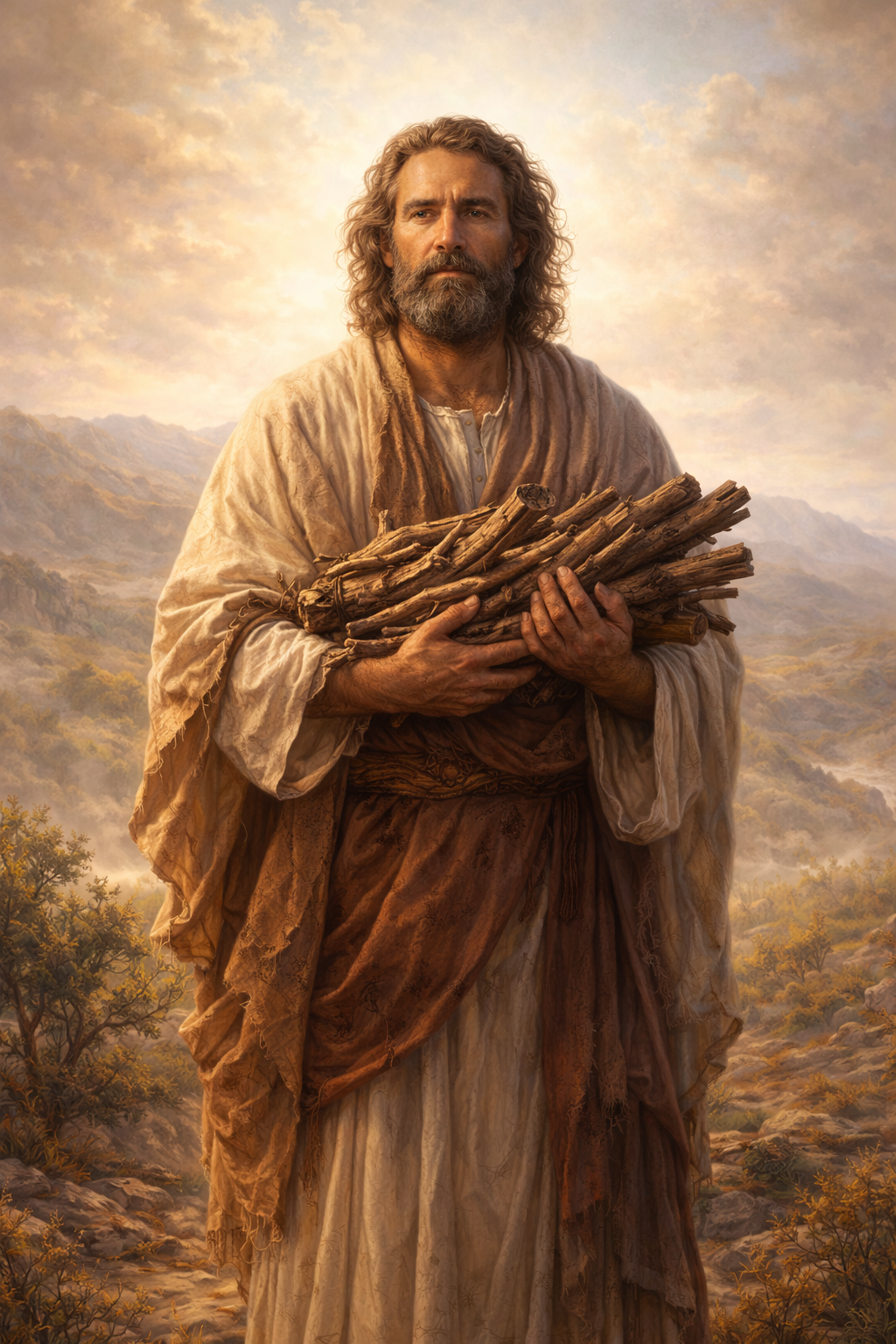
The most difficult episode is the testing of Abraham in Genesis 22, known in Jewish tradition as the Akedah, or binding of Isaac. The chapter says that Abraham took Isaac toward the land of Moriah to offer a sacrifice. Isaac carried the wood and asked where the sheep was; Abraham answered that God would provide it. At the altar Abraham bound Isaac, but a heavenly messenger stopped him before he harmed the boy, and a ram was offered instead. The narrative explains Abraham's test but does not disclose Isaac's age, inner thoughts, or willing consent. Claims that Isaac knowingly volunteered therefore go beyond this text. Moriah is also left geographically imprecise in Genesis; a later biblical tradition connects the name with Jerusalem, but a map should not invent a route or mountain coordinates.
After Sarah's death, Genesis 24 tells how Abraham's servant traveled to Abraham's relatives to seek a wife for Isaac. Rebekah chose to accompany the servant after offering water to him and his camels. Isaac himself does not take part in the negotiations. The chapter first shows him near Beer-lahai-roi, going out toward evening, when he sees the approaching caravan. Rebekah becomes his wife, and the text says that he loved her and found comfort after his mother's death. This is one of the few places where Genesis directly describes Isaac's affection.
Genesis says that Rebekah was unable to conceive and that Isaac entreated the Lord for her. After she became pregnant, the twins struggled within her, and she received an oracle that the older would serve the younger. Esau and Jacob were born, and the narrative portrays divided parental attachments: Isaac favored Esau, while Rebekah favored Jacob. These details resist an idealized family portrait. They introduce the rivalry, deception, and contested blessing that shape the next generation.
Genesis 26 gives Isaac his longest independent sequence. During famine he settled at Gerar after being told not to go to Egypt. Fear led him to call Rebekah his sister, a deception discovered by Abimelech. The chapter does not hide this failure. It then describes increasing wealth, conflict over water, and repeated movement as local herders disputed wells dug by Isaac's servants. Instead of escalating each quarrel, Isaac moved on until a well was uncontested and named it Rehoboth, expressing that room had been made for them. At Beer-sheba he built an altar, invoked the Lord, and later made a sworn agreement with Abimelech after hosting a feast. The account joins fear and error to persistence, worship, and a negotiated peace.
In old age Isaac was blind and intended to give Esau a blessing. Rebekah arranged for Jacob to impersonate his brother, and Jacob deceived his father. When Esau arrived, Isaac recognized what had happened and trembled violently. He did not simply dismiss Esau: Genesis records a second, harsher blessing and Esau's grief. Rebekah then urged that Jacob be sent to her family, and Isaac deliberately blessed Jacob before the journey. The narrative preserves injury, favoritism, and deception without claiming that every human action was divinely approved.
Isaac's final notice comes after Jacob returns to Canaan. Genesis places Isaac at Mamre, in Kiriath-arba, identified in the text with Hebron. It assigns him a lifespan of 180 years and says that Esau and Jacob buried him. A later passage locates Isaac and Rebekah's burial in the cave of Machpelah. These are narrative ages and locations, not a basis for assigning modern calendar dates or exact archaeological coordinates. The catalog therefore records no birth or death year.
Later biblical books remember God as the God of Abraham, Isaac, and Jacob, making Isaac part of a shared ancestral formula. Christian Scripture also places Isaac in reflections on promise and faith, while Christian interpretation has often read the binding typologically. Those later readings belong to reception history and should not be substituted for details absent from Genesis. The Orthodox Church in America commemorates Righteous Isaac on December 13, and Greek Orthodox worship also names the patriarch among the forefathers. Isaac remains significant because Genesis uses his family life—promise, peril, prayer, conflict, reconciliation, and inheritance—to connect the stories of Abraham and Jacob without concealing human weakness.
Wondering how to weigh the stories and sources? Learn how to read a saint biography.
Prayers for Isaac
Forefathers hymn excerpt mentioning Isaac
We commemorate the Patriarch Isaac