Biography
Isabel Florence Hapgood
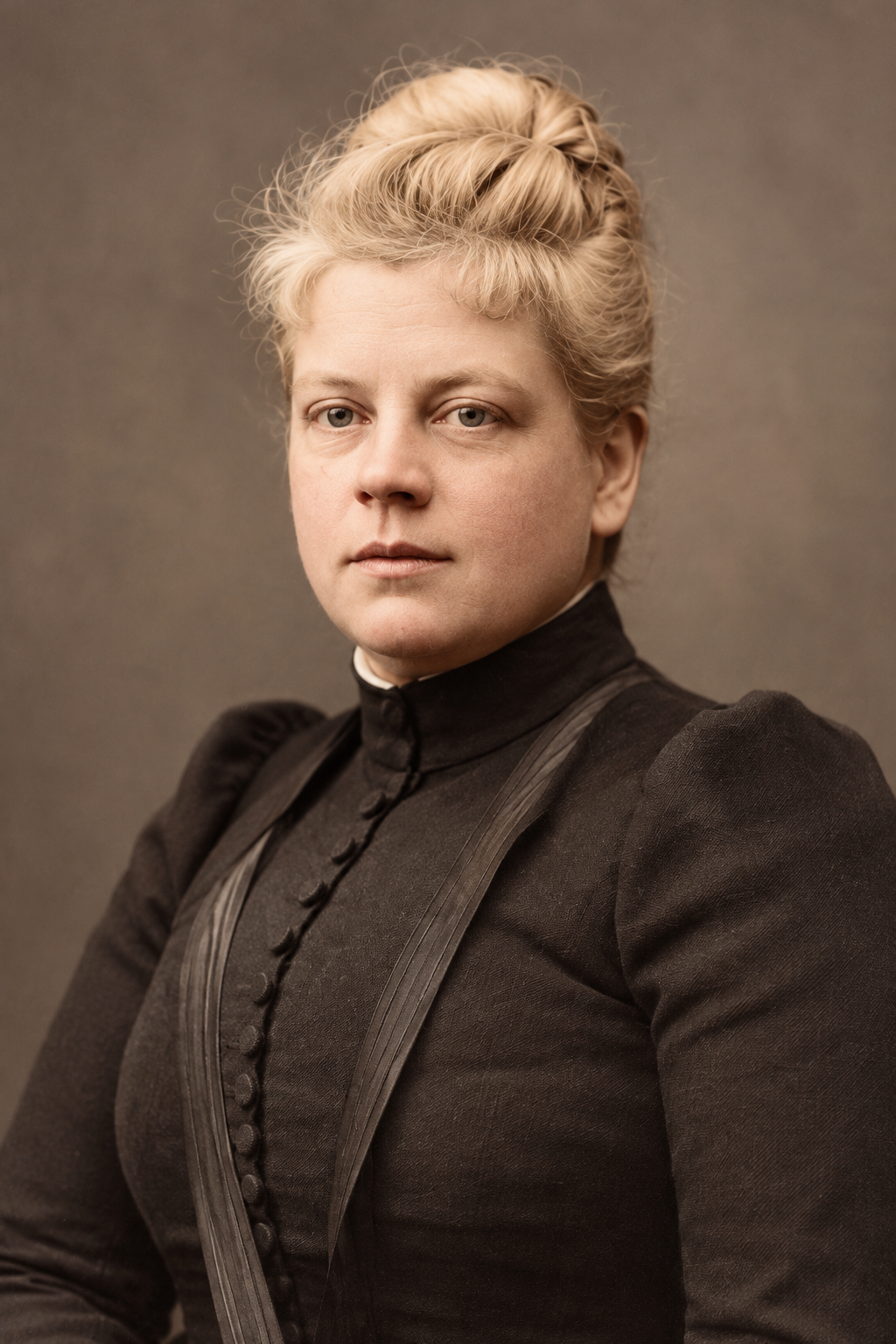
About Isabel Florence Hapgood
Isabel Florence Hapgood brought Russian literature and Orthodox worship to English-speaking readers. She was born in Boston, probably in 1851, although 1850 appears in many accounts. Scholar Marina Ledkovsky favors 1851 on the evidence of a family history that Hapgood herself annotated. Educated in Massachusetts and Connecticut, she developed an extensive knowledge of languages and became a translator before traveling to Russia in 1887. Her work included Russian fiction as well as religious texts, and her visits brought her into contact with writers, clergy, and musicians.
Her travel writing reveals the purpose she gave to this work of interpretation. In the preface to Russian Rambles, published in 1895, she complained that American readers encountered distorted pictures of Russian life. She offered personal observations and episodes rather than a continuous travel diary. Understanding another country, she argued, required knowledge of its language and a willingness to reconsider inherited prejudices. She wanted readers to approach people sympathetically instead of collecting stories that merely confirmed what they already expected.
That sympathetic purpose also shaped the limits of her account. She wrote as a visitor who valued her Russian friendships and wanted to defend people she believed had been misunderstood. Her preface criticized travelers who issued confident judgments after brief encounters or relied on poorly informed guides. It is therefore useful as evidence of her own outlook and method, rather than a neutral verdict on every aspect of Russian society.
Her most enduring religious project was the Service Book published in 1906. In its preface she explained that English could serve Orthodox communities whose members came from several countries and whose children attended American schools. She worked from Russian Church Slavonic books, comparing their texts with Greek. She selected commonly used services and arranged material to help readers follow actions occurring inside and outside the sanctuary. The aim was practical understanding for worshippers, clergy, students, and visitors.
She acknowledged assistance while accepting responsibility for the plan and translation. A priest checked doctrinal expression and supplied details of customary ritual. Archbishop Tikhon and other supporters helped the project reach publication. Hapgood also drew on familiar English biblical and liturgical language, including the King James Bible and the Episcopal prayer book. In the same preface she identified herself with the Anglican Communion and hoped the volume would help other Christians understand Orthodox worship.
Credit for the work became a matter of public disagreement. Historian Matthew Namee recounts how Ingram Nathaniel Irvine’s 1906 discussion assigned the book’s merits chiefly to the priest Alexander Hotovitzky. Hotovitzky answered in a published letter, insisting that the initiative, design, and sustained labor belonged to Hapgood, while his own assistance had been secondary. His response matters because it came from the collaborator whose contribution had been overstated. It does not mean that she worked without help; it clarifies the difference between assistance and authorship. Namee also cautions that he found no inserted correction in two copies of Irvine’s book he examined.
Hapgood’s commitment to sacred music extended into concert organization. In a 1915 letter to an Orthodox archbishop, she reported paying a deposit for a cathedral choir performance at New York’s Aeolian Hall. She argued that the choir needed enough trained adult and boy singers to meet the expectations of the city’s audiences. Her reasoning joined artistic standards to public influence: excellent performances, she believed, could attract listeners who would then become interested in the church behind the music.
The letter also exposed a controversial priority. Hapgood valued the potential influence of an outstanding cathedral choir above the establishment of numerous small parishes. This was her argument about mission and resources, not an agreed judgment of the Orthodox community. Her appeal acknowledged that earlier concerts had not sold every ticket, even as she emphasized the support of influential listeners. The document shows the practical organizer alongside the translator, negotiating money, personnel, audiences, and expectations.
A contemporary review in the New York Tribune welcomed the service book’s usefulness but did not confuse improved understanding with completed church unity. The reviewer praised its selection of services and explanatory material, while observing that the book also made Orthodox doctrinal boundaries clear. Readers could gain greater appreciation of another tradition without the differences between their churches disappearing. This reception helps explain the volume’s importance as an instrument of encounter rather than evidence that reunion had already been achieved. The review drew attention to more than the translated prayers: it also noted explanations of liturgical actions and church symbolism, together with tables of lessons, feasts, and fasts. Such guidance offered readers ways to follow the structure of worship as well as understand its words.
Hapgood continued writing and assisting Russian acquaintances after the revolution. She died in New York City on June 26, 1928, without having converted to Orthodoxy.
The Episcopal Church commemorates her on June 26.
Wondering how to weigh the stories and sources? Learn how to read a saint biography.